Story by Aldridge Dzvene
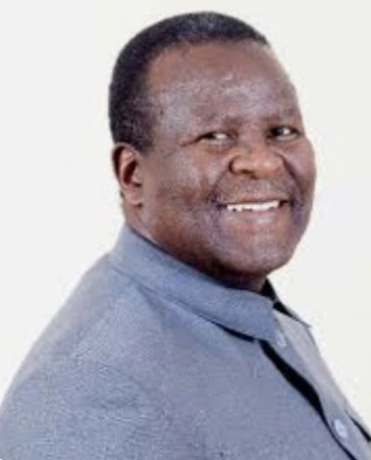
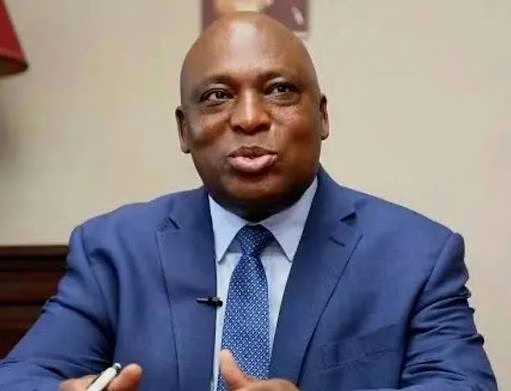
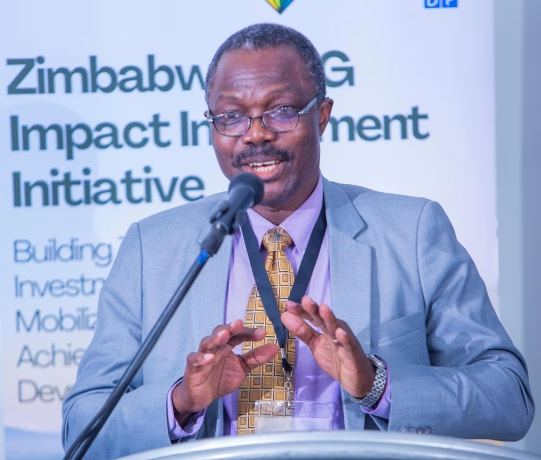
Harare – The burial of three distinguished national heroes, the late National Hero Cde Elison Mupamaonde, the late National Hero Cde Cosmas Chiringa, and the late Major General (Rtd) Dr. Hebert Chingono, presented more than a moment of remembrance, it offered a deeper reflection on the values that sustain a nation, patriotism, discipline, loyalty and an unwavering commitment to national development.
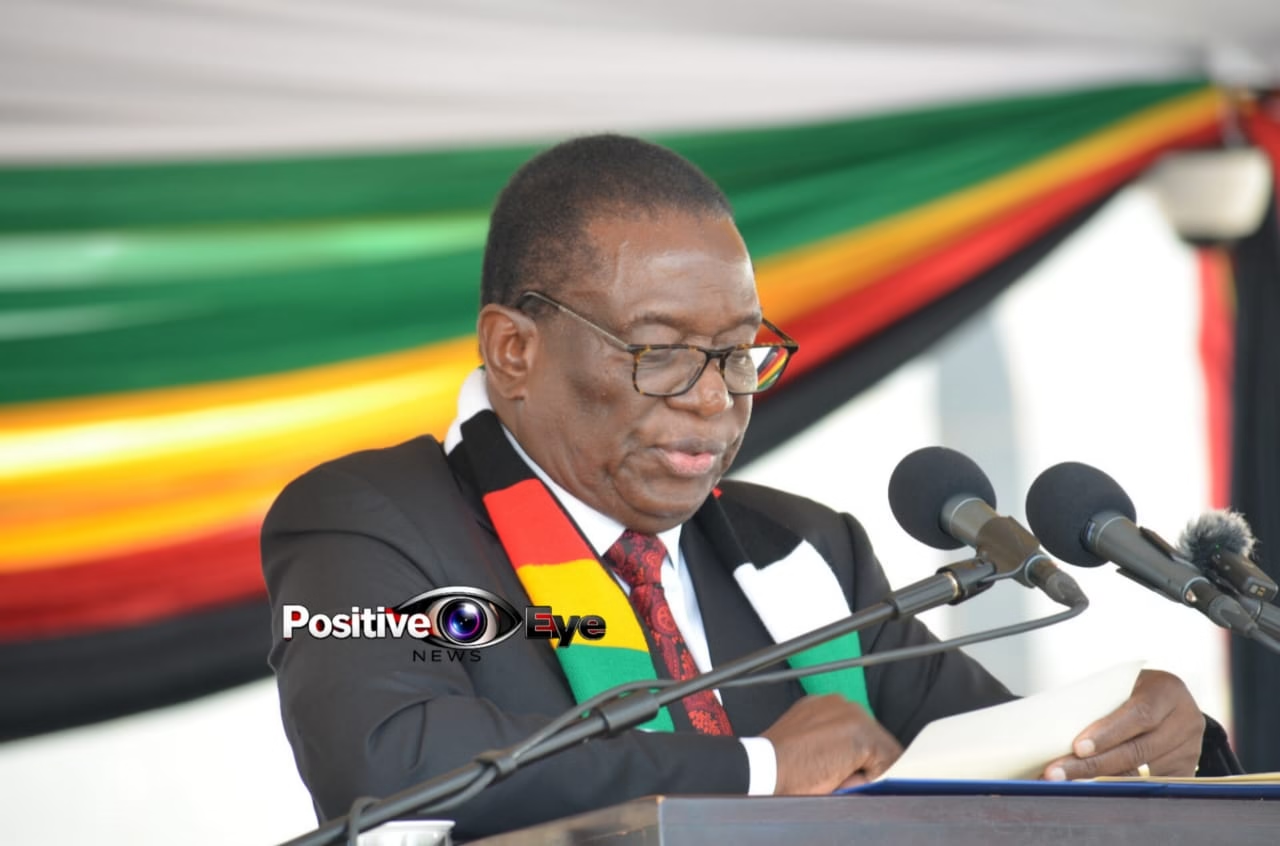
In his address, His Excellency the President and Commander-in-Chief of the Zimbabwe Defence Forces, Emmerson Dambudzo Mnangagwa, placed the lives of the three heroes within a broader national narrative, where service to the country is not confined to a particular period, but is a lifelong obligation that evolves with the needs of the State.
What stands out from the lives of the departed is a consistent pattern of duty that moved seamlessly from the liberation struggle into the structures of governance, administration and development. Their contribution reflects a form of citizenship anchored not in entitlement, but in responsibility, where every role occupied becomes an opportunity to advance national interests.
The late National Hero Cde Elison Mupamaonde embodied precision, discipline and restraint. His role during the liberation struggle demonstrated strategic clarity and commitment, yet his life after independence revealed an equally important dimension, the ability to transition into peace and contribute quietly to community stability and development. This balance between strength and restraint is a defining feature of mature patriotism, one that understands when to act and when to consolidate gains.
The late National Hero Cde Cosmas Chiringa represents the fusion of ideology and implementation. As a Political Commissar during the liberation struggle, he was responsible for shaping consciousness, instilling purpose and aligning cadres with the broader vision of national liberation. In post-independence Zimbabwe, he carried that same clarity into public administration, where his work in local government and provincial leadership ensured that policies were translated into real change within communities.
His approach to leadership reflected accessibility, order, and professionalism, qualities that strengthen the relationship between the State and its citizens. By remaining connected to the grassroots, he ensured that governance was not distant, but responsive, reinforcing trust and collective ownership of national development programmes.
The late Major General (Rtd) Dr. Hebert Chingono’s journey illustrates the evolution of service across generations. From the battlefield to the command structures of the Zimbabwe Defence Forces, and later into academic and developmental roles, his life reflects adaptability and forward thinking. His contribution to institutional development and training laid a foundation for continuity, ensuring that knowledge, discipline and values are passed on to future generations.
His transition into sectors such as agriculture further underscores the understanding that nation building requires a convergence of skills, where experience gained in one field is redirected to strengthen another. This integrated approach is essential in building a resilient and self-sustaining nation.
Central to the President’s message was the emphasis on discipline, integrity and accountability within public service. The reminder that leadership is a mandate to serve, rather than a symbol of status, speaks to the need for a culture that prioritises results, transparency and dedication. The rejection of corruption, negligence and detachment from the people is positioned as a necessary step in safeguarding national progress.
The doctrine of “Nyika inovakwa, inotongwa, inonamatirwa nevene vayo” emerges as a guiding principle that places responsibility at the centre of citizenship. It calls for a collective approach where every individual, regardless of position, contributes meaningfully to the nation’s development trajectory.
By linking the legacy of the three heroes to Vision 2030, His Excellency the President and Commander-in-Chief of the Zimbabwe Defence Forces, Emmerson Dambudzo Mnangagwa, reinforces the continuity between the sacrifices of the past and the aspirations of the future. Development is framed not as a separate agenda, but as the fulfilment of the liberation promise, requiring discipline, unity and sustained effort.
As Zimbabwe continues on its development path, the lives of the late National Hero Cde Elison Mupamaonde, the late National Hero Cde Cosmas Chiringa, and the late Major General (Rtd) Dr. Hebert Chingono stand as enduring examples of what it means to serve with purpose. Their legacy challenges citizens and leaders alike to embody the values of loyalty, commitment and selflessness in the pursuit of national progress.
In honouring them, the nation is reminded that true patriotism lies not in words, but in consistent action, in building, protecting and advancing the interests of Zimbabwe for present and future generations.