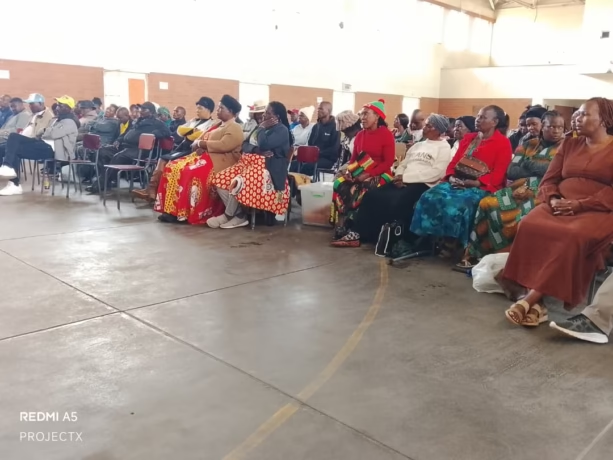


The Speaker of Parliament, Jacob Francis Nzwidamilimo Mudenda, has underscored the centrality of legislative diplomacy in advancing Zimbabwe’s national interests, positioning Parliament as a key actor in shaping the country’s international relations architecture.
Speaking during a Diplomatic Capacity Building Workshop for Members of Parliament, held under the theme “The Role of Parliament in International Relations, Ratification and Domestication of International Agreements and Protocols,” Honourable Advocate Mudenda highlighted the constitutional foundation guiding Zimbabwe’s foreign policy.

Rainbow Hotels — Experience Luxury Across Zimbabwe
Rainbow Hotels continues to redefine hospitality standards in Zimbabwe, offering world-class accommodation, fine dining, and modern conference facilities in Harare, Bulawayo, and Victoria Falls.
Whether for business or leisure, Rainbow Hotels delivers unmatched comfort, exceptional service, and a truly premium guest experience tailored to modern travellers.
Book NowHe drew attention to Section 12 of the Constitution, noting that Zimbabwe’s international engagement is anchored on the promotion and protection of national interests, respect for international law, peaceful coexistence with other nations, and the peaceful resolution of disputes, principles that collectively define the country’s diplomatic posture in an increasingly complex global environment.
The Speaker’s remarks come at a time when Zimbabwe is intensifying its re-engagement efforts and consolidating its position within regional and global frameworks. By emphasizing constitutional provisions, Parliament is being called upon not only to ratify international agreements but also to ensure their effective domestication into national law, thereby bridging global commitments with local implementation.
Honourable Advocate Mudenda further stressed that the State carries a broader obligation to promote regional and Pan African cooperation across cultural, economic, and political spheres. This approach aligns with continental integration agendas and reflects Zimbabwe’s long standing commitment to multilateralism and collective development.
Equally significant is the call for active participation in international and regional organisations, a move that reinforces Zimbabwe’s diplomatic visibility and influence in advancing peace, stability, and socio economic progress. In this regard, Parliament emerges as a strategic institution in strengthening oversight, enhancing accountability, and ensuring that international engagements yield tangible benefits for citizens.
Analytically, the Speaker’s address signals a shift toward a more institutionalised and coordinated foreign policy approach, where legislative processes play a decisive role in shaping international commitments. This is particularly critical in the context of economic diplomacy, where treaties and agreements increasingly influence trade, investment, and development outcomes.
As Zimbabwe advances its development agenda under Vision 2030, the integration of parliamentary diplomacy into national strategy reflects a broader governance evolution, one that seeks to harmonise domestic priorities with global opportunities, while safeguarding sovereignty and national interest.
Ultimately, the emphasis on constitutionalism, cooperation, and strategic engagement positions Parliament as a vital pillar in Zimbabwe’s diplomatic ecosystem, reinforcing the country’s trajectory toward inclusive growth, regional integration, and global relevance.