By Aldridge Dzvene
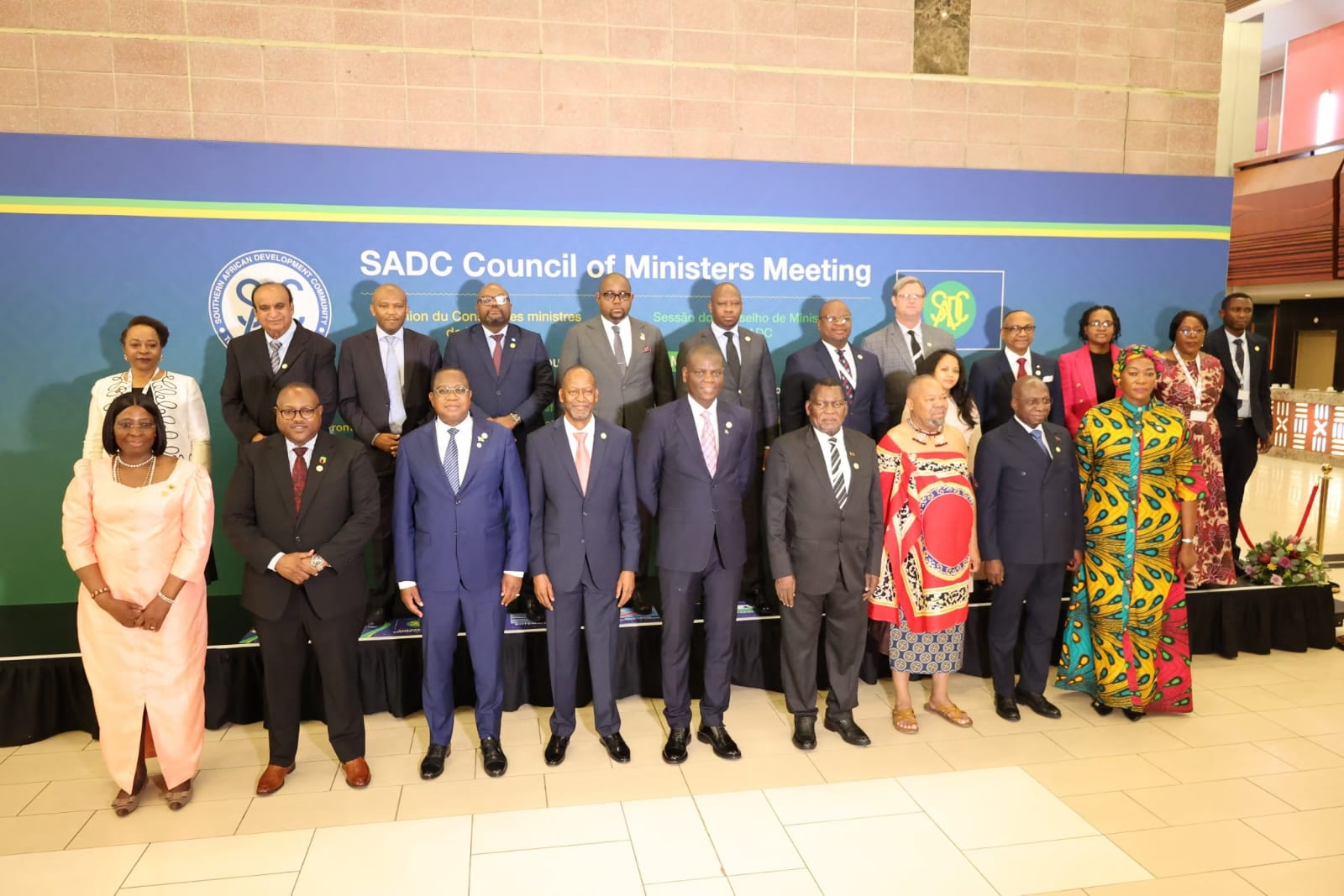
The two-day meeting of the Southern African Development Community (SADC) Council of Ministers commenced today in Pretoria, South Africa, bringing together ministers from across the region to deliberate on key regional development priorities.
The meeting, which runs until 13 March 2026, is being convened under the theme “Advancing Industrialisation, Agricultural Transformation, and Energy Transition for a Resilient SADC,” adopted during the 45th SADC Summit of Heads of State and Government held in Antananarivo, Madagascar in August 2025.
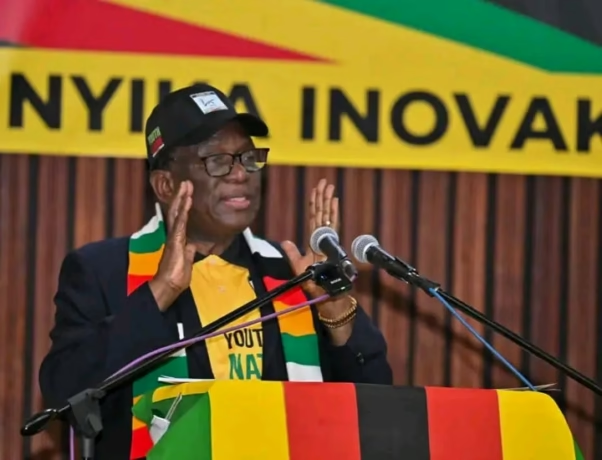
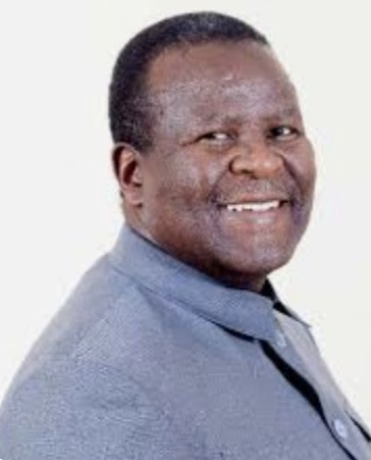
Zimbabwe is being represented at the meeting by the Minister of Finance and Economic Development, Mthuli Ncube, who is standing in for the outgoing Chair of the Council of Ministers, Amon Murwira.
The theme reflects the regional bloc’s commitment to accelerating industrialisation, modernising agriculture and advancing clean energy systems as part of broader efforts to build resilient and self-sustaining economies across Southern Africa.
During the two-day session, ministers will review progress on the implementation of Council and Summit decisions and deliberate on several strategic regional matters. Key issues on the agenda include disaster risk management, the state of regional food and nutrition security, and the operationalisation of the SADC Regional Development Fund.
The meeting will also consider updates on the review of the SADC Industrialisation Strategy and Roadmap (2015–2063) and examine the SADC Secretariat’s Annual Operational Plan and Budget for the 2026–2027 financial year.
The Council of Ministers meeting follows a series of preparatory engagements, including the Standing Committee of Senior Officials and a special meeting of senior officials and experts focusing on the Regional Indicative Strategic Development Plan (RISDP) 2020–2030.
Additional preparatory sessions included the SADC Standing Committee of Senior Officials held from 7 to 8 March 2026 and the Finance Committee meeting on 9 March 2026. The RISDP is a ten-year strategic framework designed to deepen regional integration and guide development priorities across the SADC region. Discussions held between 4 and 10 March helped prepare the draft agenda and reports for the Council’s consideration.
The Council of Ministers is responsible for overseeing the implementation of SADC policies and programmes and ensuring that decisions made by the regional body are effectively carried out. It comprises ministers from all 16 SADC member states, typically drawn from portfolios responsible for foreign affairs, economic planning, finance or trade.
South Africa is currently serving as the interim Chair of SADC, a role it assumed in November 2025. The country will hold the position until August 2026, when it is expected to formally assume the full Chairship of the regional bloc at the next SADC Summit, which will also be hosted in South Africa.
Regional leaders have emphasised that the current policy direction is critical to strengthening economic resilience, enhancing food security and accelerating industrial transformation across Southern Africa.