HARARE, Zimbabwe is increasingly turning to modern technologies and innovative farming models to strengthen climate resilient agrifood systems, with Government now harnessing Artificial Intelligence, conservation agriculture and data driven crop planning to support sustainable agricultural transformation.
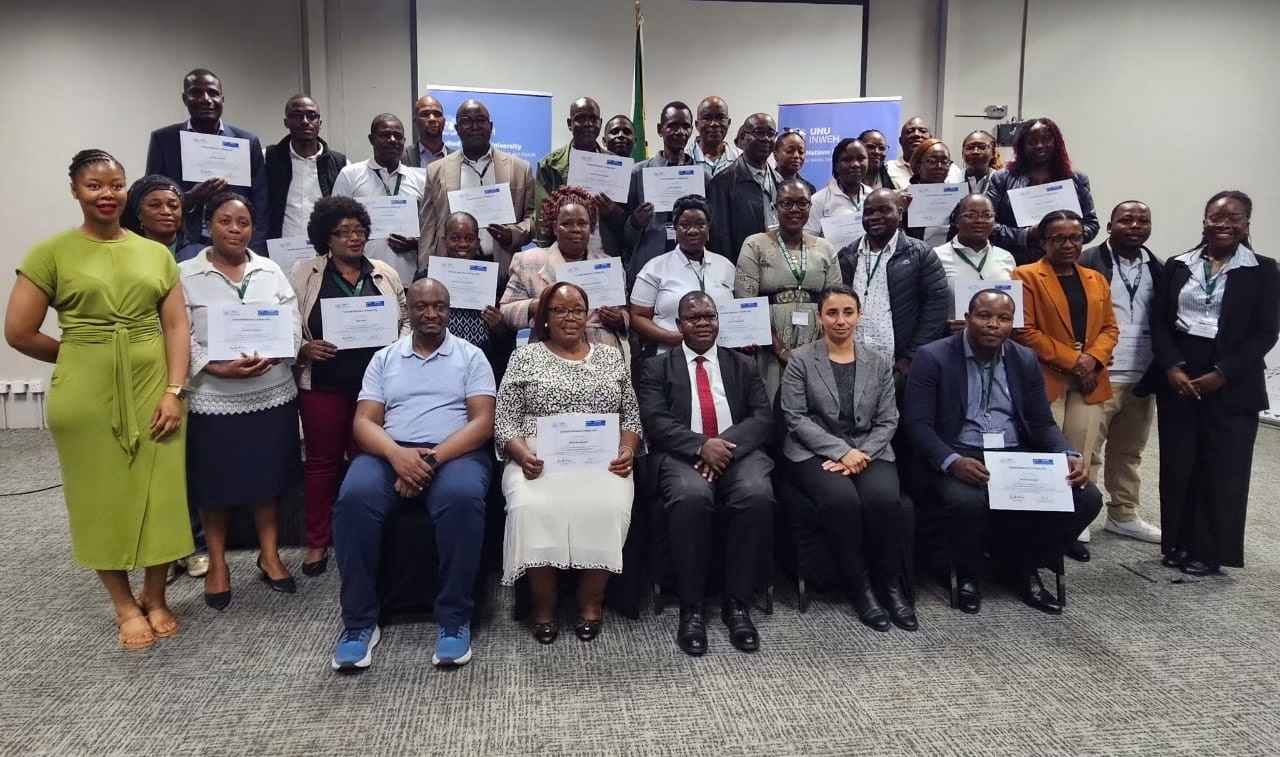
Speaking at a Science Policy Dialogue in Harare, the Permanent Secretary in the Ministry of Lands, Agriculture, Fisheries, Water and Rural Development, Obert Jiri, emphasized that integrating technology with traditional farming knowledge is becoming essential in addressing climate related challenges affecting agriculture.
Professor Jiri said the adoption of Artificial Intelligence powered data systems will help generate scientific evidence that can guide policy formulation, strengthen agricultural planning and improve farmers’ ability to adapt to climate variability.
He noted that climate change has increasingly affected rainfall patterns, crop productivity and food security across the region, making it necessary for policymakers to rely on data driven solutions that enhance resilience within the agricultural sector.
Central to Zimbabwe’s agricultural adaptation strategy is Pfumvudza Conservation Agriculture Programme, a climate smart farming approach that promotes small plot intensive farming, minimum soil disturbance and improved water retention techniques. The programme has been widely adopted by smallholder farmers as part of Government efforts to increase productivity while conserving natural resources.
By integrating Artificial Intelligence with Pfumvudza and other climate smart agricultural practices, Zimbabwe aims to strengthen crop planning through predictive analytics that can anticipate weather patterns, optimise planting schedules and improve yield outcomes.
Professor Jiri said the Science Policy Dialogue provided an important platform for researchers, policymakers and agricultural stakeholders to exchange knowledge and explore innovative solutions that link scientific research with practical farming interventions.
He highlighted that the use of AI driven evidence will not only support informed decision making at policy level but will also empower farmers with tools that enhance resilience, productivity and sustainability within the agricultural sector.
The integration of digital technologies into agriculture is also expected to contribute to improved rural livelihoods, particularly among smallholder farmers who form the backbone of Zimbabwe’s food production systems.
As climate pressures continue to intensify globally, Zimbabwe’s adoption of technology driven agricultural strategies reflects a growing recognition that sustainable food systems will increasingly depend on innovation, research collaboration and data informed policy frameworks.