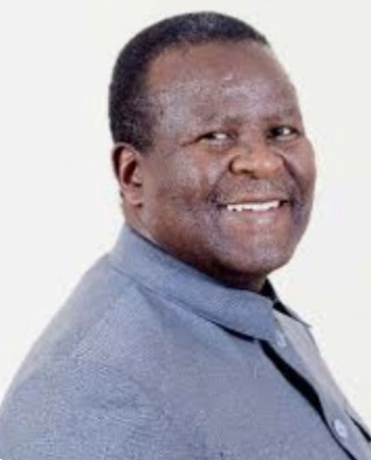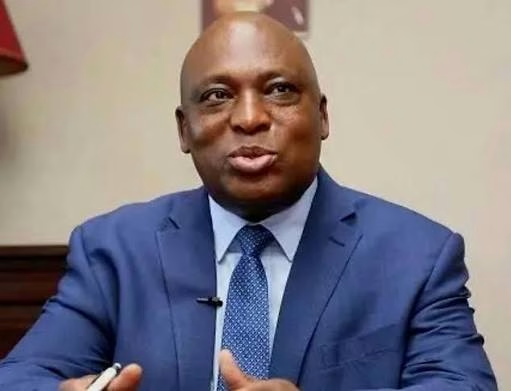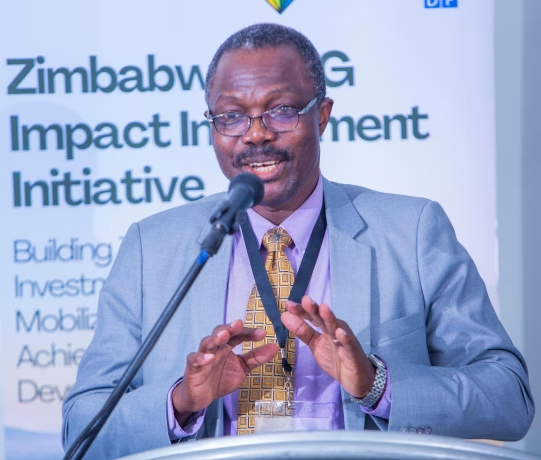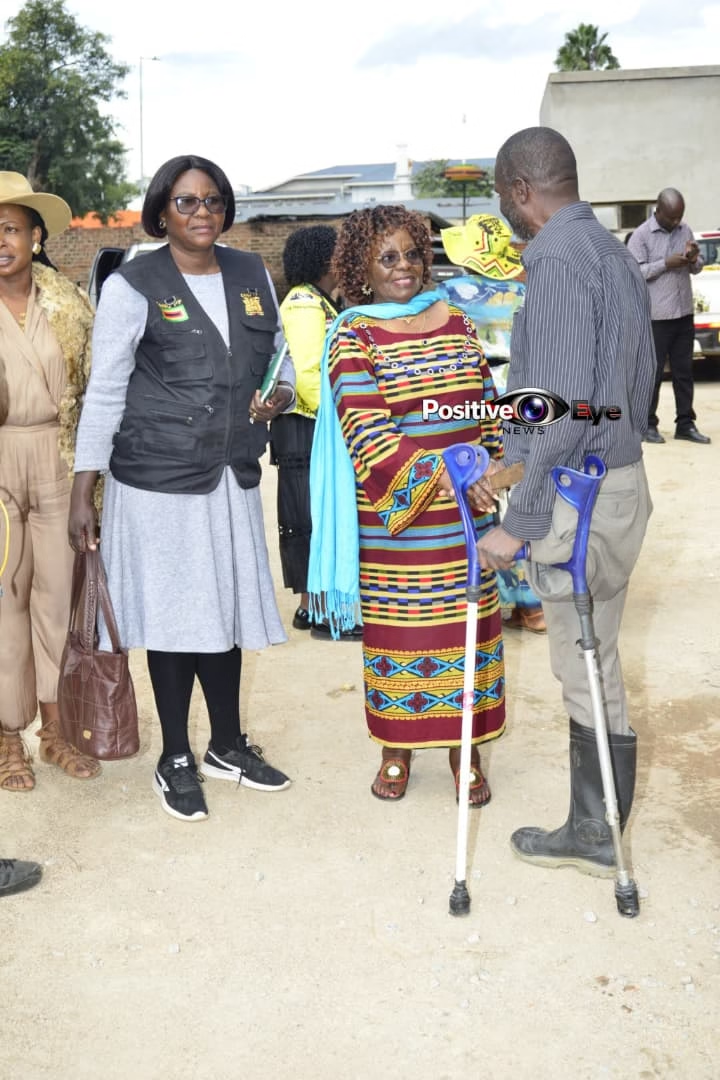
HARARE — Charles Tawengwa, Honourable Minister of State for Provincial Affairs and Devolution for Harare Metropolitan Province, has emphasized the importance of strengthening disability responses within Zimbabwe’s education system to ensure that the Heritage-Based Curriculum benefits every learner.
Addressing stakeholders on the subject of disability responses in schools, the Honourable Minister highlighted that inclusive education remains central to Zimbabwe’s national development agenda and social justice framework. He noted that education must serve every learner regardless of their physical, sensory, intellectual, or developmental condition.
Zimbabwe introduced the Heritage-Based Curriculum as part of broader education reforms aimed at grounding learning in the country’s culture, history, indigenous knowledge systems, and national development priorities. The curriculum seeks to produce learners who possess practical skills, values, and attitudes that contribute to national identity and economic development.
However, the Honourable Minister emphasized that the success of any curriculum depends on how effectively it responds to diversity within the classroom. Learners with disabilities must not only be accommodated but must be empowered to participate fully in the education system.
Zimbabwe already has several legal and policy frameworks that support inclusive education. The Education Act of 1987, amended in 1996 and 2006, guarantees every child the right to education at the nearest school without discrimination. In addition, government policy through Permanent Secretary Circular P36 of 1990 provides guidelines for inclusive education, enabling children with varying degrees of disability to receive support within ordinary schools through special classes, resource units, and specialized institutions.
Furthermore, Article 22 of the Constitution of Zimbabwe obliges all institutions and agencies of government to recognize the rights of persons with physical or mental disabilities and assist them to realize their full potential.
Under the amended Education Act of 2019, schools are also required to ensure that infrastructure and learning environments accommodate students with disabilities. Educational institutions are therefore expected to provide facilities such as ramps, accessible classrooms, and other supportive infrastructure that allows learners with disabilities to participate effectively in academic activities.
The Honourable Minister explained that disability in schools may include visual impairment, hearing impairment, physical disabilities, learning disabilities, autism, and other developmental conditions. Despite policy progress, learners with disabilities often encounter barriers such as limited assistive learning materials, inaccessible infrastructure, and insufficiently trained teachers.
To address these challenges, schools implementing the Heritage-Based Curriculum must adopt inclusive teaching approaches. These include differentiated instruction, the use of visual aids and practical demonstrations, flexible assessment methods, and peer-supported group learning. Such teaching methods ensure that learners with disabilities remain actively engaged in classroom activities.
Equally important is the provision of assistive learning materials such as Braille textbooks, large print resources, hearing aids, and audio learning materials. These tools help remove barriers to learning and ensure that learners with disabilities receive equal educational opportunities.
The Honourable Minister also emphasized the importance of teacher training in special needs education. Teachers remain at the centre of inclusive education, and continuous professional development is necessary to equip educators with skills to support learners with diverse needs. Zimbabwe’s universities and teacher training colleges are increasingly offering programmes in special needs education, focusing on intellectual disabilities, behavioural challenges, emotional disorders, and inclusive instructional strategies.
Community and parental involvement were also identified as critical elements of inclusive education. Families, schools, and communities must work together to identify learners’ needs and provide both academic and emotional support. Increased community awareness can also help reduce stigma and discrimination against learners with disabilities.
Despite progress, the Honourable Minister acknowledged that challenges remain. These include limited funding for assistive technologies, shortages of trained special needs educators, inadequate infrastructure in rural schools, and limited awareness about inclusive education.
Moving forward, the Government of Zimbabwe continues to prioritise inclusive education through increased investment in learning infrastructure, training of special needs teachers, expansion of assistive technologies in schools, and strengthening policies that protect the rights of learners with disabilities.
The Honourable Minister concluded that disability responses are essential for achieving a truly inclusive education system. The Heritage-Based Curriculum presents a unique opportunity to build an education system that celebrates Zimbabwe’s heritage while embracing diversity and ensuring equal opportunities for all learners.
Education, he said, must never leave anyone behind.