By Aldridge Dzvene
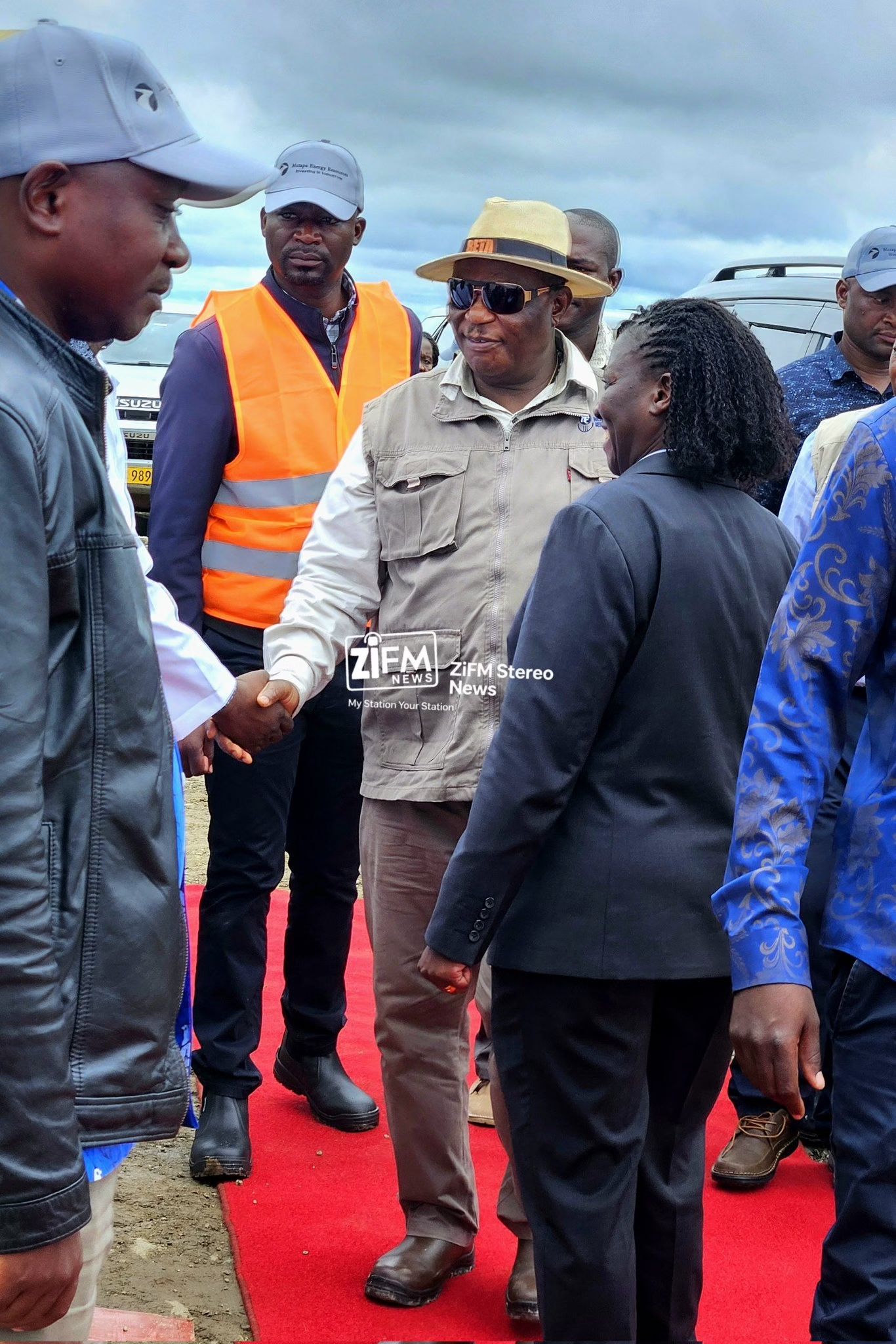
HARARE — Vice President Dr Constantino Chiwenga’s tour of key lithium operations in Zvishavane and Mberengwa on 4 March underscores a pivotal moment in Zimbabwe’s strategy to convert its mineral wealth into industrial value, even as debates over export bans, sector governance and local beneficiation intensify.
VP Chiwenga’s first stop was Zhe Li Mining Investments’ new lithium processing facility in Zvishavane, where the government’s policy of banning raw ore exports is already reshaping how the industry operates. He later proceeded to Sandawana Mines in Mberengwa — a former emerald hub transformed into a lithium centre under the Mutapa Investment Fund’s stewardship.
The tour came against the backdrop of a recent indefinite ban on the export of all raw minerals and lithium concentrates, moved forward from its original 2027 schedule. Officials said the accelerated timeline was triggered by mining companies’ rush to extract and ship ore before the ban took effect, a practice the government has described as undermining long‑term industrial objectives.
For VP Chiwenga and other policymakers, the ban is more than a supply control measure — it is part of a broader economic logic to retain greater value within Zimbabwe. This includes requiring that minerals be declared in full and processed locally, with lithium ore upgraded to battery‑grade purity suitable for high‑tech applications.
Lithium’s global importance has surged with growing demand for electric vehicle batteries and renewable energy storage, making it a linchpin in the country’s value‑addition strategy. Zimbabwe currently accounts for a significant share of global supply and, before the ban, exported large volumes primarily to buyers in Asia.
The government’s approach reflects a deliberate shift from an extractive model to one focused on downstream beneficiation and industrial participation. VP Chiwenga stressed that value‑addition is not intended to punish miners but to build a stronger domestic industry that supports job creation, infrastructure development and skills transfer in mining communities.
At Sandawana, where the state‑linked Mutapa Investment Fund is advancing lithium projects with Chinese partners, the focus is on expanding processing capacity and attracting further investment in refined outputs that can feed into global battery supply chains.
For now, VP Chiwenga’s engagements signal a government determined to align mineral exploitation with national industrial goals. As Zimbabwe pushes for higher levels of value addition, the lithium sector stands at the centre of efforts to marry natural resource wealth with upstream manufacturing, global supply‑chain relevance and sustained economic growth.