

By Aldridge Dzvene
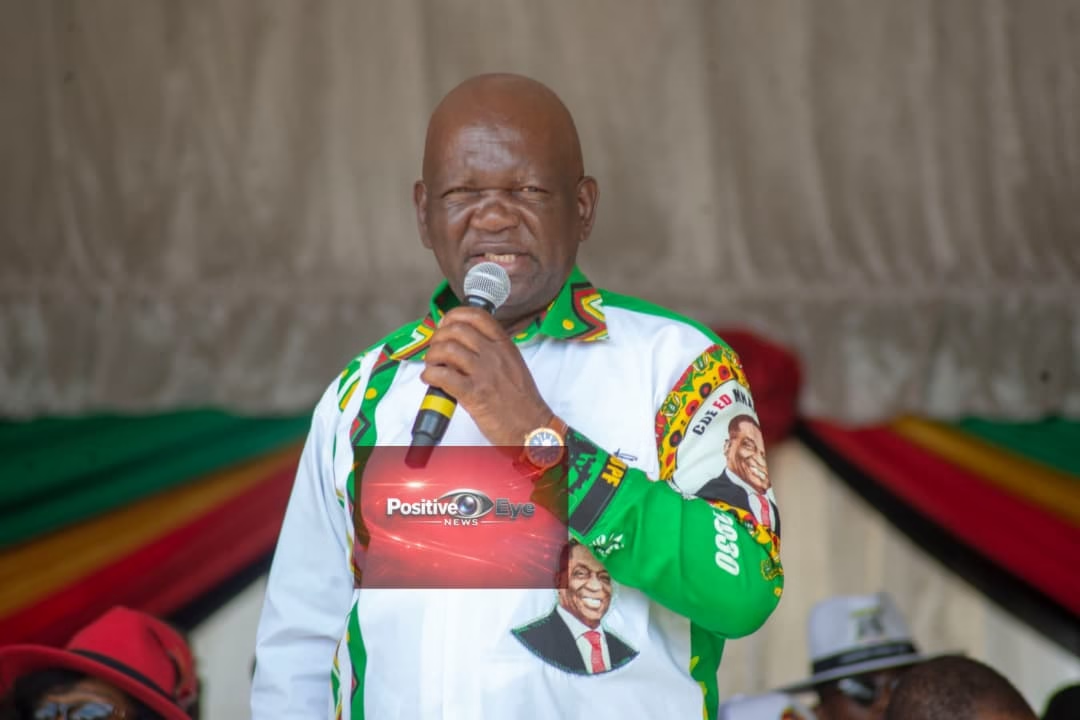
HARARE – While Constitutional Amendment Bill Number Three dominates public and political discourse in Zimbabwe, issues around voter roll management, extended electoral cycles, and other proposed amendments are emerging as equally critical talking points, according to Godwills Masimirembwa, ZANU-PF Harare Provincial Chairman.

Rainbow Hotels — Experience Luxury Across Zimbabwe
Rainbow Hotels continues to redefine hospitality standards in Zimbabwe, offering world-class accommodation, fine dining, and modern conference facilities in Harare, Bulawayo, and Victoria Falls.
Whether for business or leisure, Rainbow Hotels delivers unmatched comfort, exceptional service, and a truly premium guest experience tailored to modern travellers.
Book NowSpeaking to members of the media after a Provincial Coordinating Committee (PCC) meeting, Masimirembwa highlighted that the party is now organising inter-district meetings to engage communities directly on the amendment bill, which seeks to extend the tenure of President Emmerson Dambudzo Mnangagwa beyond 2028.
“The people’s resolution has been answered. Parliament has provided the legal framework, but citizens have the final say during public hearings,” Masimirembwa said, emphasising that the consultation process is central to democratic participation.
However, the proposed constitutional changes go beyond the presidency. Key areas attracting debate include the management of the voters’ roll, which Masimirembwa argued should be under the office of the Registrar-General to ensure accuracy, particularly regarding births and deaths. “The registrar knows when I was born and when I die; this ensures integrity in the electoral process,” he said, pointing to persistent concerns about voter fraud.
Other amendments also under discussion include adjustments to parliamentary procedures, the framework for judicial appointments, and restoring political participation rights for traditional leaders, all of which Masimirembwa described as progressive and supportive of long-term governance stability.
Analysts say the proposal to extend the electoral cycle to seven years is designed to reduce the perpetual political campaigning that has, according to Masimirembwa, disrupted developmental focus in previous administrations. “Some candidates are already campaigning to disturb sitting MPs. The longer cycle allows governments to concentrate on national development rather than being consumed by elections,” he said.
The PCC meeting signals a strategic push by ZANU-PF to consolidate public understanding of the bill while managing the narrative around associated governance issues, including electoral integrity and institutional reforms. Masimirembwa urged citizens to actively participate in public hearings to influence the outcome, underlining that the people’s voice remains decisive in shaping Zimbabwe’s constitutional and political landscape.
With inter-district engagements set to roll out across Harare Province, the conversation is poised to move from legislative text to practical implications for governance, electoral credibility, and national development.


