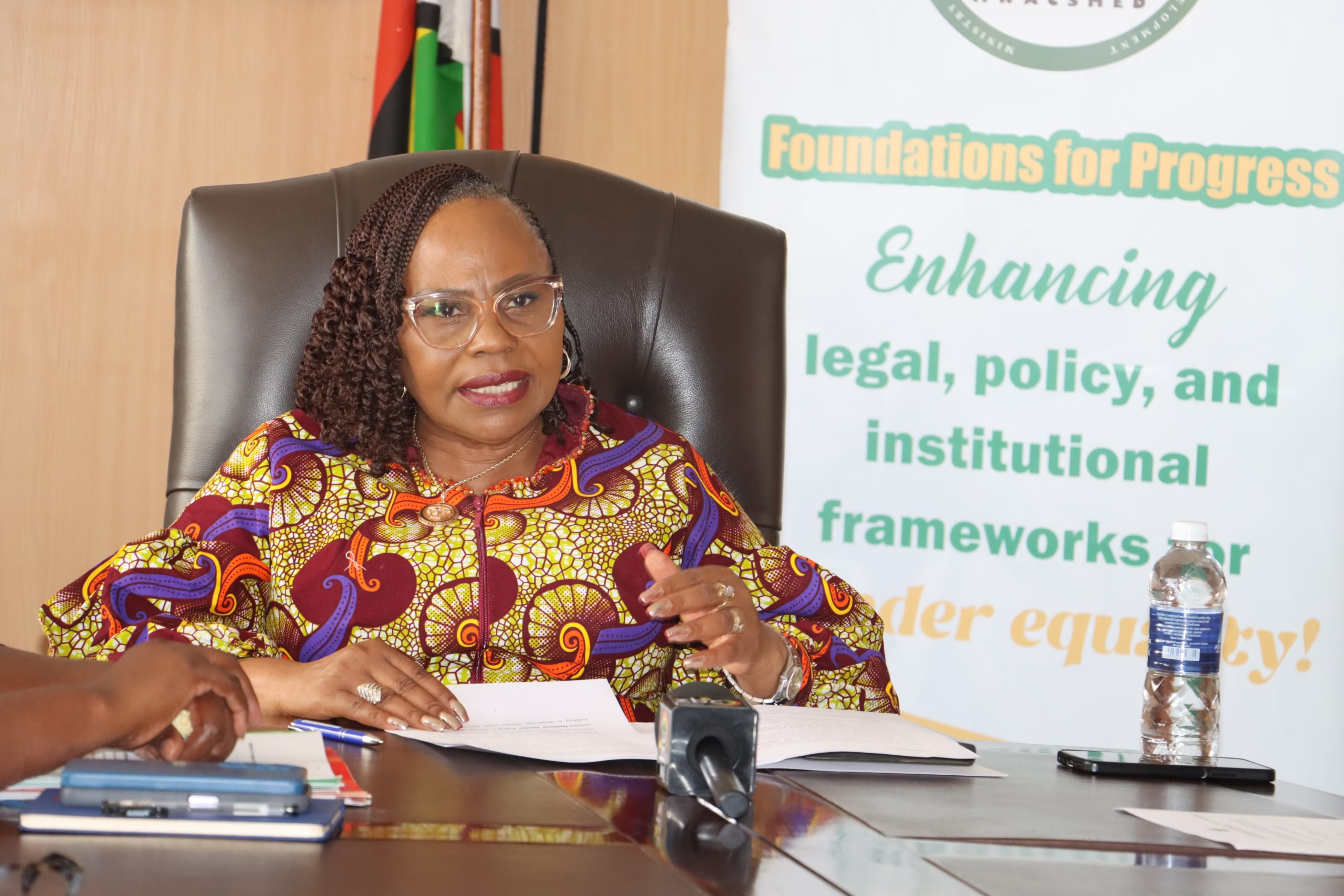
Harare – Zimbabwe joined the global community on 4 March 2026 to commemorate International Women’s Day (IWD) at Chipadze High School in Bindura District, Mashonaland Central Province, under the transformative theme: “Rights. Justice. Action. For All Women and Girls.”
Speaking at the national launch, the Honorable Minister of Women Affairs, Community, Small and Medium Enterprises Development, Sen. M. Mutsvangwa, emphasized that the observance is not merely symbolic but a call to action to dismantle socio-economic and structural barriers hindering women’s full participation in society. Anchored in Sections 17 and 56 of the 2013 Constitution, which guarantee gender equality, the Minister highlighted that empowering women is both a moral and economic imperative in Zimbabwe, where women constitute 52 percent of the population.
According to the Minister, Zimbabwean women form the backbone of the economy, driving food security through agriculture, sustaining households, and fostering national resilience amidst global economic challenges. Beyond domestic and agricultural roles, women are increasingly assuming leadership positions across local committees, ward development councils, and traditional governance structures, contributing to accountability, inclusive decision-making, and social progress.
The Government has put in place concrete mechanisms to translate policy into measurable outcomes. Key initiatives include the Women’s Development Fund, the Zimbabwe Community Development Fund, the Zimbabwe Women’s Microfinance Bank, and the Small and Medium Enterprises Development Corporation. These instruments provide affordable capital to women-led enterprises, catalyzing entrepreneurship and economic inclusion.
Further, the updated National Gender Policy promotes capacity-building in leadership, climate-smart agriculture, and digital empowerment, ensuring women have access to markets, technology, and critical information. The Minister noted, however, that challenges remain, including land ownership constraints, the unequal burden of unpaid care work, and vulnerability to climate shocks, which continue to hinder women’s potential.
In her address, Sen. Mutsvangwa called for a sustained, evidence-based commitment to women’s empowerment, outlining three pillars for action: rights for all women and girls, justice delivered for survivors of inequality and violence, and action to ensure economic and social empowerment across all communities.
“The ripple effect of empowering women extends beyond households to the economy and the very fabric of our nation,” she said, urging Zimbabweans to collectively forge a society where every woman can claim her rights, exercise justice, and lead with unyielding action.
The launch underscores the government’s commitment to transforming gender equality from policy into tangible progress, recognizing women not only as beneficiaries of empowerment but as key architects of Zimbabwe’s sustainable development.