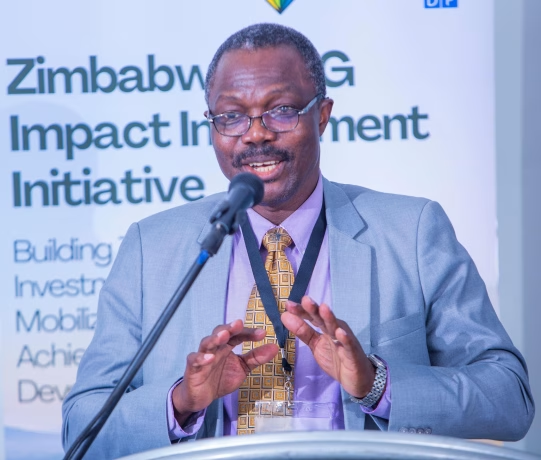
Zimbabwe has intensified its fight against cancer by dispatching a high-level government delegation to Kenya to benchmark best practices in cancer prevention, treatment, and governance, as the country confronts a growing public health challenge that continues to strain health systems across the developing world.
The delegation was led by the Permanent Secretary in the Office of Vice President Kembo Mohadi, reflecting the strategic importance attached to strengthening cancer management at the highest levels of government. The visit provided Zimbabwean officials with critical insights into Kenya’s institutional frameworks for cancer governance, health financing mechanisms, research coordination, and the integration of digital health solutions into oncology care.
Discussions and site engagements focused on key pillars of effective cancer control, including radiation regulation, access to medicines and medical technologies, health workforce development, supply chain efficiency, and the maintenance of specialised oncology equipment. These areas remain central to improving early detection, treatment outcomes, and long-term patient care in Zimbabwe.
Officials indicated that lessons drawn from Kenya’s model will directly inform Zimbabwe’s efforts to enhance research and development capacity, mobilise sustainable cancer financing, and realign institutions involved in cancer prevention and treatment. The benchmarking exercise is also expected to guide reforms aimed at strengthening regulatory oversight and improving coordination across the health sector.
The initiative is firmly aligned with Zimbabwe’s National Development Strategy 2, which prioritises social development and universal access to quality health services. Under the leadership of President Emmerson Dambudzo Mnangagwa, the government has committed to confronting non-communicable diseases such as cancer through proactive, resilient, and evidence-based interventions.
Beyond domestic reform, the benchmarking visit is expected to deepen bilateral cooperation between Zimbabwe and Kenya, particularly through the twinning of oncology institutions, joint research initiatives, and shared capacity-building programmes. Such collaboration is seen as critical in addressing skills gaps, improving service delivery, and accelerating the adoption of modern cancer treatment technologies.
As cancer cases continue to rise, the government has reaffirmed its determination to leave no stone unturned in safeguarding public health. By learning from regional peers and strengthening institutional capacity, Zimbabwe aims to build a more robust, equitable, and responsive cancer management system that improves health outcomes and enhances the well-being of its citizens.