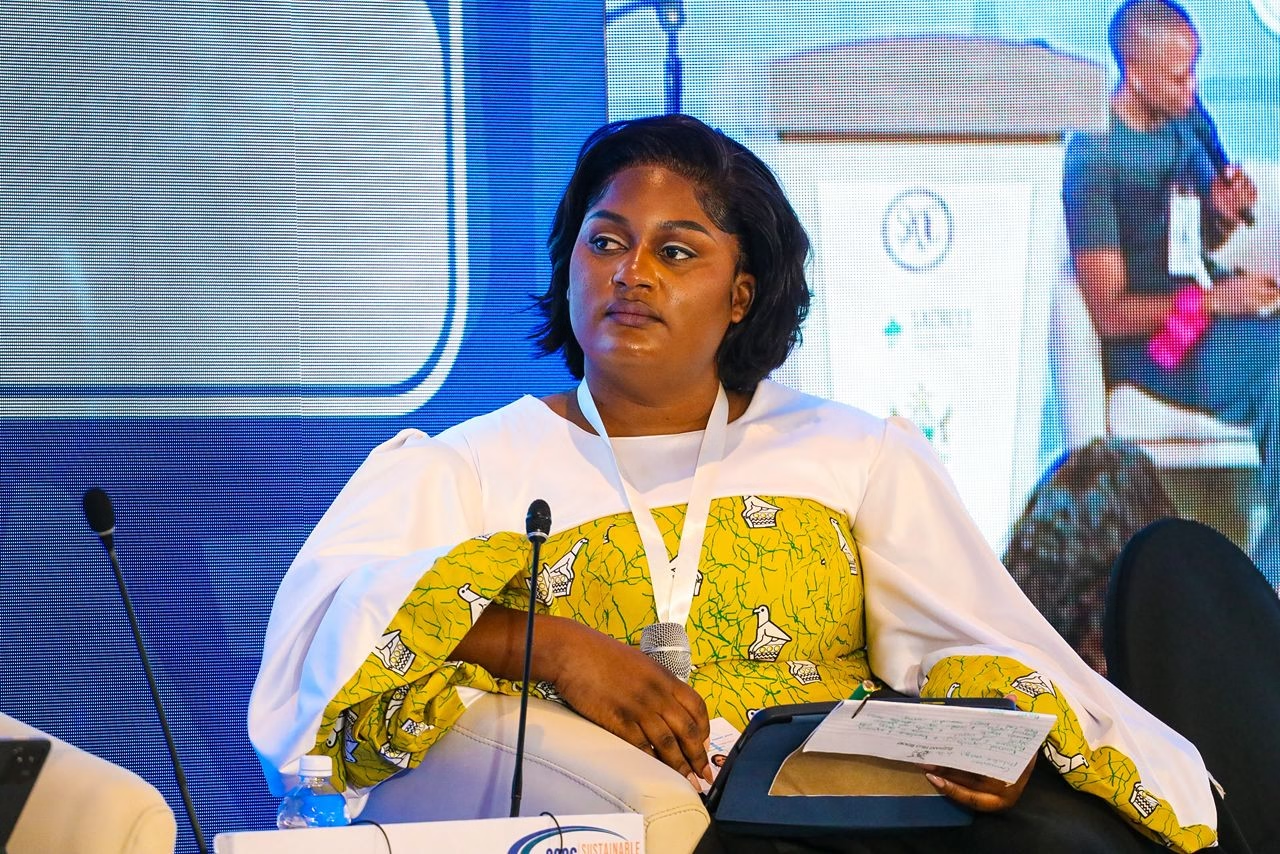
Ambassador Apphia Nyasha Musavengana, Vice President of Iconic Africa Summit & Honors and founder of Concord For Young Women in Business, has outlined a compelling case for the structural transformation of women-led clean energy initiatives into scalable, investment-ready enterprises across the Southern African region.
She made the remarks during a panel discussion held under the banner Driving Regional Economic Growth through Clean Energy and Energy Efficiency at the SADC Sustainable Energy Week 2026, a high-level platform convened to advance inclusive energy solutions and regional economic integration within the Southern African Development Community.
Ambassador Musavengana said the clean energy transition in Southern Africa is increasingly being driven by young women who are moving beyond informal participation into technical, entrepreneurial, and leadership roles. Drawing on practical examples from Zimbabwe, she highlighted how women supported through programmes implemented by the United Nations Development Programme in districts such as Chipinge and Chimanimani have been trained in installation, maintenance, customer education, and after-sales services, enabling them to build sustainable livelihoods while expanding access to modern energy solutions.
She noted that the shift from informal activity to scalable enterprise is closely linked to policy alignment and institutional inclusion. Zimbabwe’s 2025 ruling party manifesto, she explained, deliberately prioritised women and youth not only as participants but as decision-makers within the energy sector. This policy approach has resulted in young people and women being appointed to regulatory bodies such as the Zimbabwe Energy Regulatory Authority, while also opening pathways for young women to be employed as electricians and technical personnel within the Zimbabwe Electricity Supply Authority.
According to Musavengana, this institutional representation has had a significant knock-on effect at community and enterprise level, particularly within clean cooking, LPG distribution, and small-scale fuel-related businesses. She observed that many young women were previously reluctant to enter the energy sector due to safety concerns and entrenched gender norms, but targeted training, mentorship, and regulatory support have lowered entry barriers and encouraged formalisation, especially in urban centres such as Harare and Bulawayo.
She further highlighted emerging rural innovations where young entrepreneurs are converting agricultural waste into clean energy products and organic fertiliser, describing these initiatives as powerful examples of how climate solutions can simultaneously address unemployment, environmental degradation, and income generation. Businesses rooted in local value chains, she argued, are more resilient and better positioned to survive beyond donor-funded project cycles.
Addressing concerns around sustainability once grant funding ends, Ambassador Musavengana cautioned against long-term dependency on external support. She stressed that grants should function as catalytic capital that enables enterprises to transition toward blended finance models incorporating community savings mechanisms such as mikando, cooperative financing structures, revolving funds, and eventual private-sector investment.
She also commended Zimbabwe’s inter-ministerial collaboration, particularly the role of the Ministry of Women in establishing rural energy hubs that have reduced reliance on firewood, created employment opportunities, and empowered women with practical, market-relevant skills. These interventions, she said, demonstrate how coordinated government action can anchor women-led energy enterprises within local economies.
Speaking from her leadership role, Musavengana called for regional platforms to systematically scale proven models across SADC member states. She argued that young women must be positioned not merely as beneficiaries of energy programmes but as innovators, entrepreneurs, and decision-makers driving Africa’s clean energy future.
“When young women are equipped with the right skills, access to finance, and real market opportunities, they do not simply participate in the energy transition,” she said. “They lead it.”
Her contribution at the 2026 SADC Sustainable Energy Week reinforced growing regional consensus that women-led clean energy enterprises are no longer peripheral development projects, but central pillars for inclusive economic growth, energy security, and sustainable industrialisation in Southern Africa.