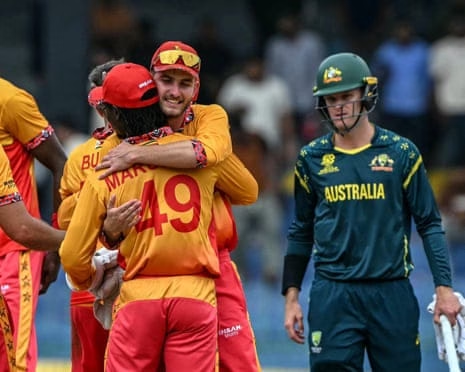
Zimbabwe delivered one of the most analytically impressive performances of the tournament with a controlled, phase-by-phase victory over Australia at the ICC Men’s T20 World Cup, underlining how structure, discipline, and role clarity can outweigh rankings and reputation in modern T20 cricket.
Coming into the Group B contest ranked 11th against the second-ranked side, the Zimbabwe national cricket team did not play like underdogs. From the first over to the final wicket, they dictated tempo and match direction at R Premadasa Stadium, turning what many expected to be a routine result into a strategic statement.
The match pivoted early through new ball efficiency. Opening bowlers Blessing Muzarabani and Brad Evans dismantled the Australian top order with precision rather than pace alone. Their lengths were disciplined, their seam positioning consistent, and their lines forced high-risk responses. Early wicket clusters in T20 cricket correlate strongly with chase failure, and Zimbabwe executed that script perfectly. Muzarabani’s return of 4 for 17 was not just productive, it was phase-defining, removing scoring engines before they could settle.
Although the Australia national cricket team attempted a structural rebuild through a 77-run fifth-wicket stand between Glenn Maxwell and Matt Renshaw, the partnership exposed another Zimbabwe strength, patience under pressure. Instead of chasing desperation wickets, Zimbabwe rotated bowling options and protected boundary zones. The turning point came when part-time leg spinner Ryan Burl removed Maxwell for 31, inducing a drag-on that collapsed Australia’s counterattack window. From 106 for 4 to 146 all out, the fall was swift and terminal.
Australia’s instability was compounded by squad disruption. The absence of captain Mitchell Marsh, along with frontline quicks Pat Cummins and Josh Hazlewood, reduced bowling control and lower order resilience. An in-game injury scare to Marcus Stoinis further disrupted balance, while returning power hitter Tim David fell for a two-ball duck, highlighting execution gaps under pressure.
Zimbabwe’s batting template was equally instructive. Opener Brian Bennett produced an unbeaten 64 off 56 balls built on controlled aggression and ground stroke efficiency rather than aerial risk. Boundary placement over brute force defined his method, reflected in seven fours and minimal false shots. It marked his 10th T20 international half century and showcased maturity beyond his 22 years.
Partnership analytics tell the deeper story. Bennett and Burl added 70 for the second wicket, a Zimbabwe record stand at T20 World Cups, after an opening partnership of 61 with Tadiwanashe Marumani. Two stable partnerships in a T20 innings dramatically increase projected totals because they preserve wicket capital for late acceleration. Zimbabwe converted that platform into a competitive score without a late collapse, a trait typical of elite T20 sides.
Equally notable was the psychological dimension. Crowd scenes featuring Zimbabwe supporters celebrating with traditional dance reflected more than joy, they signaled belief transfer from team to fans and back again. In tournament environments, emotional momentum can reinforce tactical discipline rather than disrupt it when teams feel in control.
From a development lens, this result suggests Zimbabwe are evolving from upset specialists into process driven competitors. Their bowling plans were layered, their batting sequencing intentional, and their field settings data aware. That combination reduces randomness and increases repeatability.
In group stage economics, such a win does more than add points. It forces future opponents to reassess risk models, respect Zimbabwe’s powerplay threat, and plan for their middle-overs squeeze. Rankings said mismatch. Match evidence said method.