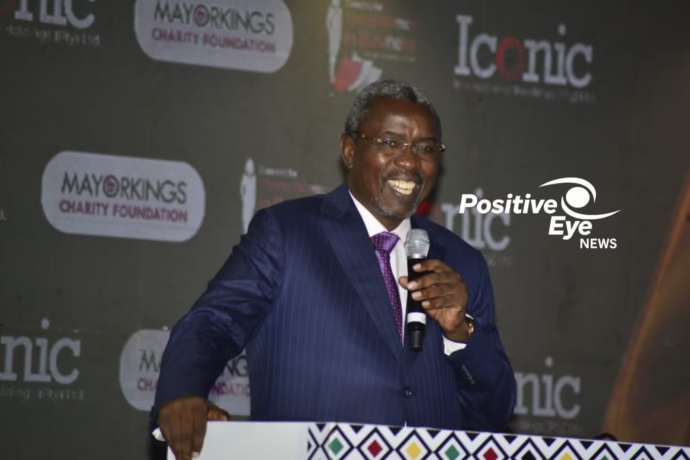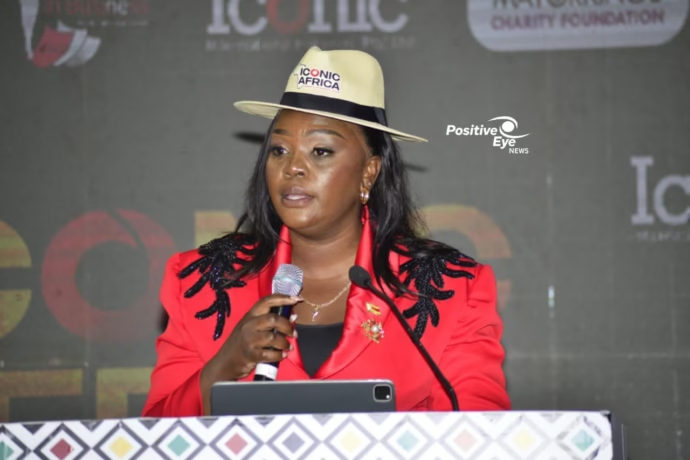

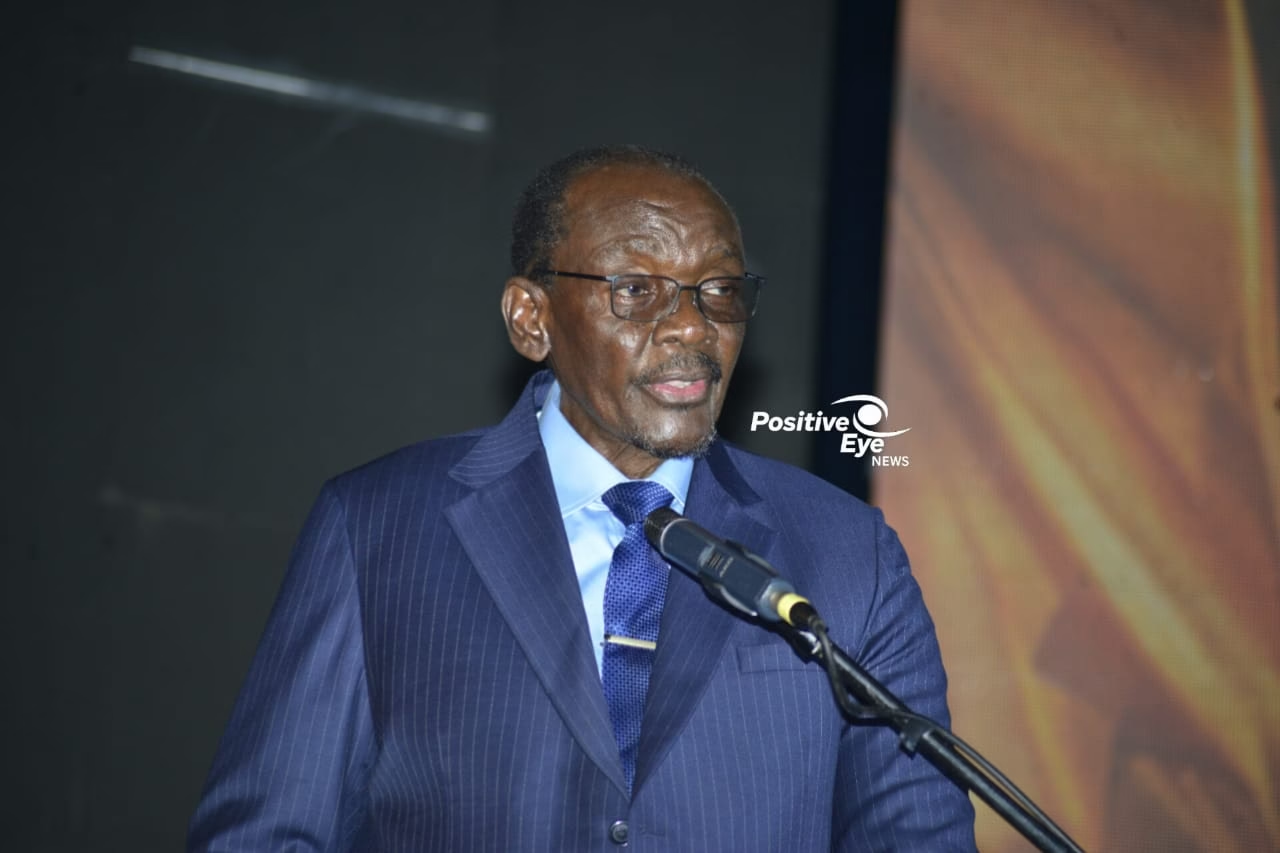
A defining and forward shaping moment for continental dialogue and leadership vision unfolded at the Iconic Africa Summit & Honors 2026 where Vice President of the Republic of Zimbabwe, Kembo Mohadi, delivered a comprehensive and statesmanlike address that strongly positioned Africa as a continent of agency, capacity and accelerating opportunity. Speaking as Guest of Honour, Vice President Mohadi did not merely deliver ceremonial remarks, but presented a layered and policy aligned vision that connected continental aspirations with practical development pathways, regional cooperation and inclusive economic participation.
From the outset, Vice President Mohadi framed the summit as more than an event of recognition and celebration, but as a continental mirror and strategic platform, where Africa evaluates its journey, corrects its narrative and projects its future with confidence. His articulation of The Africa We Want was grounded in self determination, productivity and resilience, emphasizing that Africa must be understood not through inherited stereotypes of crisis, but through measurable progress, innovation capacity, demographic strength and resource potential. The tone of the address reflected growing continental thought leadership that encourages African solutions to African challenges, supported by global partnerships that respect sovereignty and mutual benefit.

Rainbow Hotels — Experience Luxury Across Zimbabwe
Rainbow Hotels continues to redefine hospitality standards in Zimbabwe, offering world-class accommodation, fine dining, and modern conference facilities in Harare, Bulawayo, and Victoria Falls.
Whether for business or leisure, Rainbow Hotels delivers unmatched comfort, exceptional service, and a truly premium guest experience tailored to modern travellers.
Book NowIn a deeply analytical segment of the address, Vice President Mohadi underscored that narrative power matters in development. He stressed that how Africa defines itself influences investment flows, policy confidence and youth ambition. By repositioning the continent as solution oriented and opportunity rich, he reinforced a mindset shift that aligns with long term continental frameworks such as African Union Agenda 2063, which calls for industrialisation, integration, innovation and people centered growth. His remarks suggested that mindset transformation is not abstract, but directly linked to economic performance, governance reform and social progress.
A central pillar of the Vice President’s address was the strategic importance of women’s empowerment. He presented gender inclusion not as a symbolic commitment or social courtesy, but as an economic multiplier and governance strength factor. Vice President Mohadi made it clear that no nation and no continent can achieve sustainable development while sidelining women from leadership, finance, science, entrepreneurship and decision making spaces. He highlighted Zimbabwe’s progress under the Second Republic, noting the increasing presence of women in senior government roles, diplomatic missions, academic leadership and corporate structures. This expansion of participation, he indicated, is unlocking the productive power of half the population and strengthening institutional outcomes.
The analytical weight of this position is significant, because global and regional development data consistently shows that when women participate fully in economies, productivity rises, household welfare improves and governance accountability deepens. By embedding women’s empowerment within national and continental development logic, Vice President Mohadi elevated the discussion from advocacy to strategy, from representation to measurable growth impact.
Vice President Mohadi also placed strong emphasis on regional integration and cross border collaboration as non negotiable foundations for Africa’s future success. He stressed that Africa cannot industrialise or compete globally through isolated national efforts. Instead, he pointed to expanding cooperation with regional partners including Eswatini, Malawi and South Africa across sectors such as energy, agriculture, infrastructure development, tourism corridors and trade systems. These examples illustrated a working model of regionalism where policy coordination produces tangible benefits, including market access, production scale and shared infrastructure efficiency.
By linking continental ambition with Zimbabwe’s national development drive toward upper middle income status, the Vice President demonstrated how long term vision is being translated into sector based action. He outlined progress trajectories in energy security, agricultural modernization, infrastructure rehabilitation, value addition and industrial expansion. This alignment between continental frameworks and domestic policy execution reflects a governance approach that treats vision statements as operational guides rather than symbolic documents.
Investment openness and partnership readiness formed another major theme in the address. Vice President Mohadi reaffirmed Zimbabwe’s commitment to being open to trade, innovation and mutually beneficial partnerships. He positioned the country as an emerging node of regional growth, supported by policy reforms, infrastructure development and human capital advancement. Importantly, he tied investment attractiveness to national values, highlighting unity, hard work and patriotism as social drivers that support economic transformation. This linkage between civic culture and economic progress presented development as a shared national project rather than a government only responsibility.
The address also carried a strong youth and future orientation message, consistent with the summit’s broader recognition platform. Vice President Mohadi emphasized that Africa’s demographic strength must be converted into productive capacity through skills development, entrepreneurship support, technology adoption and innovation ecosystems. He suggested that platforms that recognize excellence and leadership play a catalytic role by creating visible role models and encouraging performance culture across sectors.
In closing, Vice President Mohadi delivered a call that was both inspirational and operational, urging Africa to answer history with courage, unity and disciplined execution. He called for a continent that is industrialised, innovative, people centered and confident in its destiny. The broader analytical significance of his address lies in how it weaves together leadership vision, gender inclusion, regional integration, investment openness and narrative transformation into one coherent development philosophy.
In that context, the summit emerges not simply as a recognition ceremony, but as a continental ideas engine and partnership marketplace. The message delivered by Vice President Mohadi reinforced a growing reality in African policy and economic circles, that the Africa being envisioned is not a distant aspiration, but a future actively being built through leadership resolve, inclusive participation and coordinated continental action.