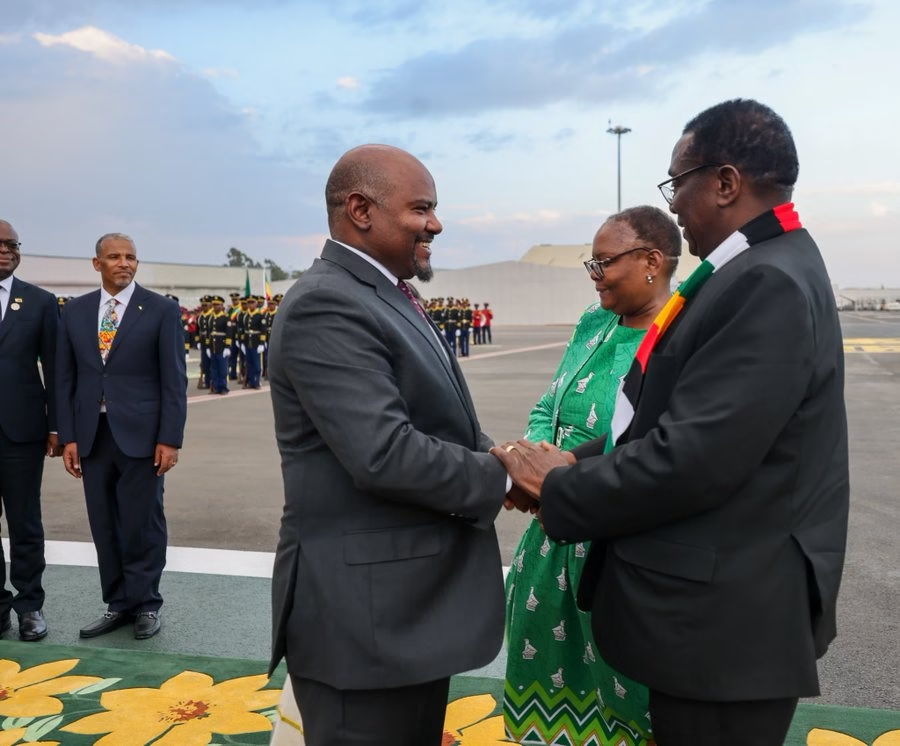
Emmerson Mnangagwa has arrived in Addis Ababa, Ethiopia, to attend the 39th Ordinary Session of the African Union Summit of Heads of State and Government, a high level platform shaping continental policy direction, institutional reform and development coordination across Africa.
From an analytical policy perspective, President Emmerson Mnangagwa’s participation positions Zimbabwe within the core decision making arena of Africa’s governance architecture at a time when the bloc is recalibrating priorities around water security, sanitation systems, climate resilience and institutional efficiency. The summit theme, aligned with African Union Agenda 2063, places basic infrastructure and human security at the centre of long term continental transformation.
The summit is not merely ceremonial. It functions as the AU’s supreme policy forum, where political consensus is translated into frameworks that influence regional financing models, cross border infrastructure planning, and coordinated responses to shared risks. With water stress, urban sanitation gaps and climate shocks increasingly affecting productivity and public health, the focus signals a shift from broad declarations toward measurable service delivery targets.
Key agenda items include institutional reform updates, thematic progress reports, peace and security appointments, and conflict situation reviews in fragile regions. Deliberations will also examine trade and development acceleration under the continental free trade framework, including progress around African Continental Free Trade Area integration, climate adaptation financing, and Africa CDC coordination on public health preparedness.
For Zimbabwe, President Emmerson Mnangagwa’s presence supports the country’s re engagement and cooperation thrust, anchored in economic diplomacy, regional integration and brand repositioning under National Development Strategy 2. Engagement at this level allows Zimbabwe to align domestic sectoral priorities, particularly water infrastructure, sanitation, agriculture and climate adaptation, with continental funding channels and technical partnerships.
Analytically, AU summits increasingly operate as policy marketplaces as much as political gatherings. They create convergence between governments, development finance institutions and regional blocs, shaping which projects attract support and which reforms gain traction. Outcomes from Addis Ababa are therefore likely to influence not only continental narratives but also national policy sequencing and investment flows.
President Emmerson Mnangagwa joins other African leaders at a time when the AU is under pressure to demonstrate implementation credibility, measurable reform progress and stronger coordination capacity. The effectiveness of the summit will ultimately be judged by how far resolutions convert into funded programs, operational systems and cross border cooperation that improves everyday conditions across member states.