
Story by Godfrey M Bonda
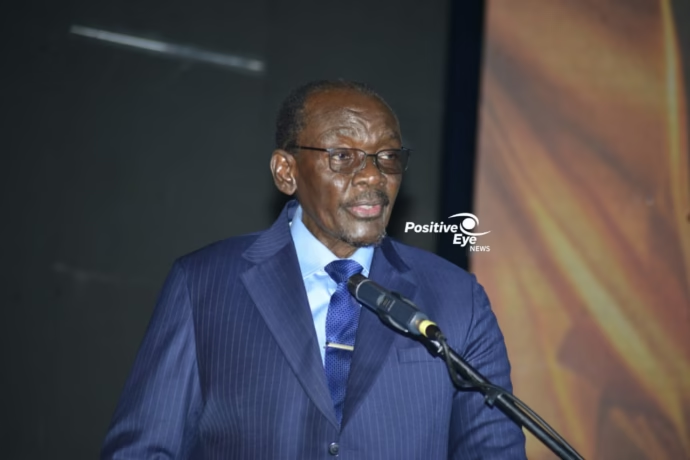
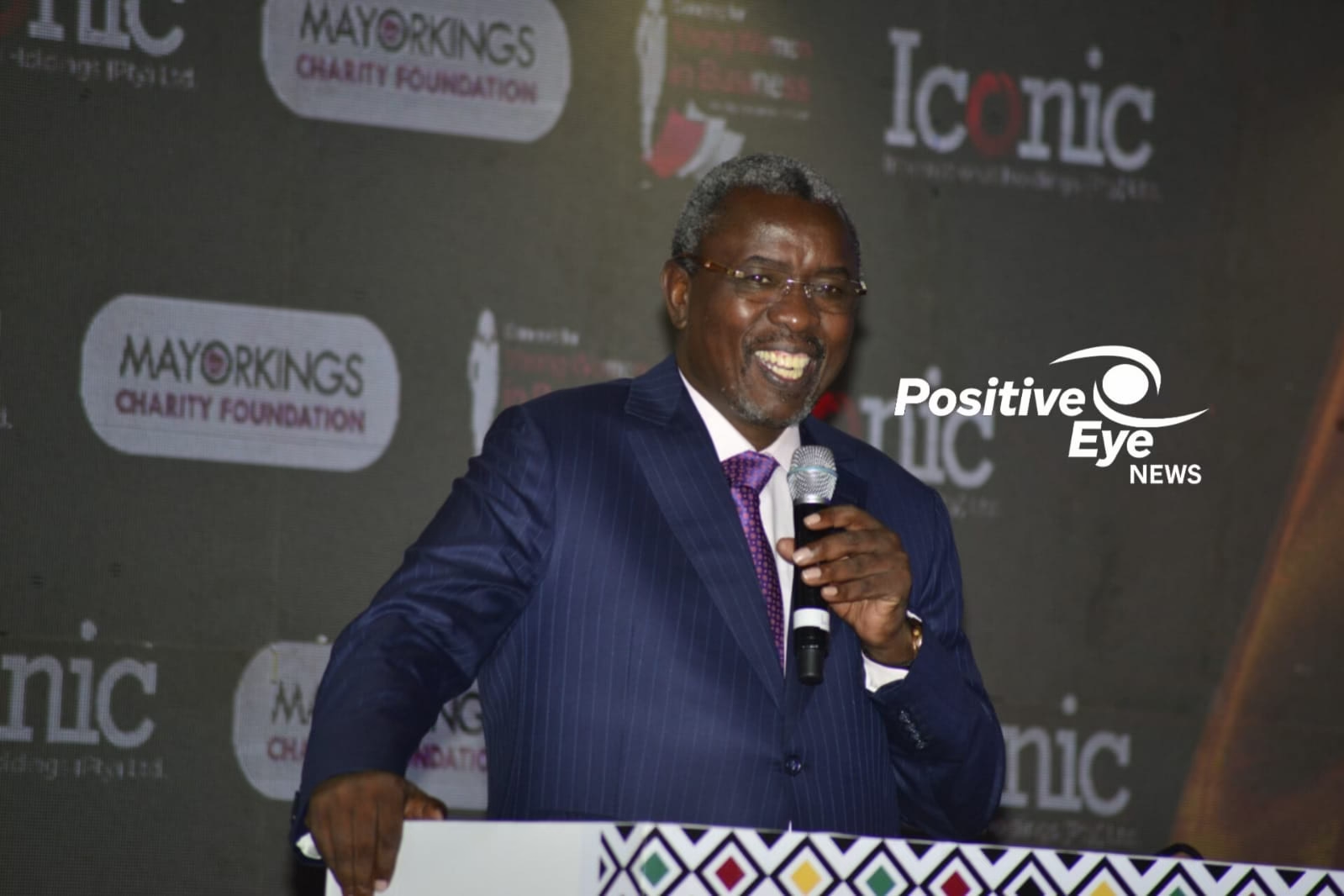
Philanthropist and business leader Dr. Kudakwashe Tagwirei was among the headline figures at the Iconic Africa Summit and Honors 2026, an event held under the theme “The Africa We Want, Sustainable Development, Everyone’s Responsibility”, a framing that places agency and accountability at the centre of the continent’s development discourse.

Rainbow Hotels — Experience Luxury Across Zimbabwe
Rainbow Hotels continues to redefine hospitality standards in Zimbabwe, offering world-class accommodation, fine dining, and modern conference facilities in Harare, Bulawayo, and Victoria Falls.
Whether for business or leisure, Rainbow Hotels delivers unmatched comfort, exceptional service, and a truly premium guest experience tailored to modern travellers.
Book NowFrom an analytical standpoint, Dr Tagwirei’s address went beyond symbolism and into the political economy of Africa’s development dilemma. While acknowledging the absence of His Excellency President Dr Emmerson Mnangagwa, he explicitly located his remarks within the leadership and policy environment shaped by the President, crediting it for shifting Zimbabwe away from what he described as a culture of dependency.

Dr Tagwirei also acknowledged Honourable Dr. Tatenda Mavetera and senior party leadership present, signalling the intersection between private capital, political leadership, and national development strategy. This triangulation is increasingly important in Africa’s growth model, where the state sets direction, the private sector executes, and society provides legitimacy.
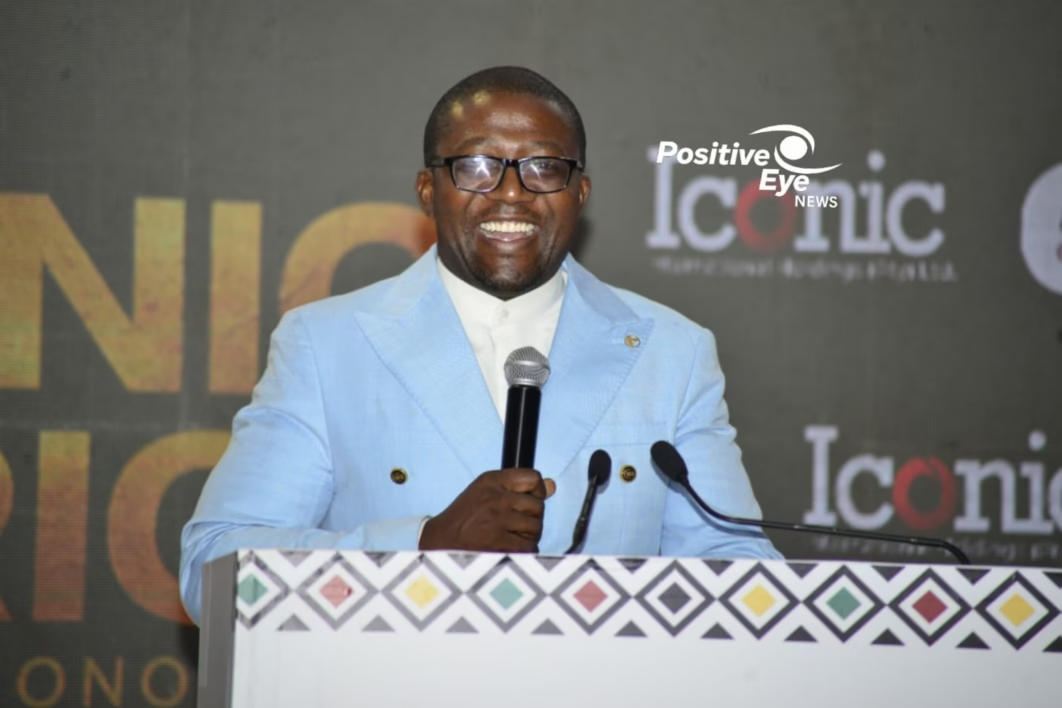
Anchoring his remarks on Africa’s demographic and resource profile, Dr. Tagwirei highlighted that the continent is home to approximately 1.57 billion people and remains the fastest-growing population globally. This, he argued, should be interpreted not as a liability but as an economic asset. From an economist’s lens, population growth, when matched with productivity-enhancing investment, expands labour markets, consumer demand, and innovation capacity. Without people, there is no economy, and without scale, industrialisation stalls.
He cited remarks by His Excellency President Duma Boko of Botswana, reinforcing a continental consensus that Africa possesses a unique resource endowment unmatched elsewhere. However, Dr Tagwirei was candid in identifying Africa’s persistent contradictions. Nearly 600 million Africans still lack access to electricity, a structural bottleneck that suppresses industrial output, limits value addition and entrenches poverty cycles.
A central theme of his intervention was what can be described as the psychology of underdevelopment. Dr. Tagwirei argued that Africa’s greatest constraint is not capital or resources, but confidence. He linked this deficit to historical colonial experiences, which eroded self-belief and replaced it with externally driven validation. In development economics, this manifests as weak local value chains, excessive import dependence, and limited faith in domestic brands and solutions.

He challenged Africans to reject the narrative that black success is an exception rather than a norm, calling jealousy and the absence of a culture that celebrates success as major internal inhibitors to growth. This observation aligns with broader institutional economics, which recognises social norms and trust as critical, though often overlooked, components of economic performance.
Importantly, Dr. Tagwirei connected Zimbabwe’s development trajectory to infrastructure fundamentals, particularly water security and irrigation. He noted that Zimbabwe has invested heavily in dam construction, laying the groundwork for agricultural transformation. From a structural transformation perspective, irrigation underpins food security, stabilises rural incomes, supports agro processing and reduces vulnerability to climate shocks, positioning Zimbabwe to reclaim its ambition of becoming a global breadbasket.
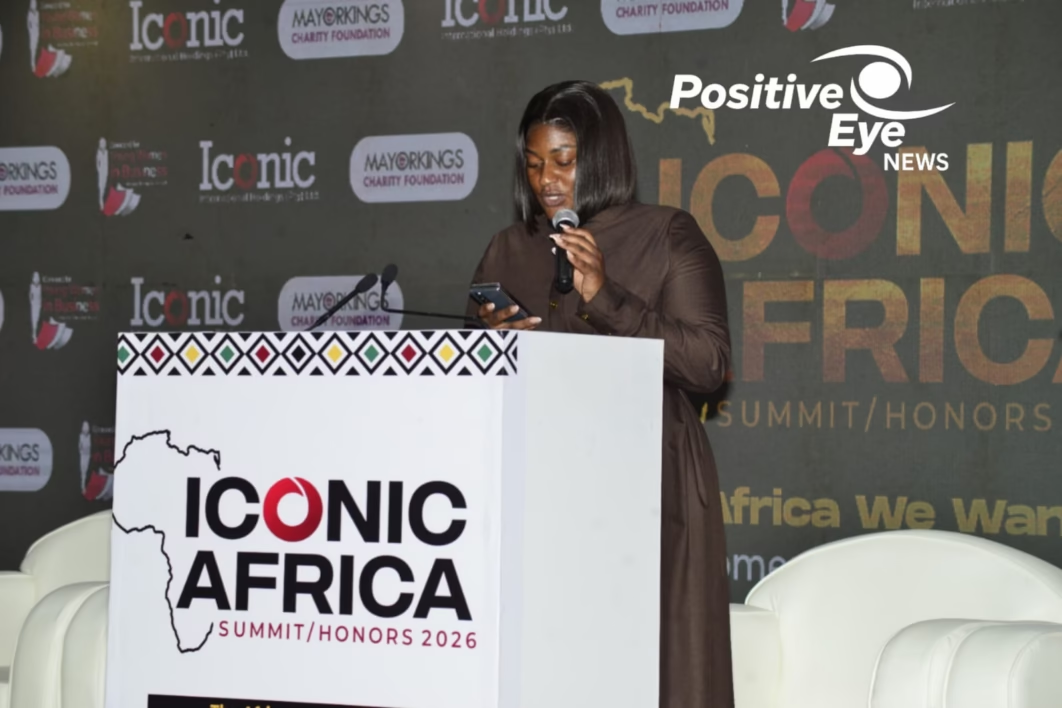
His remarks also carried an implicit industrial policy message. Africa, he argued, must move beyond exporting raw potential and instead produce its own cars, phones, clothing, and technologies. This aligns with the continent’s broader shift toward value addition, local manufacturing, and economic sovereignty.
In analytical terms, Dr. Tagwirei’s contribution at the Iconic Africa Summit framed development not as a question of aid or sympathy, but of mindset, leadership, and execution. The Africa he articulated believes in its people, leverages its resources, and builds institutions and industries capable of sustaining growth from within.