
Story By Otillia Makomo
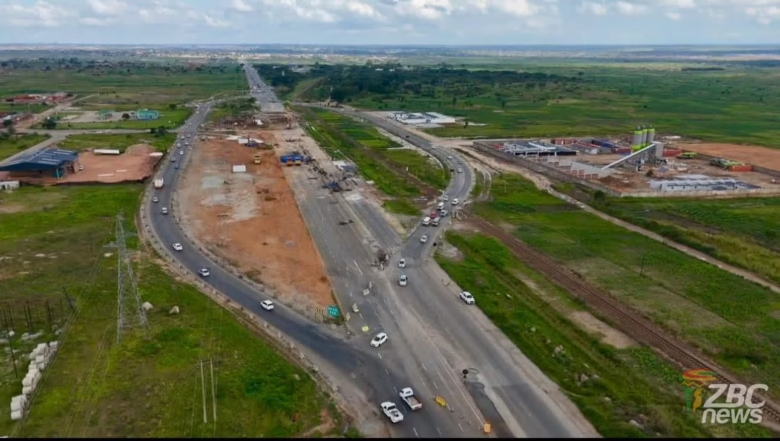
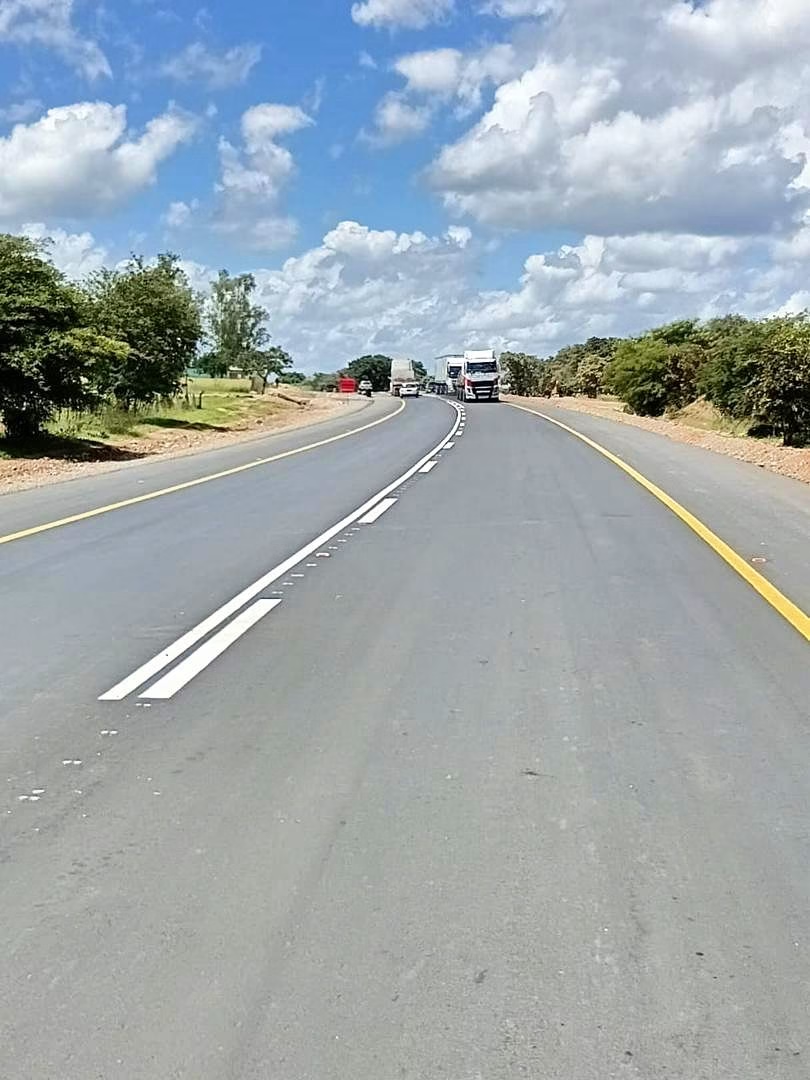
Zimbabwe’s flagship Harare–Masvingo–Beitbridge Road Rehabilitation and Upgrading Project is entering its final stretch, with the opening of an additional 2.9 kilometers in Mwenezi District pushing the total completed and trafficable distance to 547.1 kilometers, representing about 94 percent of the corridor. Only 34.9 kilometers now remain before full completion, marking one of the most consequential transport infrastructure turnarounds in the country’s recent history.

Rainbow Hotels — Experience Luxury Across Zimbabwe
Rainbow Hotels continues to redefine hospitality standards in Zimbabwe, offering world-class accommodation, fine dining, and modern conference facilities in Harare, Bulawayo, and Victoria Falls.
Whether for business or leisure, Rainbow Hotels delivers unmatched comfort, exceptional service, and a truly premium guest experience tailored to modern travellers.
Book NowBeyond the raw construction figures, the near completion of the highway signals a deeper structural shift in how Zimbabwe is approaching strategic infrastructure, corridor competitiveness, and regional trade positioning. The route is not just a road, it is an economic spine linking Harare to Beitbridge Border Post, one of Southern Africa’s busiest gateways into South Africa and the broader SADC market.
The project is being delivered through a consortium of local contractors, including Bitumen World, Fossil Contracting, Masimba Holdings, Exodus, and Tensor Systems. Their performance, with reported target adherence across segments, reflects a deliberate policy thrust toward empowering domestic construction capacity while accelerating delivery timelines. This localization model has increasingly become central to Zimbabwe’s infrastructure rollout strategy, keeping capital circulation, skills development, and industrial capability within the domestic economy.
Minister of Transport and Infrastructure Development, Honourable Felix Tapiwa Mhona, has been widely credited for maintaining delivery pressure, policy alignment, and contractor accountability across the lifespan of the project. His ministry’s approach has emphasized measurable milestones, section by section commissioning, and traffic opening of completed stretches rather than waiting for total corridor completion, allowing economic benefits to start flowing earlier.
From an economic and logistics standpoint, the implications are substantial. Reduced travel time, lower vehicle operating costs, and improved safety standards are expected to directly support freight efficiency and passenger mobility. For cross border trade, corridor reliability is often as important as border efficiency itself. A modernized trunk road reduces unpredictability in cargo movement, strengthens supply chain confidence, and enhances Zimbabwe’s attractiveness as a transit and logistics route.
Tourism also stands to benefit. The corridor connects major tourism circuits, linking the capital region with Masvingo’s heritage attractions and onward flows toward southern routes. Improved road quality tends to raise domestic tourism flows and regional visitor confidence, especially for self drive and coach travel segments.
At a policy level, the highway upgrade aligns with Vision 2030 and National Development Strategy 2 priorities, where infrastructure is treated as an enabling platform rather than a stand alone sector. Roads, in this framework, are productivity multipliers, supporting mining exports, agricultural marketing, manufacturing distribution, and regional integration.
With less than 35 kilometers left to complete, attention is now shifting from construction momentum to lifecycle maintenance discipline. The long term economic return on the corridor will depend not only on finishing the remaining stretch, but on sustained maintenance regimes, axle load enforcement, and smart corridor management systems.
As the project approaches full completion, the Harare–Masvingo–Beitbridge Highway is increasingly standing as a test case of how infrastructure delivery, local contractor participation, and trade corridor strategy can intersect to reshape national development outcomes.