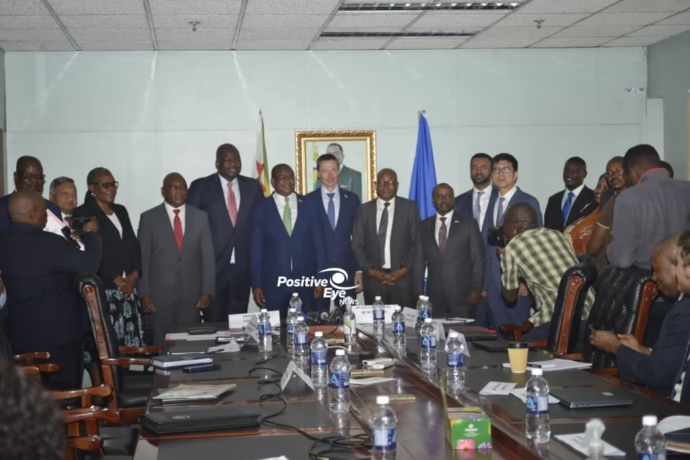


Zimbabwe’s strategy of turning tourism into a frontline investment diplomacy tool came into sharp focus with the arrival of a high powered Romanian business delegation at Victoria Falls International Airport, where 35 senior executives began a structured market exposure visit that blends destination experience with commercial engagement.
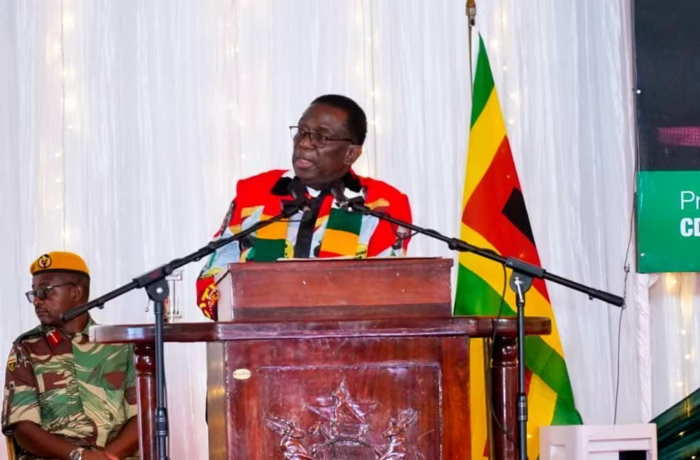
The delegation, headed by Romanian Chamber of Commerce and Industry Vice President Mr Sorin Vornic, was officially welcomed by the Deputy Minister of Tourism and Hospitality Industry, Honourable Tongai Mnangagwa, in a reception that signaled more than courtesy. It marked a deliberate state backed effort to convert tourism traffic into investment pipelines and trade relationships.

Rainbow Hotels — Experience Luxury Across Zimbabwe
Rainbow Hotels continues to redefine hospitality standards in Zimbabwe, offering world-class accommodation, fine dining, and modern conference facilities in Harare, Bulawayo, and Victoria Falls.
Whether for business or leisure, Rainbow Hotels delivers unmatched comfort, exceptional service, and a truly premium guest experience tailored to modern travellers.
Book NowVictoria Falls is increasingly being positioned not just as a global natural wonder, but as a strategic economic showroom. The model is simple but intentional, bring decision makers into the country, expose them to operational realities, infrastructure, and sector opportunities, then connect them directly with local business actors. It is tourism re engineered as an investment conversion platform.
Government tourism and trade planners are leaning into experience driven diplomacy, where executives do not only attend meetings, but interact with the destination ecosystem, from hospitality facilities and transport systems to service standards and local enterprise networks. The assumption behind this approach is that confidence grows faster through exposure than through presentations.
The Romanian delegation’s program includes site experiences and business engagements, reinforcing Victoria Falls’ evolving role as both a tourism capital and a commercial gateway node. This dual positioning matters, because tourism hubs often offer faster entry points for foreign partnerships through hotel development, service outsourcing, destination logistics, renewable energy solutions, and smart infrastructure.
From a policy perspective, the visit also reflects Zimbabwe’s push to diversify its investment partners geographically. Eastern European business networks are now being actively engaged as Zimbabwe widens its economic diplomacy map and reduces over reliance on traditional corridors.
What makes this visit notable is scale and structure. A chamber linked executive group carries signaling power. It suggests organized interest rather than casual inquiry, and creates downstream visibility across multiple firms and sectors back home. That multiplies the potential impact beyond the 35 executives on the ground.
If successfully leveraged, such delegations can reposition tourism from being a revenue endpoint to being a relationship starting point, where scenic attraction opens the door, but trade and investment close the deal.