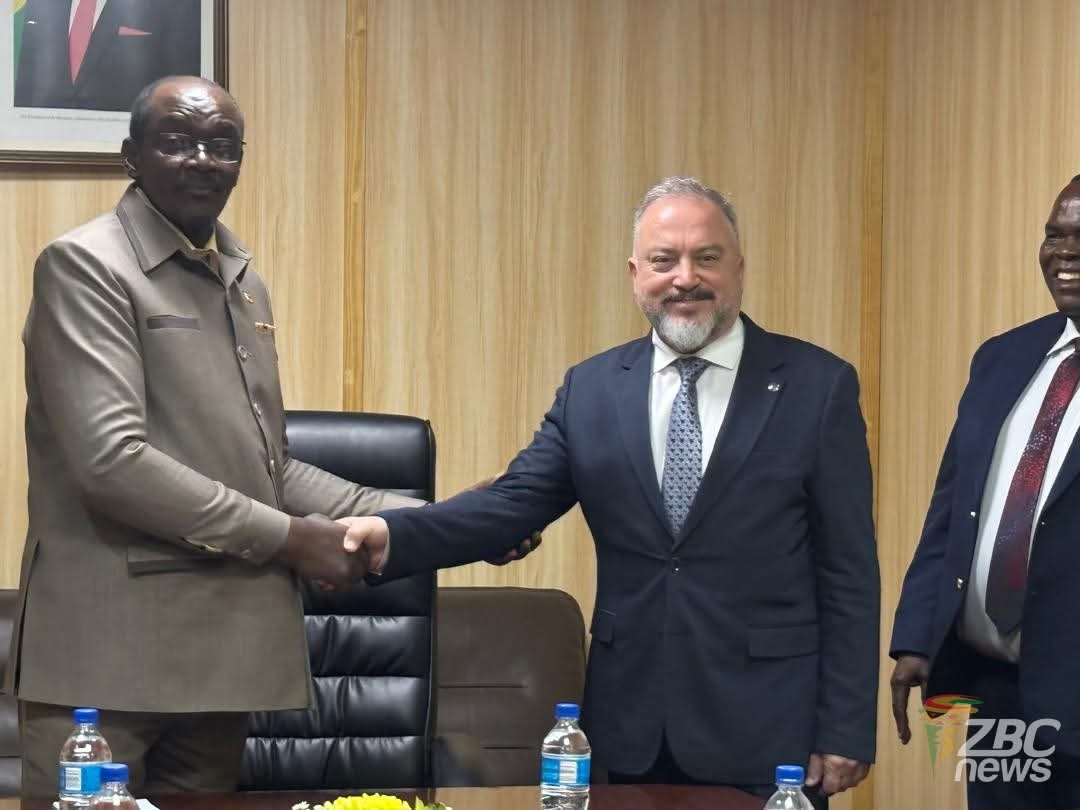
The quiet meeting in Harare between Acting President Colonel (Retired) Dr Kembo Mohadi and executives from Türkiye-based Sahinli Construction Company was more than diplomatic routine. It was a calculated signal, to markets, policymakers and competitors alike, hat Zimbabwe’s energy sector is back on the radar of serious international capital, and that patience is thinning for delays, red tape and half-measures.
Sahinli Construction’s proposed multi-billion-euro investment into Zimbabwe’s energy sector lands at a moment when the country’s power deficit has shifted from being a development inconvenience to a binding economic constraint. Load shedding continues to weigh down industrial productivity, limit mining expansion and erode investor confidence. In that context, Türkiye’s entry is not charity; it is opportunistic, strategic and conditional.
Speaking after the engagement, Sahinli Construction Chairperson Mr Akin Atila Sahinli framed the move as a response to Zimbabwe’s reform posture rather than its promises alone. The firm, which has operations across construction, energy and infrastructure, identified power generation as the most urgent and bankable intervention point in Zimbabwe’s economy, a sector where demand is guaranteed, regional markets are accessible, and returns are defensible if policy consistency holds.
The language matters. This was not a speculative interest. The company indicated an intention to move within months, pending modalities. In investment terms, that places pressure squarely on institutions — not speeches, to perform.
For Zimbabwe, the implications are layered. At one level, the engagement aligns neatly with the National Development Strategy 2, which places energy security at the centre of industrialisation, mining beneficiation and value-chain development. Without stable power, downstream processing remains theoretical. With it, sectors from platinum smelting to agro-processing become investable at scale.
At another level, Türkiye’s interest reflects a broader geopolitical recalibration. Ankara has been expanding aggressively across Africa, particularly in energy, construction and minerals, favouring markets where infrastructure gaps are large but political engagement is direct. Zimbabwe fits that profile — but only if execution follows access.
Government officials were quick to welcome the development. On behalf of the Office of the Special Advisor Responsible for Monitoring and Implementation of Government Projects, Honourable Kenneth Mus