The long-promised people-centred ministry delivery has proven to be little more than empty rhetoric. Instead of easing the burden on citizens, many ministries operate like revenue-hungry institutions, more interested in extracting money from ordinary Zimbabweans than in delivering meaningful services. The President’s drive for affordable living is being systematically undermined, with piecemeal efforts such as selective price reductions by the Ministry of Finance rendered meaningless by the negligence of other departments. The result is a fragmented, inconsistent, and ultimately punitive approach to governance.
Zimbabwe now faces an education crisis at a time when the nation should be rallying behind free primary education for all. Yet, the reality is a stark reversal: education is rapidly becoming a privilege, not a right. The Ministry of Education has failed to eradicate the scourge of illegal extra lessons, leaving parents to shoulder the escalating financial burden. Rather than protecting families, the system actively compounds their hardship, forcing them deeper into economic strain.
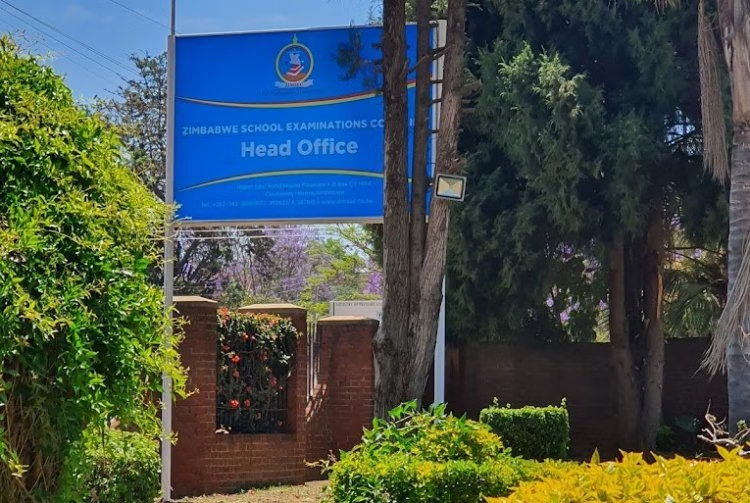
The situation worsened dramatically when ZIMSEC announced a 100% increase in examination fees, adding an intolerable weight to families already struggling to pay school fees and cover the cost of illicit extra lessons. This reckless decision directly violates children’s right to education, effectively barring many from sitting exams that determine their futures. One has to ask: does ZIMSEC, or the Ministry itself, even care about the citizens they are meant to serve?
Practical, cost-saving solutions exist, yet they are rarely implemented at operational level. Boarding schools, for instance, could easily accommodate examiners, eliminating the unnecessary burden. Such measures would significantly reduce costs for both parents and the examination board. However, inefficiencies persist, driven by poor administrative choices rather than policy direction. Across several ministries, there has been a troubling pattern of escalating fees and charges, often only reversed after direct intervention from His Excellency the President. This points not to a failure of vision at the top, but to weaknesses in execution and accountability within ministerial structures. The President has consistently articulated a people-centred approach and the need for affordable living, yet the disconnect lies in how this vision is translated into action. Ministers, many of whom are elected Members of Parliament and therefore closest to the communities they represent, are expected to grasp and respond to the everyday hardships faced by citizens. Unfortunately, this expectation is too often undermined by administrative complacency and a lack of urgency in addressing public concerns.
A nation united under a shared vision must ensure that no citizen is left behind. In education, however, exclusion has become the rule, with rising costs placing learning firmly out of reach for ordinary families. Education is not a luxury, it is a fundamental right, the very foundation of the nation’s future. Denying children access to schools and examinations is not just negligent; it is an active assault on their rights and a direct threat to Zimbabwe’s long-term development.
Until ministries embrace true people-centred leadership, the rhetoric of inclusive growth and affordable living will remain empty slogans. The time for excuses is over. Zimbabwe cannot afford a generation of children sidelined by financial barriers while policymakers sit idly by.