By Aldridge Dzvene
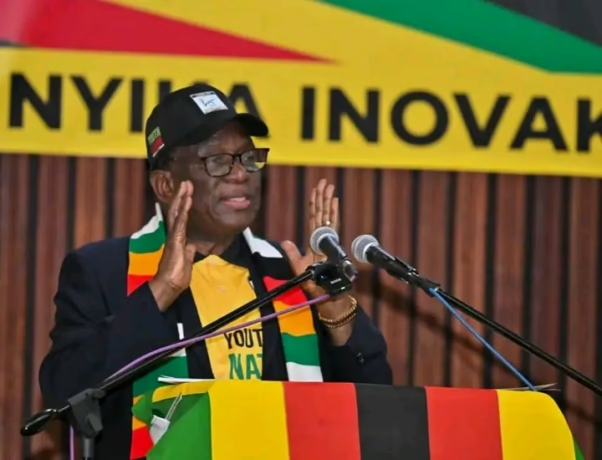
At a moment when climate-induced disasters are increasingly redefining governance priorities, the President of the Republic of Zimbabwe and Commander-in-Chief of the Zimbabwe Defence Forces, His Excellency Emmerson Dambudzo Mnangagwa, has placed emergency management at the centre of the national agenda, deferring his annual leave to personally steer responses to destructive flooding affecting Zimbabwe, Malawi and Mozambique.
The move signals a transition from routine administration to crisis-mode leadership, reflecting the gravity with which the Zimbabwean State is treating the unfolding humanitarian and environmental challenge gripping the region.
Confirming the development in Harare, the Deputy Chief Secretary for Presidential Communications, Mr George Charamba, said the President is directing a multi-agency command structure, bringing together civilian authorities, security institutions and disaster management bodies in a coordinated national and cross-border response framework.
At the core of this mobilisation is the Civil Protection Unit, now on full operational alert, supported by the Zimbabwe Defence Forces, police units and relevant ministries. This integrated structure is designed not merely to respond to current flooding but to anticipate further climate shocks during the peak rainy season.
Government has already moved to cushion vulnerable communities by pre-positioning 50 tonnes of grain in each province, a strategic intervention aimed at stabilising food access amid displacement and agricultural losses.
Beyond Zimbabwe’s borders, the Head of State has extended tangible assistance to Malawi and Mozambique, deploying food aid and aviation resources to facilitate evacuation and emergency relief. This positions Zimbabwe not only as a recipient of regional solidarity but as an active contributor to Southern Africa’s disaster response capacity.
As extreme weather events become a defining feature of the region’s future, Zimbabwe’s current posture reflects a broader policy recalibration, one that elevates climate preparedness, humanitarian coordination and regional cooperation as core pillars of national and foreign policy