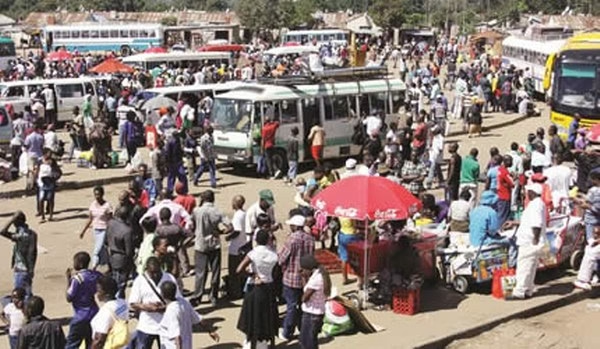
The proposed upgrade of the Mbare Musika Bus Terminus by Harare City Council, in partnership with City Parking, falls far short of the transformative development envisioned under Vision 2030. While the nation is witnessing modern roads, interchanges, and infrastructure projects elsewhere, the council’s plan for Mbare Musika remains modest and uninspiring.
Harare City Council has a troubling history of investing in projects that fail to meet the needs of the people. Just under US$1 million was spent refurbishing Rufaro Stadium, yet the facility still does not meet FIFA or CAF standards. Instead of meaningful sporting infrastructure, the development produced tuckshops and a tarred car park, hardly the kind of upgrades that attract international approval. Similarly, the massive Coca Cola shade intended to serve as a flea market remains incomplete after many years, standing as a symbol of wasted potential and poor planning.
Now, the council is embarking on another project beyond its capacity. The approved scope for Mbare Musika includes only basic upgrades: toilets, paving, boundary walls, waiting sheds, and seating areas. While these improvements are welcome, they pale in comparison to the kind of ambitious urban renewal Zimbabweans expect. In Beitbridge, for example, we have seen genuine upliftment—modern facilities that inspire confidence and pride. By contrast, Mbare’s proposed renovations amount to cosmetic changes.
What the people envision is a true transformation, a multi-level bus terminus with underground parking, four to five floors housing a medical clinic, banks, shops, flea markets, and food courts, recreational facilities for families, and a solar-powered complex capable of generating around one megawatt of energy.
Such a development would turn Mbare into a one-stop hub where rural travelers could conduct business without needing to enter the CBD, while simultaneously creating a vibrant community space.
To achieve this, the council must broaden its partnerships. Instead of relying solely on City Parking and internal resources, they should engage local businessmen and entrepreneurs who have the financial capacity and vested interest in building their country. By pooling resources with the community, Mbare could be transformed into a genuine business hub that empowers residents and attracts investment.
The people are appealing to authorities, including the Minister of Local Government, to intervene. Trust in the current council is low, with many accusing it of pursuing projects that serve its own interests rather than the public good. Unless the council rethinks its approach, the modernization of Mbare Musika risks becoming yet another white elephant an underwhelming project that fails to meet the aspirations of Vision 2030.