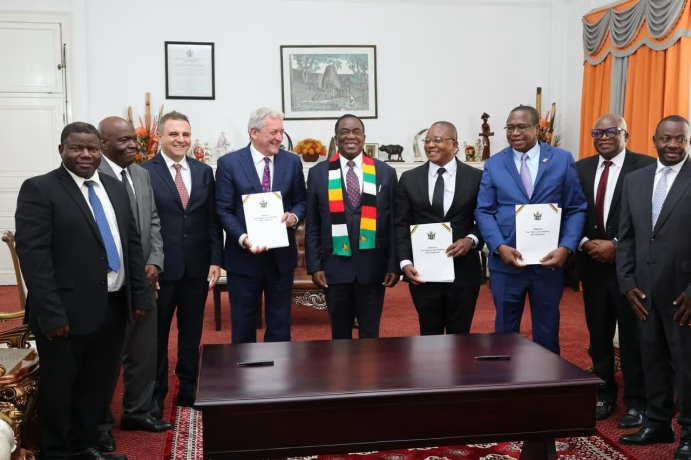
In a decisive and forward looking move, the Second Republic under the leadership of President Dr E.D Mnangagwa, has approved the 2025,2026 National Multi Hazard Contingency Plan, reinforcing its commitment to safeguarding communities and strengthening national preparedness in the face of increasing climate induced threats. This approval demonstrates the Government’s continued prioritisation of disaster risk reduction as a pillar of sustainable development.
The newly endorsed Plan by the Cabinet on 9 December 2025 provides a comprehensive framework for national disaster preparedness, detailing coordination structures, response mechanisms, and resource mobilization strategies.
It is designed to ensure that Zimbabwe remains proactive rather than reactive, particularly in light of the projected normal to above normal rainfall expected between December 2025 and February 2026. With forecasts pointing to a heightened risk of severe storms, hailstorms, floods, tropical cyclones, landslides and other trans boundary hazards, the Plan arrives at a crucial moment.
By strengthening capacity from the national level down to provincial, district and village structures, the Contingency Plan aims to enhance timely and coordinated responses to emergencies. This multi-tiered approach will enable stakeholders, government agencies, local authorities, civil society, and development partners to act swiftly and cohesively when disasters strike. More importantly, it signals a deliberate shift toward community-centred resilience building, ensuring that preparedness is not just a national ambition but a reality felt on the ground.
The Second Republic deserves commendation for this proactive stance. Approving the Multi Hazard Contingency Plan reflects responsible governance, foresight, and genuine concern for the welfare of citizens. As climate change continues to intensify weather related hazards across the globe, nations that plan ahead stand the best chance of protecting lives, livelihoods and infrastructure. Zimbabwe’s decision to institutionalise preparedness and strengthen coordination across all levels of society is both timely and necessary.
Beyond emergency response, the Plan fosters a national culture of resilience and disaster risk reduction, an essential ingredient for long term development. It encourages systematic planning, risk awareness, and prudent resource allocation, helping communities adapt to climate variability while supporting national stability and economic progress.
The approval of the 2025,2026 National Multi Hazard Contingency Plan is therefore a milestone achievement for the Second Republic. It demonstrates visionary leadership and sets the stage for a safer, more resilient, and more prepared Zimbabwe.