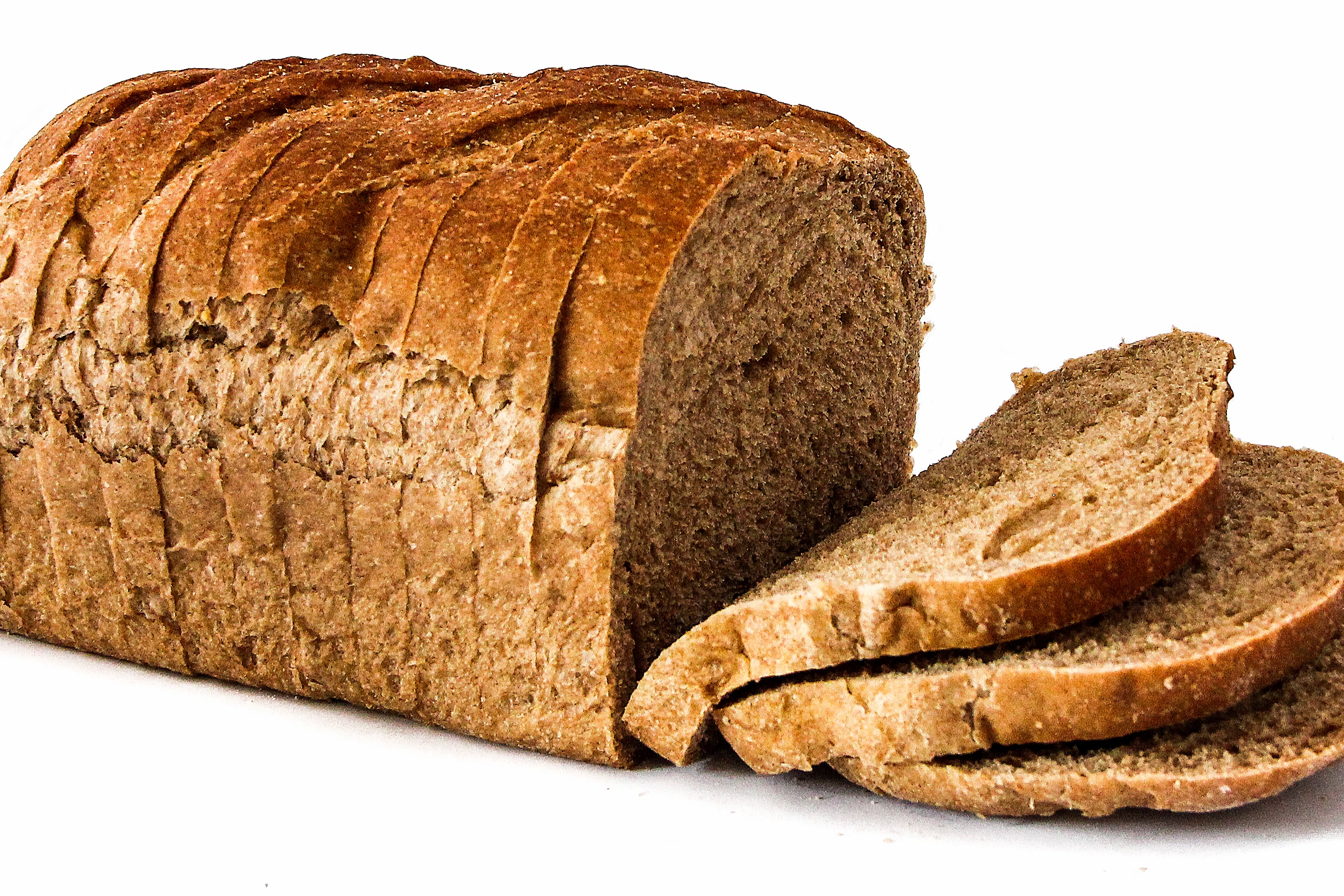
The Government of Zimbabwe has moved swiftly to calm public concern over claims that bread prices were set to rise, clarifying that Statutory Instrument 87 of 2025 applies only to maize imports and not to wheat or flour. The clarification, delivered by the Permanent Secretary in the Ministry of Lands, Agriculture, Fisheries, Water and Rural Development, Professor Obert Jiri, restores confidence in the government’s continued efforts to safeguard food security and stabilise basic commodity prices.
Professor Jiri explained that the statutory instrument, issued earlier this month, was being misinterpreted to suggest that it imposed a levy on wheat imports. In reality, he said, the $10 per metric tonne levy only applies to maize imported by agro-processors, millers, and stock feed manufacturers. The policy is designed to strike a delicate balance, allowing importation to cover shortfalls while ensuring that local farmers remain protected from unfair competition.
“This S.I. is essentially about maize,” Professor Jiri clarified in Mutare. “The Minister has not guided on wheat, which is still being imported free of charge, and the same applies to soya beans and other grains. Our farmers have produced enough maize, so this policy safeguards them without affecting bread prices.”
Industry players have echoed the government’s position. Mega Market Managing Director, Ahmed Muhammad Shiraan, commended the Agricultural Marketing Authority (AMA) for issuing clear communication that removed earlier ambiguities. “The press statement from AMA made it clear that the $10 per tonne only applies to maize, not to wheat. With that clarity, there’s no reason for any price increase,” he said, adding that the global decline in maize prices has neutralised the effect of the levy.
For the public, the clarification is a relief. Bread is a daily staple for most households, and any hint of a price rise immediately stirs anxiety. By moving quickly to clarify the policy, the government has demonstrated attentiveness to consumer welfare and commitment to maintaining stability in the cost of living.
S.I. 87 of 2025 reflects a broader policy thrust under the Second Republic, a drive to balance economic liberalisation with local empowerment. It underscores President Mnangagwa’s ongoing efforts to support agricultural production while protecting consumers from unjustified price shocks. The move also highlights how communication between government, industry, and the media can prevent misinformation and ensure policy transparency.
In the end, what could have sparked market panic has instead become a moment of confidence-building. The clear message is that bread prices are not going up, and the government remains in full control of measures to sustain food security and price stability.