The country’s agrarian reforms are finally paying off, with a record wheat production for the 2025 season on the horizon. Zimbabwe has so far harvested a total of 578,059 metric tonnes, a new record that surpasses the 2024 figure of 562,091 metric tonnes.
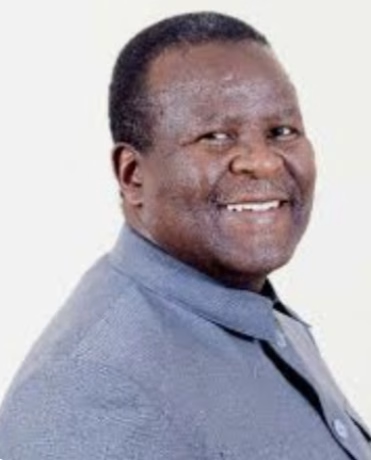
The Minister of Lands, Agriculture, Fisheries, Water and Rural Development, Dr Anxious Masuka issued an update on winter wheat production and marketing arrangements for the 2025 season.
In 2019, Zimbabwe produced 94,686 metric tonnes of wheat. A 511% increase has been realized in just under six years, an unprecedented feat. Currently, farmers are harvesting the crop, setting the stage for an even more production increase.
The surge in production is attributed to the Second Republic, led by His Excellency President E.D. Mnangagwa, through various schemes. The government has resuscitated several irrigation schemes across the country. Various input support schemes, including the Presidential Wheat Support Scheme, self-financing models, private contractors, and the National Enhanced Agricultural Productivity Scheme (NEAPS), were implemented to assist farmers.
Through the Agriculture and Rural Development Authority (ARDA), the government has contracted over 60,000 hectares, expected to produce over 300,000 tonnes of wheat this season. ARDA’s entry into wheat farming is set to augment the country’s strategic reserves and bolster food security.
The Ministry of Lands, Agriculture, Fisheries, Water and Rural Development has indicated that the country’s wheat requirements have already been surpassed, opening up avenues for export and thus raising foreign currency earnings.
Millers have been directed to import the higher gluten content wheat that is not locally produced, but is required by some millers will continue without any additional cost. The government continues to make wheat available to millers at an affordable cost. In recent weeks, 6,518 tonnes were released to millers. Given the production increase, prices have relatively stabilised, making the product more accessible, one of the government’s goals.
The government is working with stakeholders in the agriculture sector to maintain the momentum. The efforts of the farmers are acknowledged and appreciated.