Zimbabwe is confronted by a silent emergency that continues to steal young lives in the shadows. Although abortion is legally permitted in cases of rape, incest or when a woman’s life is in danger, countless women and girls are still forced into desperate decisions that place their health and dignity at risk. Conversations unfolding around the possible amendment of the Termination of Pregnancy Act are exposing a critical truth that safe abortion is already a matter of life and death for vulnerable citizens. The question is whether the nation will continue to look away as tragedy unfolds, or step boldly into a future that protects and empowers its women.
Dr. Mildred Mushunje, the Country Director of Sexual Reproductive Health and Rights Africa Trust SAT, has witnessed how confusion and fear shape decisions in communities where knowledge about the law is limited. She says some of the strongest resistance comes from religious and traditional values that are often not fully informed. Her organisation works directly with community leaders to deepen understanding of what the law already provides and how failure to act on that law contributes to preventable deaths. Through values clarification programs, leaders begin to reflect on their own beliefs in the context of real stories of girls suffering in silence. Many soon realize that acknowledgement of the law does not weaken culture, it strengthens the protection of life. In these spaces, a mindset shift begins to take root, guided by compassion and truth rather than assumptions.
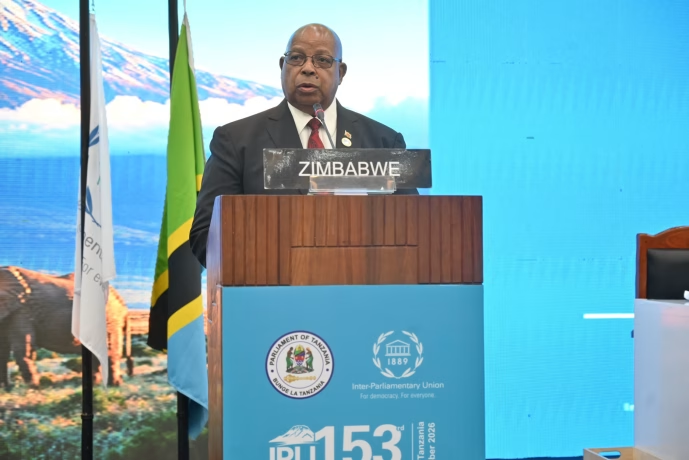
Parliamentarians are increasingly echoing the concerns being raised by health rights advocates. Honorable Thomas Muwodzeri, standing in for the Chairperson of the Parliamentary Portfolio Committee on Health, expressed frustration that the country is still governed by a law enacted in 1977. He describes how a survivor of rape who seeks a legal abortion must endure a painful journey of reporting to police, pleading for documents, revisiting trauma before medical workers and then waiting for approval from a court magistrate. By the time the process is complete, many young women are emotionally broken and medically endangered. Those without financial means or emotional strength turn to dangerous backyard procedures that rob families of daughters, sisters and mothers.
Hon Muwodzeri insists that Parliament cannot remain idle. He says silence does not stop abortions from happening. It only pushes them into darkness where death thrives. Zimbabweans frequently encounter paid social media advertisements promising secret abortion services. These illegal providers operate without accountability. Their existence signals a healthcare system that is failing its people. To address these gaps, the proposed reforms include empowering nurses in rural health facilities to authorize legal terminations so that distance from urban hospitals does not become a death sentence for girls from villages and farming communities.
Both Dr. Mushunje and Hon Muwodzeri emphasize that the call for reform is not a celebration of abortion. It is a defense of life. No parent should bury a teenage daughter who died attempting to protect her future. No survivor of rape should be condemned to relive trauma in front of strangers because the system demands it. No woman should feel that her country values rules over her existence.
Zimbabwe stands at a moment that demands courage. The voices growing louder in civil society and Parliament are calling the nation to confront an uncomfortable but undeniable reality. Abortion is happening. The choice before lawmakers and leaders is whether it continues to happen unsafely, secretly and fatally, or whether the law becomes a shield that protects instead of a wall that blocks relief.
The path forward requires empathy, informed leadership and the will to rewrite a law that has outlived its time. Reforming the Termination of Pregnancy Act is not about changing who we are as a people. It is about preserving who we love while honoring the dignity and humanity of every Zimbabwean woman.