As Zimbabwe prepares to unveil the 2026 National Budget, focus is turning toward consolidating economic stability and accelerating growth under Vision 2030. The government is positioning the upcoming fiscal plan as a foundation for sustainable development built on stability, infrastructure, and inclusivity.
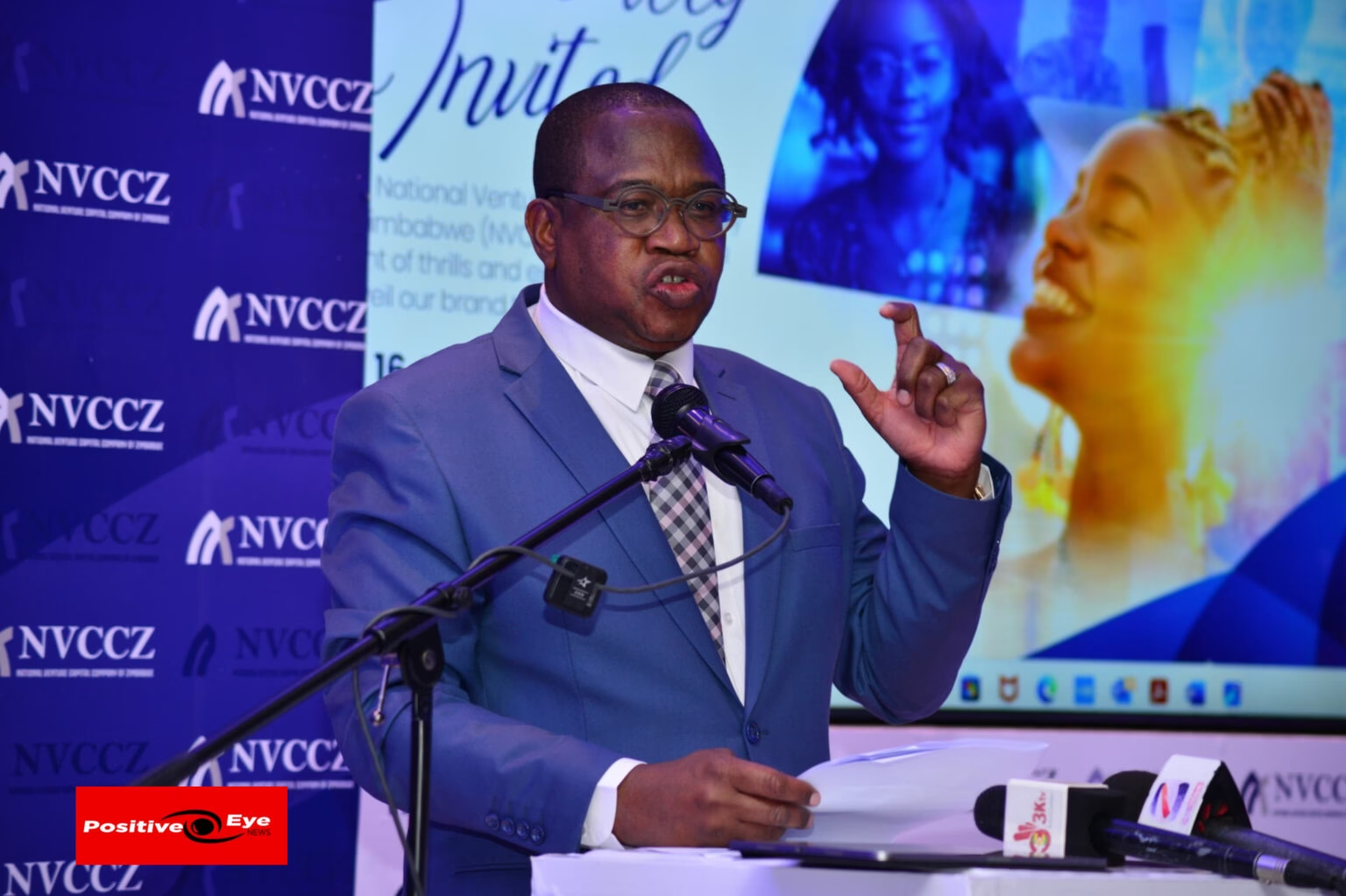
Finance, Economic Development and Investment Promotion Minister Professor Mthuli Ncube said the central theme of the 2026 Budget is to construct a strong economic base that ensures consistent growth beyond the National Development Strategy 1. He emphasized that the budget must stimulate productive sectors while deepening investor confidence through predictable and stable fiscal policies.
“The tone for the budget is to set up the right platform towards the achievement of Vision 2030. We need a very strong growth rate out of the policies that the budget will support. We have already started that process by embarking on a drive to reduce the cost of doing business, and that is part of laying the foundation as we move to the upper high level of performance,” said Professor Ncube.
The Minister outlined macroeconomic stability, infrastructure expansion, and debt management as the three key pillars underpinning the 2026 Budget. He noted that stability is now a reality, as inflation remains under control, creating a conducive environment for private sector growth and long-term investment.
“Fiscal policy in this budget will focus on entrenching stability and creating certainty for both industry and investors. We need to sustain this environment where government revenues are predictable and inflation remains contained, so that the private sector can plan ahead with confidence,” Professor Ncube said.
Infrastructure investment will continue to take centre stage, with the Treasury set to channel more resources towards roads, rail, power, and water projects. These sectors are considered vital to unlocking economic potential and driving productivity across all industries.
Zimbabwe’s debt-to-GDP ratio has fallen to around 45 percent, reflecting strengthened fiscal discipline and a commitment to prudent debt management. Professor Ncube said this progress creates space for the government to direct more resources to developmental and social programmes.
Beyond the fiscal and economic numbers, inclusivity remains central. The 2026 Budget is expected to strengthen social protection, healthcare, and education funding to ensure that every Zimbabwean benefits from the country’s growth trajectory. “Strong economic performance must be felt across all segments of society. We are committed to ensuring no one is left behind as we progress towards Vision 2030,” he added.
The 2026 National Budget, to be presented later this year after ongoing consultations, is thus seen as a defining step in sustaining economic stability and broad-based growth. Through sound fiscal management and infrastructure-led development, Zimbabwe continues to move steadily toward the ultimate goal of becoming an upper-middle-income economy by 2030.