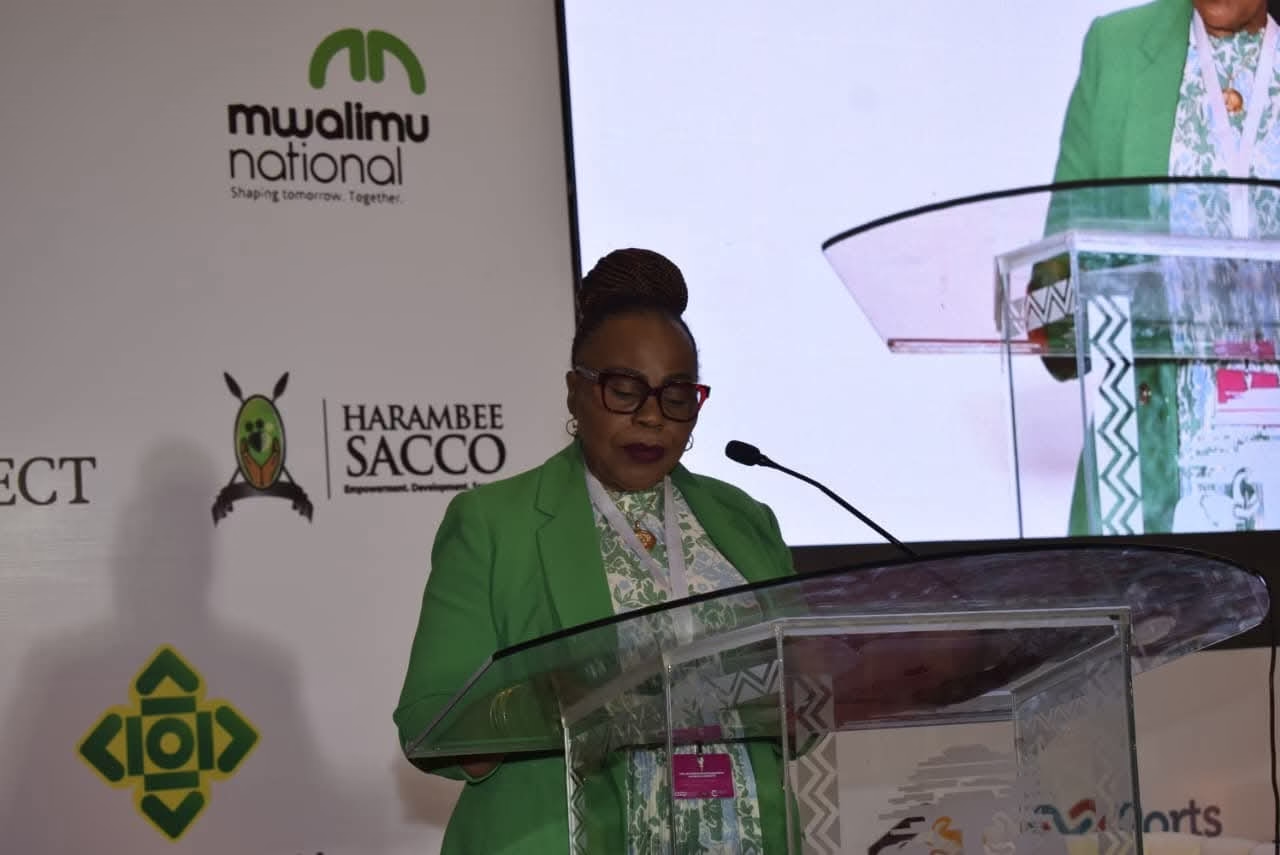
Zimbabwe’s participation at the 14th Africa Ministerial Cooperative Conference (AMCCO) in Nairobi, Kenya, underscores the nation’s growing leadership in promoting an innovative and inclusive cooperative economy. The conference, a premier platform convened every three years by the International Cooperative Alliance Africa in collaboration with African governments, is shaping policy direction for the continent’s cooperative movement at a time when African economies face complex development challenges.
Minister of Women Affairs, Community, Small and Medium Enterprises Development, Senator Monica Mutsvangwa, highlighted Zimbabwe’s strong position on cooperative development and its commitment to strengthening cross border collaboration to accelerate innovation and digitisation in the cooperative sector. Her remarks reflected a broader understanding that cooperatives are more than economic units, they are vital engines of social transformation and resilience, particularly in an era defined by climate change, informalisation, and shifting trade patterns.
“This year, AMCCO convenes as African states are grappling with the challenges of informalisation of economies, climate change, and ever increasing trade barriers. There is need for Governments to transform Policy Commitments into Action, Strengthen Enabling Environments, and Promote Inclusive and Sustainable Models to advance cooperative models that empower youth, women, and marginalised communities while supporting climate resilience and the green economy,” she said.
Her words echo the broader spirit of the conference, where 26 African countries have gathered to deliberate on critical issues such as market access, financing, and policy integration. The emphasis on financing, in particular, reveals a continental drive to explore innovative mechanisms that can sustain cooperatives across domestic, regional, and international markets. The conversations also align with Zimbabwe’s National Development Strategy 1 (NDS1), which positions cooperatives as key actors in wealth creation, employment generation, and community empowerment.
Analysts note that Zimbabwe’s participation at AMCCO is both timely and strategic. As the country strengthens its cooperative frameworks under the Second Republic, its experiences in supporting small and medium enterprises, women’s empowerment, and inclusive growth offer a practical model for other African states. The cooperative approach, rooted in shared ownership and mutual benefit, provides an alternative to purely profit driven systems, fostering equitable participation and sustainable community growth.
Beyond policy discourse, the conference also represents a learning platform where nations share best practices on integrating technology into cooperatives. The rise of digital platforms and data driven cooperative management has transformed how cooperatives operate, making them more transparent, efficient, and responsive to market trends. Zimbabwe’s commitment to digital transformation within its cooperative ecosystem positions it at the forefront of this continental shift toward innovation led growth.
Minister Mutsvangwa’s call for collaboration captures an essential truth, that the future of Africa’s cooperative movement depends on unity, knowledge exchange, and a shared vision for inclusive economic transformation. The AMCCO’s emphasis on linking cooperatives to climate resilience and the green economy also resonates with Zimbabwe’s ongoing efforts to align local enterprise development with sustainability and environmental responsibility.
As the conference continues to chart Africa’s cooperative agenda, Zimbabwe’s participation stands as an affirmation of its readiness to contribute thought leadership and policy innovation. The country’s model demonstrates that when communities are empowered through cooperation, they become not just beneficiaries of development, but active drivers of economic and social progress.
In essence, Zimbabwe’s role at AMCCO extends beyond representation, it is about shaping the continent’s cooperative future through practical innovation, inclusive governance, and a shared commitment to resilience. The Nairobi conference serves as a platform for reflection and renewal, reminding Africa that cooperation remains one of the most powerful tools for transforming lives, strengthening economies, and ensuring that no community is left behind.