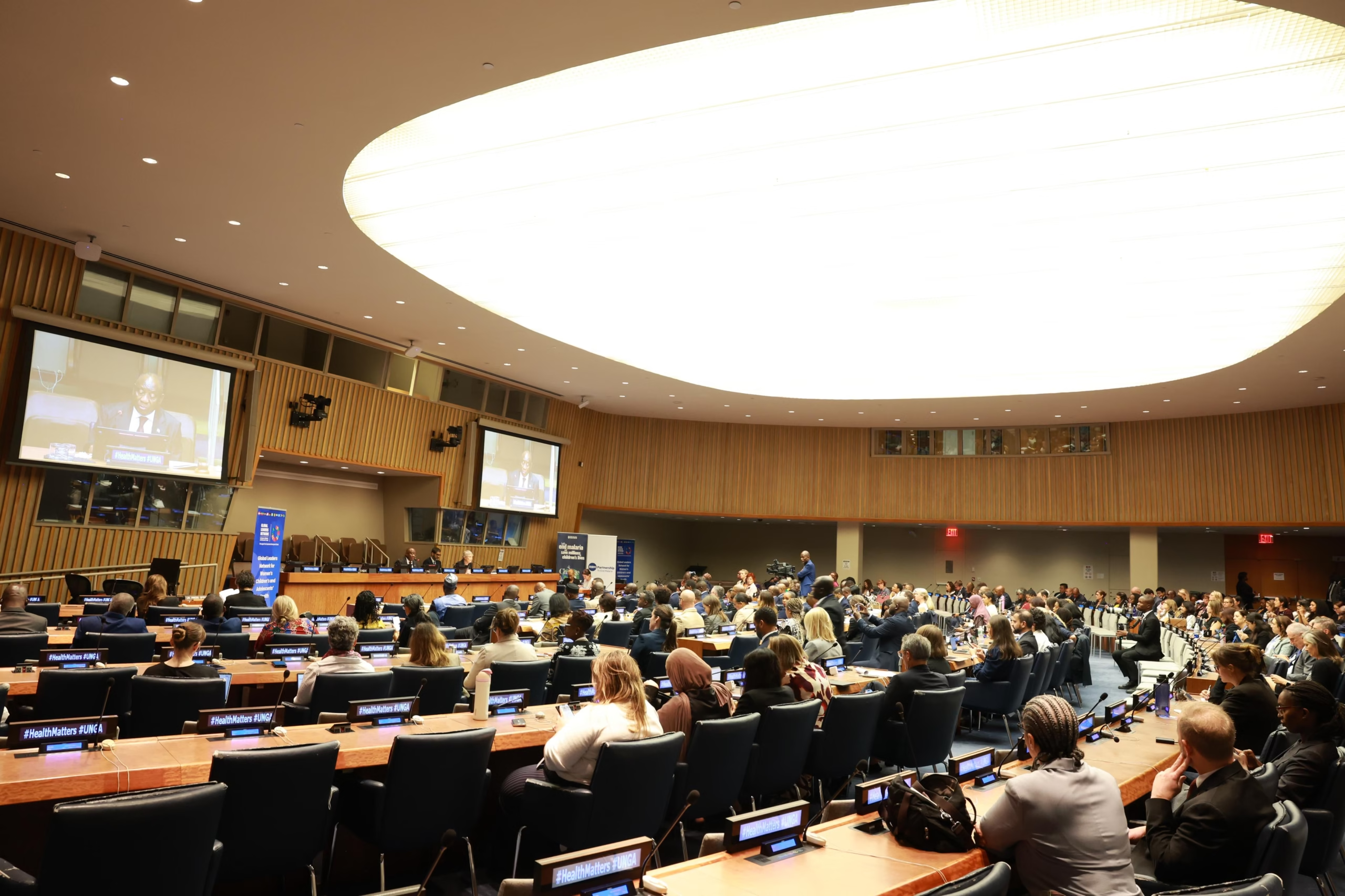
The 80th United Nations General Assembly (UNGA80) became a defining moment for global health diplomacy as world leaders rallied behind a renewed commitment to protect women, children, and adolescents from preventable deaths and diseases. Amid overlapping crises, conflict, displacement, climate disasters, and economic shocks, the session titled “Uniting for Global Health Security” emerged as a critical platform for rethinking how nations finance, coordinate, and deliver healthcare in the most fragile settings.
The event, jointly hosted by the Global Leaders Network (GLN) for Women’s, Children’s and Adolescents’ Health and the African Leaders Malaria Alliance (ALMA), underscored an uncomfortable truth, the world is regressing on some of its most fundamental health goals. According to the World Health Organization, 2023 saw an estimated 260,000 maternal deaths from preventable causes, with 92 percent occurring in low and middle-income countries. In that same period, 4.8 million children under five died, 2.3 million of them newborns, while 1.9 million stillbirths were recorded. Humanitarian and crisis-affected countries accounted for more than half of these deaths, revealing how inequality continues to shape health outcomes.
For Africa, the numbers carry a deep resonance. They tell a story not only of fragile systems but also of the urgent need for global solidarity and sustained investment. Chairing the GLN, South African President Cyril Ramaphosa captured the gravity of the situation, warning that the gains made over decades in maternal and child health are at risk of reversal. He lamented how conflict, economic strain, and climate change have converged to widen the health gap for the world’s most vulnerable groups. His message was clear, global action must evolve from reactive responses to structural transformation.
Helen Clark, Chair of the Partnership for Maternal, Newborn and Child Health (PMNCH) and former Prime Minister of New Zealand, echoed that sentiment, reminding delegates that failure to protect women, children, and adolescents is tantamount to endangering the world’s future. Her words resonated as a moral challenge to the international community, calling for empathy, equity, and political will at a time when competing global priorities often push human development to the margins.
What made this year’s dialogue distinctive was not merely the recognition of crisis, but the ambition of solutions. President Duma Gideon Boko of Botswana, who chairs ALMA, advanced a transformative idea, the creation of a Public-Private Partnership (PPP) Health Accelerator. The initiative is envisioned as a financing model that will close the gaps in health coverage and service delivery by engaging private capital, the African diaspora, and development partners in a sustainable framework. His call for “a strong, sustainable partnership for prosperity” represents a paradigm shift from dependence on Official Development Assistance (ODA) to self-driven, innovative resource mobilisation rooted in African leadership and accountability.
Analytically, the proposed Health Accelerator stands as a forward-looking intervention with both symbolic and practical implications. Symbolically, it asserts Africa’s readiness to take ownership of its health agenda. Practically, it introduces an inclusive mechanism for funding that could insulate the continent from the volatility of aid-driven cycles. By bridging the financing gap, this model could bolster efforts to eliminate malaria, reduce maternal deaths, and improve access to reproductive health services, areas most strained by declining global support.
The underlying message of the UNGA80 discussions was that global health security can no longer be treated as an abstract aspiration but as a shared responsibility. The crises that have shaken nations, from pandemics to climate shocks, are reminders that a healthy population underpins both development and resilience. When women die giving birth, when children succumb to preventable diseases, and when adolescents face barriers to reproductive health, the costs are not just humanitarian but economic and generational.
Africa’s proactive leadership in this discourse, as demonstrated by Presidents Ramaphosa and Boko, represents a significant step toward repositioning the continent from being a recipient of health assistance to becoming a shaper of global health priorities. The emphasis on innovation, partnership, and accountability introduces a new moral and economic logic, one that demands cooperation across borders, sectors, and generations.
The UNGA80 health deliberations ultimately serve as a wake-up call to the global community. If the world continues to neglect women’s and children’s health in times of crisis, it risks undermining the very foundation of sustainable development. Yet, within that warning lies an opportunity, to reimagine health financing, strengthen local systems, and ensure that progress is inclusive and enduring.
As the world looks beyond UNGA80, the challenge will be to translate commitments into measurable outcomes. The data, the pledges, and the dialogue must now give way to delivery. For millions of women and children, this is not a matter of policy, it is a matter of survival.