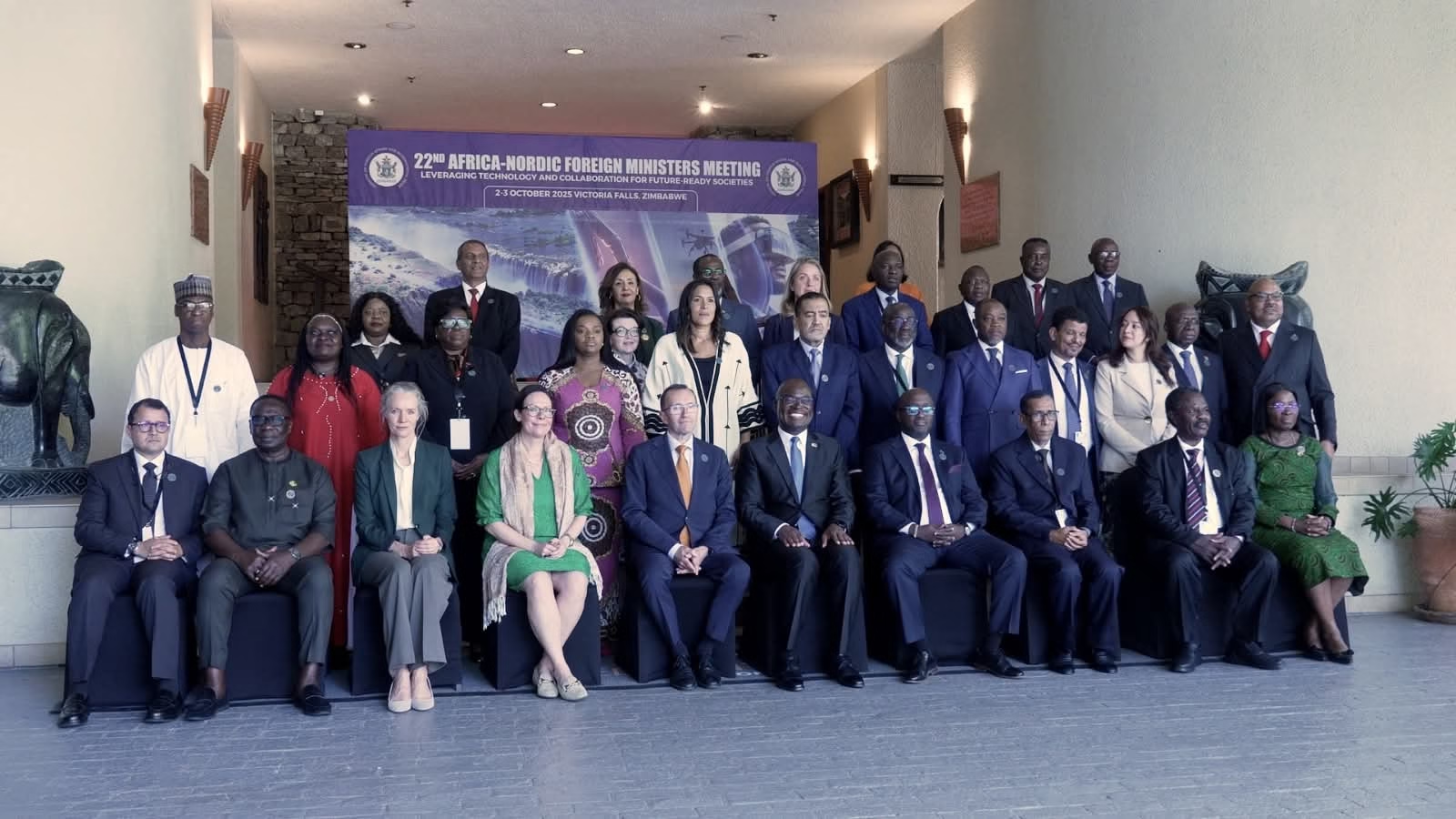
The 22nd Africa Nordic Foreign Ministers’ Meeting in Victoria Falls this week signalled more than diplomatic formalities. It carried with it the weight of a changing era in international cooperation, one where aid handouts are giving way to deliberate trade and investment-driven partnerships. The discussions were not framed in the language of dependency, but in the language of opportunities, sustainability, and shared prosperity.
For decades, Africa’s relations with many Western partners have been defined by an aid mentality that often created imbalances of power and undermined local development strategies. The tone in Victoria Falls was different. With Nordic countries already investing over US$2 billion across the continent and trade volumes steadily rising, the narrative is clearly moving towards creating value, expanding industrialisation, and embedding technology in Africa’s growth model. That Zimbabwe played host to this pivotal meeting is in itself symbolic, aligning the country with this new conversation of mutual benefit.
Norway’s Foreign Minister, Honourable Espen Barth Eide, spoke of extending cooperation into technology, clean energy, and mineral value addition—fields that directly intersect with Zimbabwe’s economic vision. At a time when the world is racing towards renewable energy transitions, Zimbabwe’s lithium, platinum, and other critical minerals place it in a strategic position. Nordic expertise in energy technology and mineral beneficiation could marry seamlessly with Zimbabwe’s abundant resources, turning rhetoric into real industrial growth. The remarks of Ms Solveig Tangen of the Norwegian-African Business Association, affirming that Norwegian companies are already on Zimbabwean soil, cemented the sense that this is not about distant promises, but about partnerships already taking shape.
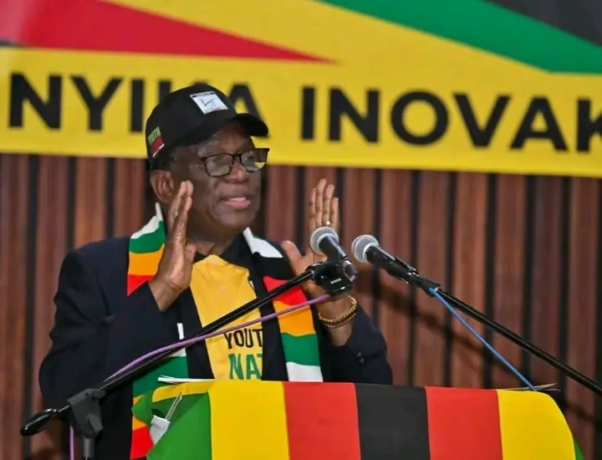
For Zimbabwe, the summit was not just about diplomacy, but also about affirmation of the Second Republic’s engagement and re-engagement drive. As Minister of Foreign Affairs and International Trade, Professor Amon Murwira, pointed out, Africa is no longer looking for donations. The strength of this new era lies in Africa recognising its demographic dividend, its growing consumer markets, and its vast natural resources as bargaining chips for fairer global partnerships. The insistence that Nordic strategies are now designed around trade, investment, renewable energy, and security was a welcome sign that the old donor-recipient dynamics are being replaced by a modern, equal-footed model of collaboration.
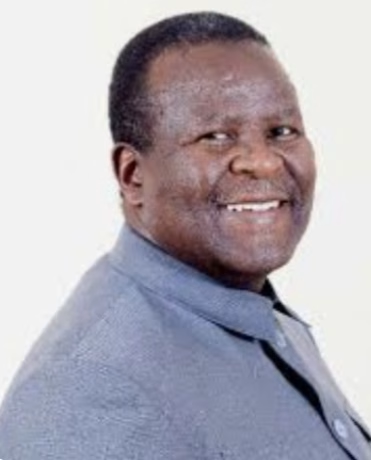
Beyond economics, the symbolism of Nordic foreign ministers visiting Zimbabwe after decades of absence spoke volumes. It reflects not only a thawing of relations, but a broader acknowledgement that Zimbabwe is once again a player in shaping multilateralism and international cooperation. Ambassador Priscilla Misihairambwi Mushonga captured this well, noting that the high-level Nordic presence in Victoria Falls demonstrates the world’s readiness to re-engage with Zimbabwe meaningfully.
The deeper message from the Victoria Falls meeting is that Africa’s partnerships must be redefined around agency and strategy. Where once aid dependency was the hallmark of relations, the new language is industrialisation, trade expansion, and technology-driven growth. For Zimbabwe, this aligns seamlessly with Vision 2030 and the ongoing national push to leverage resources for value addition, industrial capacity, and broad-based prosperity. The Nordic countries, with their technological expertise and investment appetite, are natural partners for this trajectory.
As Africa and the Nordic region move forward, their joint commitment to multilateralism, sustainability, and shared economic goals could mark the dawn of a new model of global cooperation. In this sense, Victoria Falls was not just the scenic backdrop of an international summit, but the symbolic stage of Africa’s economic reawakening and Zimbabwe’s re-entry into serious global conversations about trade, investment, and sustainable development.