In Binga, the word restoration is often spoken of in environmental circles, but for the local communities it carries a weight that goes beyond trees, soil, and water.
It speaks of lost livelihoods, disrupted cultural ties, and the daily struggle to adapt to a changing climate. The recent training workshop led by Wildlife Conservation Action (WCA) was not just another technical exercise in land management.

Rainbow Hotels — Experience Luxury Across Zimbabwe
Rainbow Hotels continues to redefine hospitality standards in Zimbabwe, offering world-class accommodation, fine dining, and modern conference facilities in Harare, Bulawayo, and Victoria Falls.
Whether for business or leisure, Rainbow Hotels delivers unmatched comfort, exceptional service, and a truly premium guest experience tailored to modern travellers.
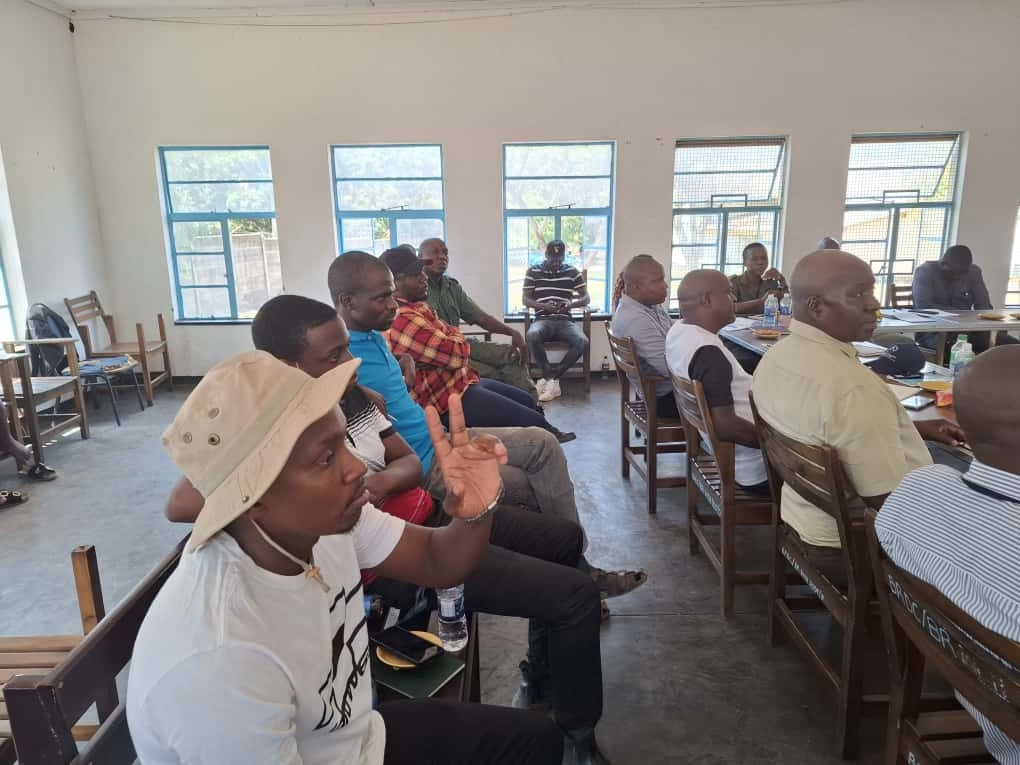
Book NowIt represented a reawakening of a district’s capacity to reclaim its landscape and, with it, its future.At face value, the workshop gathered 34 district-level stakeholders to learn about agroforestry, forest landscape restoration, and farmer managed natural regeneration. But beneath that was a deeper process, mapping out power and influence in land use decisions, confronting competing interests between development and conservation, and defining who gets to shape Binga’s environmental destiny.
Restoration in this context is not simply about planting trees, it is about redrawing the lines of accountability and governance in a district where fragile ecosystems intersect with fragile livelihoods.
The urgency cannot be overstated. For years, Binga has faced the twin pressures of land degradation and poverty, with communities depending heavily on natural resources for survival. Unsustainable practices have stripped the land, leaving it less resilient to droughts and floods that are now more frequent under climate change.
Restoration, therefore, is not a luxury. It is a survival strategy. As WCA’s Climate Smart Livelihoods Programme Officer Farai Nhekairo put it, the challenge is not just ecological but social,
“Landscape restoration recognizes the interconnectedness of ecosystems and promotes practices that support biodiversity, food production, livelihoods, and cultural heritage.
”This perspective introduces a shift in thinking, restoration as a cultural and economic process. In Binga, cultural heritage is inseparable from land. Sacred forests, communal grazing lands, and traditional agroecological knowledge systems form the backbone of identity.
Reviving landscapes, then, is also about reviving culture, pride, and belonging.
It is a reclamation of identity in a global era where rural communities often feel left behind.Perhaps most significantly, the workshop mapped stakeholders’ interests and influence, revealing the political and social undercurrents of restoration. District councils, ministries, and community actors often pursue overlapping or even conflicting goals.
Bringing them to one table forces a negotiation of power and resources, a necessary but uncomfortable process. The identification of priority areas for restoration was not merely technical, it was also political, signalling whose voices are heard in shaping the district’s green future.
By aligning Binga’s vision with national and global frameworks, WCA has also positioned the district to tap into international funding streams and policy support. Yet the real test will be whether these frameworks can be localized in ways that strengthen community resilience rather than impose external agendas.
The appreciation expressed by the District Development Coordinator’s Office is telling, it was less about theory and more about seeing a pathway for livelihoods to improve.Ultimately, the story of Binga’s restoration is not about a single workshop. It is about a community wrestling with the meaning of sustainability, negotiating power, and seeking to secure a livelihood that is at once ecological, cultural, and economic.
If the seeds planted during this training grow into genuine collaboration, Binga could become a model not just for Zimbabwe but for other regions where the fight against land degradation is as much about people as it is about nature.