The Government has rolled out the 2025/26 Summer Cropping Season Plan, targeting the planting of 1.8 million hectares of maize under the Presidential Inputs Scheme and other support programmes, in a move aimed at consolidating national food security.
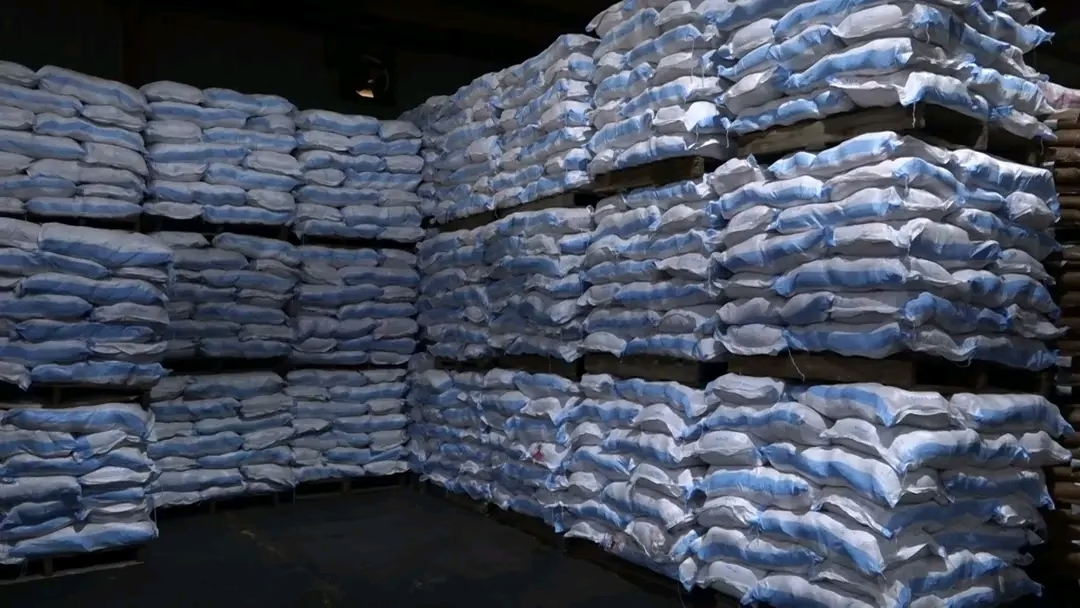
More than three million farmers are expected to benefit from seed and fertiliser support, with seed houses and fertiliser companies already mobilising inputs. Valley Seed, the lead supplier for the Presidential Inputs Scheme, confirmed that preparations were progressing smoothly.
“We have received seed from our contracted farmers, and we are now processing, although on a low note. We are happy that relevant authorities are working around the clock to support us with logistics,” said Valley Seed Managing Director, Mr Alois Chareka.
Permanent Secretary in the Ministry of Lands, Agriculture, Fisheries, Water and Rural Development, Professor Obert Jiri, confirmed that Cabinet had approved the plan and assured that inputs for all agricultural schemes were in place.
“For the Presidential and Pfumvudza schemes, those who availed the 10kg maize token to the President will be prioritised. We are targeting three million rural families under Pfumvudza. Fertiliser, seed and chemicals are available, and farmers should access them through the usual channels,” said Prof Jiri.
In addition to maize, the Government is targeting 516 000 hectares of sorghum and 280 000 hectares of traditional grains, aligning with the broader strategy of promoting climate-smart agriculture and diversifying the national food basket.
With meteorological experts forecasting rainfall patterns similar to last year, expectations are high that the country will register another successful harvest and strengthen food self-sufficiency. The emphasis on drought-tolerant crops such as sorghum and traditional grains is also expected to enhance resilience against climate variability.
The Summer Cropping Plan represents not only a blueprint for increased production but also a crucial step towards achieving Vision 2030’s goal of a food-secure and prosperous Zimbabwe.