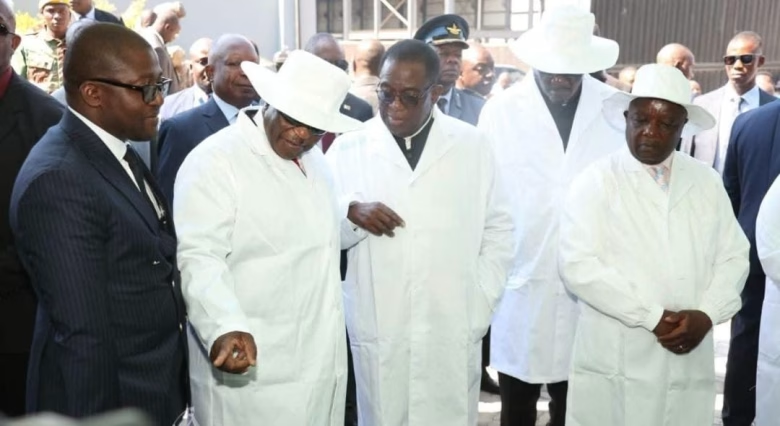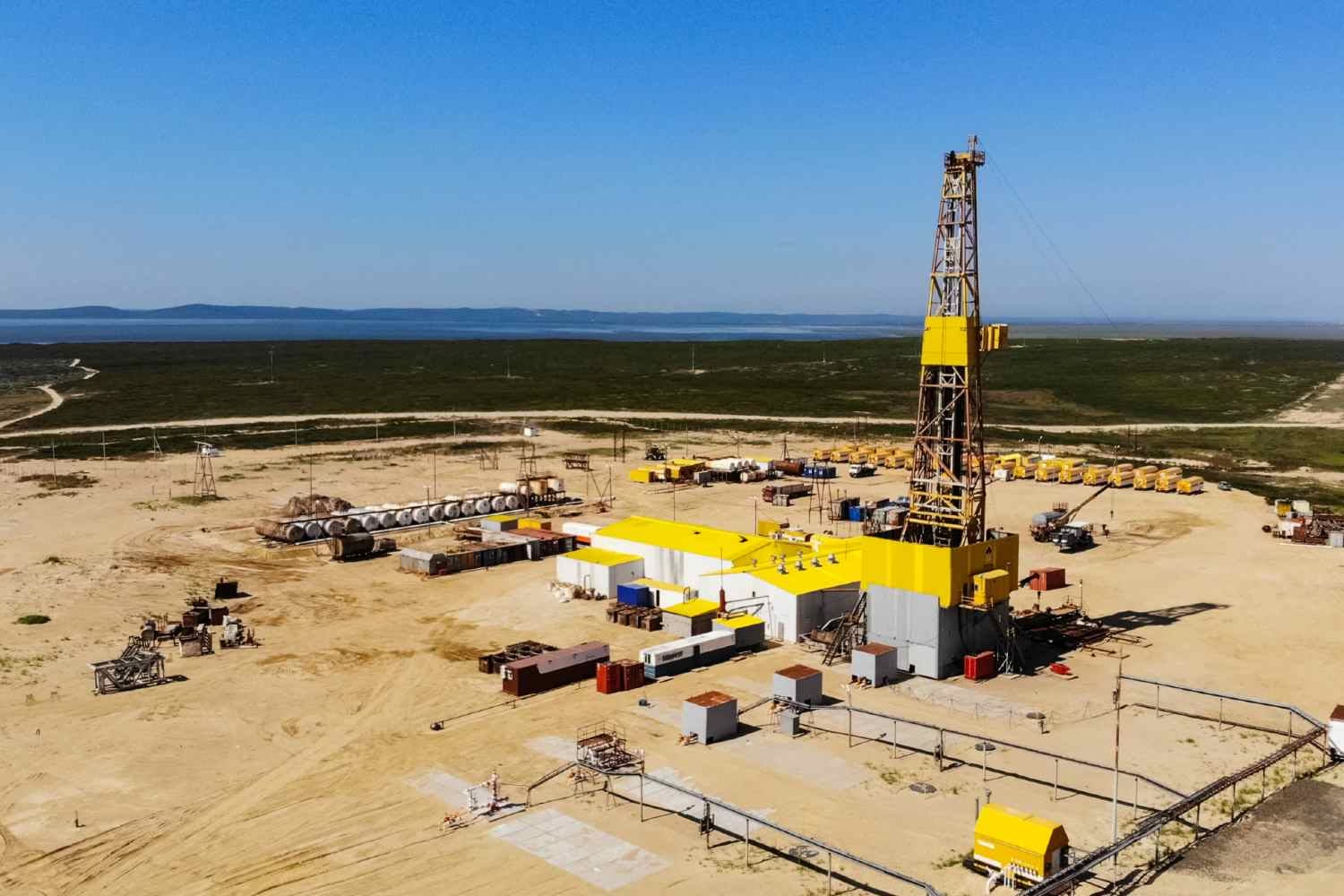
Zimbabwe’s Cabora Bassa oil and gas project has now crossed into the realm of national strategy, officially recognised as a National Project by Finance Minister Professor Mthuli Ncube. The announcement, coupled with confirmation that terms of the Petroleum Production Sharing Agreement have been agreed with the Republic of Zimbabwe, signals a decisive turn in the country’s quest to harness its own hydrocarbons and rewrite its energy narrative.
National Project Status is no ordinary designation. It is reserved for ventures that stand at the crossroads of national growth, security, and industrial transformation. In granting this recognition, government has sent a clear message: Cabora Bassa is not just an oil and gas play; it is a cornerstone in the economic future of the Second Republic.
The implications stretch far beyond geology. For decades, Zimbabwe has grappled with the heavy cost of fuel imports, spending billions in scarce foreign currency and tying the fortunes of its industries to volatile global markets. By moving Cabora Bassa up the ladder of policy priority, Zimbabwe is now positioning itself to ease that dependency, secure its own supply chains, and create the conditions for industrial expansion.
The Petroleum Production Sharing Agreement (PPSA), a globally accepted model of resource governance, further signals maturity. It balances state interests with investor incentives, creating a predictable framework for exploration, production, and revenue allocation. For foreign investors wary of political or regulatory risk, the PPSA acts as an assurance that Zimbabwe is ready to play by international rules in managing its hydrocarbons.
This breakthrough also fits seamlessly into the broader thrust of President Emmerson Mnangagwa’s economic diplomacy. Just as lithium and platinum have become central pillars in Zimbabwe’s mining-led growth, Cabora Bassa adds a new dimension, energy sovereignty. It aligns with the Africa-wide ambition of reducing import reliance, while potentially positioning Zimbabwe as an exporter into a Southern African Development Community (SADC) region hungry for reliable energy alternatives.
Yet, the weight of expectations cannot be ignored. Exploration in Cabora Bassa remains technically challenging and financially demanding. Market volatility, global energy transitions, and the capital-intensive nature of oil and gas projects mean timelines could stretch. But with National Project Status, government has essentially unlocked fast-tracked approvals, fiscal incentives, and a policy shield, advantages that shorten the road to commercialisation.
For Zimbabweans, the promise is profound. Beyond the headlines of barrels and reserves lies the potential for jobs, skills transfer, industrial by-products, and cheaper energy that fuels agriculture, manufacturing, and transport. The symbolic weight is equally powerful: the nation that once saw its energy ambitions falter may now stand on the brink of rewriting its place on the global energy map.
Cabora Bassa is no longer just a frontier well, it is the pivot of a vision. A vision of a Zimbabwe that fuels itself, trades as an equal, and harnesses its underground wealth not as a curse, but as a foundation for sovereignty and growth.