
By Aldridge Dzvene | Positive Eye News
The ground is no longer silent at Parirenyatwa. The dust has risen. The drills are humming. Scaffolds are wrapped around buildings that once whispered stories of neglect. But today, those whispers are being drowned by the loud, determined sound of national renewal. The country’s biggest referral hospital is not just being refurbished, it’s being reborn, brick by brick, as a statement of intent.
On August 6, the Ministry of Information, Publicity and Broadcasting Services led a powerful media tour of high-impact development projects in Harare Metropolitan Province, and at the centre of it all was Parirenyatwa Group of Hospitals, a site now buzzing with coordinated activity under the direction of the Second Republic. Ministers didn’t come to make promises; they came to show evidence. And the evidence was everywhere, in the newly tiled wards, in the restored nurses’ hostels, in the sports courts breathing back to life.
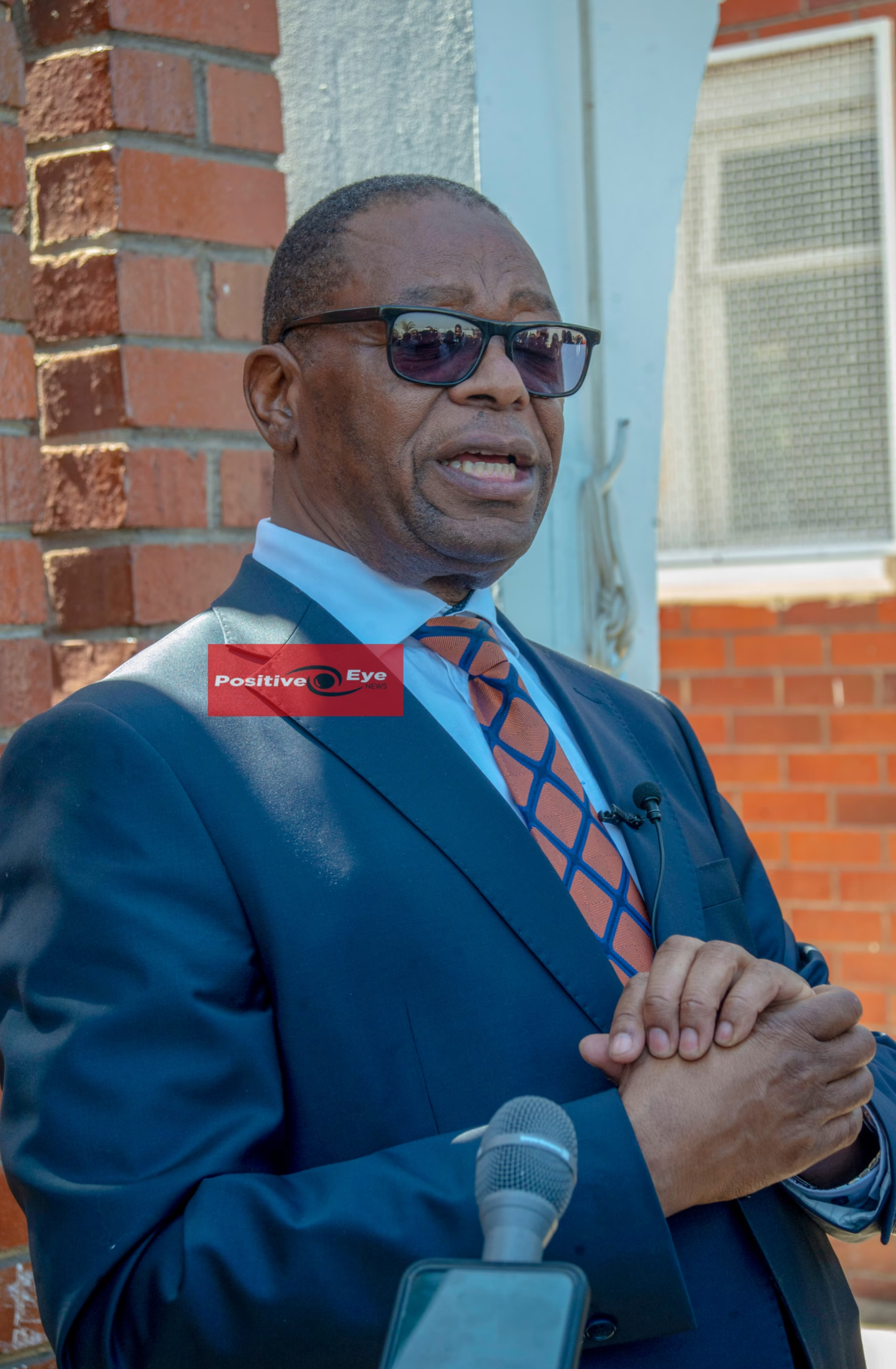
Minister of Local Government and Public Works, Honourable Daniel Garwe, didn’t mince his words. “This is what Vision 2030 looks like on the ground,” he said, standing beside a rejuvenated training centre. “We are not patching cracks. We are rebuilding health infrastructure to global standards.”
Three massive refurbishments are currently underway, the maternity wing, the nurses’ training school, and the student accommodation block. All are running side by side under the steady hand of Prevail Group of Companies, the contracted constructor entrusted with the job. Yet it is not the contractor that captured the public’s eye, it’s the scale, speed, and seriousness of the operation.
The details are sharp. A multi-purpose court for netball, basketball, and volleyball now glistens where grass once grew wild. A previously derelict swimming pool waits to be filled. New sewer and water systems have been installed, replacing decades-old pipes choked by rust and dysfunction. And, according to officials, the nurses’ training school will be ready by September, with hostels following by the end of October, and the rest of Phase One completed before December 2025.
Minister of Health and Child Care, Dr Douglas Mombeshora, said the transformation is already raising morale among both students and teaching staff. “When tutors walk into clean lecture rooms, and students live and train in a safe, well-kept environment, it uplifts their spirits and enhances their focus,” he said. “This refurbishment is not just cosmetic. It will double the intake of nurses, and in doing so, help us increase the national health workforce in line with our Vision 2030 goals.”
He emphasized that Parirenyatwa is only the beginning. “This initiative will not end here. We are extending this same model to other hospitals, Mpilo in Bulawayo is already being considered, along with key provincial health centres across Zimbabwe. Every region deserves a modern facility,” Dr Mombeshora added.
The transformation of Adlam House, a long-forgotten residence for student nurses, is perhaps the clearest metaphor of this shift. From broken ceilings and flooded toilets, the block is being revived into a habitable, dignified living space for young professionals training to become Zimbabwe’s frontline caregivers. The renovation isn’t just fixing a building; it’s restoring hope in the future of nursing.
There was no need for political hyperbole on this tour. The facts did the speaking. The media saw walls speak louder than press statements. Pipes, tiles, and timelines replaced political poetry. And what emerged was a message that Zimbabwe is indeed capable of transformation, not just through words, but through work.
Of course, more remains to be done. The main hospital block, the core of Parirenyatwa, still waits for its turn, and it will require careful phasing since the facility cannot be shut down. But the direction is clear. What the country is witnessing is not a facelift. It’s an architectural promise to future generations.
And in a time when global citizens are demanding visible progress, Parirenyatwa is answering, loudly, confidently, and with the steady rhythm of machines at work.