By Aldridge Dzvene
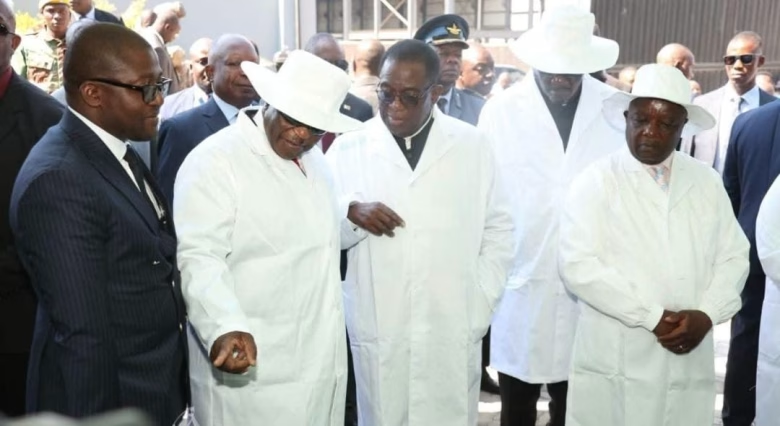
In the heart of Hurungwe district, the dusty plains of Magunje are being transformed into a beacon of rural industrial rebirth. The construction of a US$1 billion high-tech cement plant, spearheaded by Whi-Zim, is fast becoming one of the most compelling symbols of Zimbabwe’s rural industrialisation thrust under President Mnangagwa’s Second Republic.
What was once a quiet, agriculture-driven area is now alive with construction activity, machinery, and a growing sense of optimism. Set for completion by August next year, the plant is more than just a factory, it is a promise of transformation, of jobs, and of self-sustained development. For the local community, the excitement is not just in the towering silos and machinery, but in the opportunities already trickling down.
“Our children are being employed at the site,” said a community member, his face alight with anticipation. “The investor vowed to give back to the community, and we’ve already started noticing that. While some may not see the benefit of this project, it comes with multi-faced benefits.”
Indeed, the project’s potential impact reverberates well beyond the economic. With Zimbabwe working toward significantly reducing cement imports by 2026, this venture directly feeds into the country’s strategic vision for self-reliance and industrial sovereignty. The Whi-Zim representative, Mr Thomas Chidzomba, reaffirmed the company’s commitment to inclusive development, noting that, “We are working with the community and the government so that there is a win-win situation. Despite a few challenges, we are confident that all works will be completed by next August. We will produce low-cost cement, with prices expected to fall below US$10 per 50kg bag.”
This pricing shift alone promises to unlock broader infrastructure development across both rural and urban landscapes, allowing ordinary Zimbabweans to build and improve homes, schools, clinics, and other essential facilities without the burden of overpriced materials. It’s a powerful convergence of industrial policy and social impact, a rare but necessary balance.
Local leadership has also embraced the project with passion and purpose. ZANU PF Mashonaland West Provincial Chairperson and Hurungwe RDC Chairperson, Cde Mary Mliswa-Chikoka, called the initiative a lifeline not just for Hurungwe, but for national development. “This means development for the entire district. It will support council operations and fight against drug and substance abuse, which thrives on youth unemployment. Local job creation and affordable building materials directly align with our infrastructure development plan,” she said.
Her sentiments were echoed by the Minister of Justice, Legal and Parliamentary Affairs, Cde Ziyambi Ziyambi, who described the plant as a key pillar in strengthening the country’s productive capacity. “This is a welcome development for Magunje and the province. It will uplift lives through employment and help boost national cement production. As government, we are impressed with the direction this project is taking.”
But perhaps what makes this story particularly compelling is the human side of the investment. Beyond its economic weight, Whi-Zim has already invested in community well-being by drilling at least 11 boreholes to provide clean, potable water, a vital gesture in a region where water scarcity remains a challenge. This act reinforces the idea that industrialisation need not be extractive, but rather collaborative and responsive to the needs of the people it is meant to uplift.
As construction cranes rise above the horizon in Magunje, so too does a new narrative, one where development is not just seen from the glass towers of Harare, but felt on the ground, in the lives of rural families, in the dignity of labour, and in the satisfaction of building a better future with local hands. The cement plant in Hurungwe is not just mixing concrete, it is laying the foundation for a stronger, more inclusive Zimbabwe.