By Aldridge Dzvene, Positive Eye News
At a time when empowerment has become a buzzword in political speeches and community expectations, Special Presidential Investment Advisor Dr. Paul Tungwarara has stepped forward with a bold, corrective voice, one that challenges the very culture of entitlement, exclusion, and opaque handling of development funds in Zimbabwe.
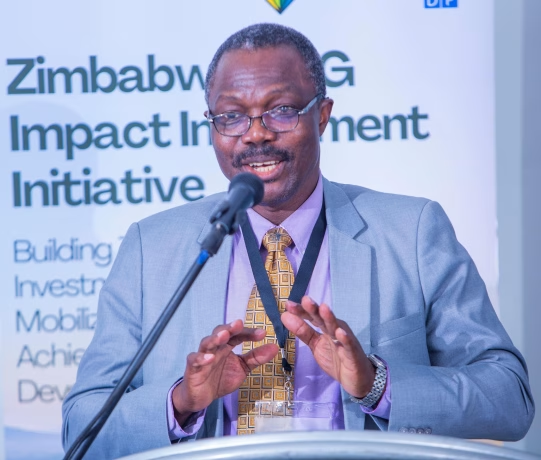
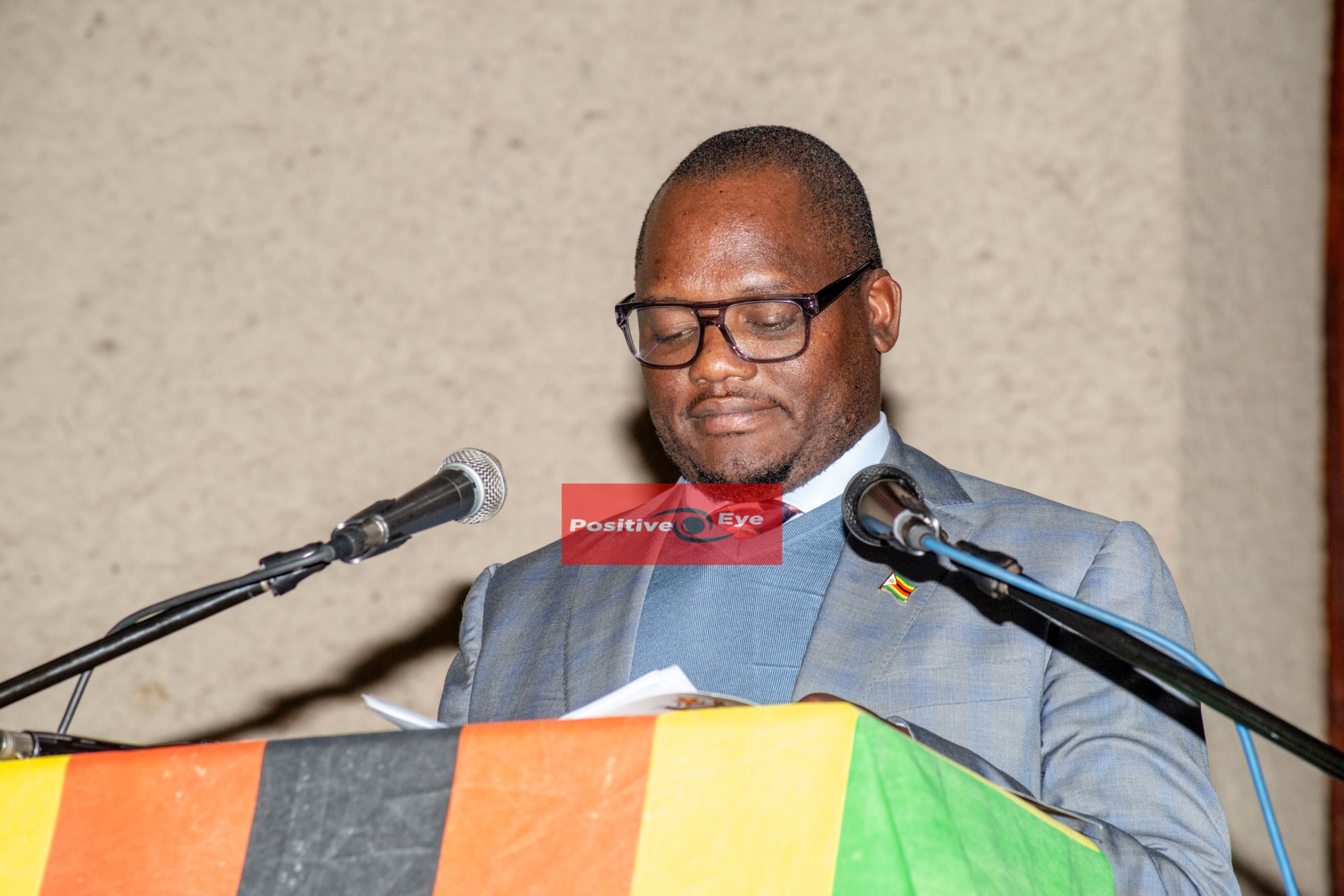
Speaking at the recent National Multi-Faith Economic Dialogue in Harare, Dr. Tungwarara did not deliver a ceremonial address, but rather, issued a strong declaration on what empowerment must and must not be. He made it clear that President Emmerson Mnangagwa’s vision under the Presidential Empowerment Schemes does not support individual gain, but instead champions collective, community-based transformation that leaves no one behind.
In an environment often marred by political gatekeeping, clique-based funding access, and unmonitored group leadership, Dr. Tungwarara’s tone struck a chord, firm, unapologetic, and clear: corruption, favoritism, and internal looting will not be tolerated.
“The President’s intention is not to make individuals rich. It is to empower groups, churches, war veterans, youth formations, women’s clusters, and provinces,” he said. “But we cannot do that if the leadership within those groups becomes the only beneficiary.”
These words carry weight. At stake is the credibility of Zimbabwe’s wide-ranging empowerment drive, from youth presidential funding, affiliates’ allocations, and war veterans’ support, to Pastors for ED, the Multi-Faith Financial Corporation, and provincial revolving fund launches. While the initiatives are broad in scope and impressive on paper, the real test lies in execution, and that execution must be just.
Dr. Tungwarara’s statements exposed a long-standing weakness in grassroots development: access inequality. Too often, funds meant for thousands are accessed by dozens. Community cooperatives are reduced to executive committees, and the spirit of inclusive economic transformation is choked by internal corruption.
That is what this editorial must confront: the betrayal of empowerment by the empowered themselves.
When those entrusted to distribute opportunity begin to eat first, most, and alone, they derail the very vision they claim to support. What Dr. Tungwarara offered was not just a speech, but a challenge to those within the system: Be gate-openers, not gatekeepers.
He emphasized transparency, calling for open systems of resource allocation, with clear guidelines, records, and accountability frameworks. In a context where bricks, cement, boreholes, and agricultural inputs are being rolled out under the Presidential banner, failure to transparently manage those resources is not just theft, it’s sabotage.
This is where empowerment must evolve, from being a campaign theme to becoming a governance culture. And the warning was clear: if leadership at the community level cannot manage empowerment honestly, then they are unfit to lead.
The Presidential Empowerment Schemes are some of the most ambitious post-independence economic interventions in Zimbabwe’s recent history. But ambition must be matched with integrity, and ambition alone cannot fill granaries, build schools, or start cooperatives. Only honest systems can.
In highlighting group-based empowerment, Dr. Tungwarara also reminded Zimbabweans that real transformation is found in structure, not status. It is found in savings clubs that share profits fairly, in farming groups that uplift each member, and in faith organisations that become vessels of change, not vaults of hidden privilege.
As Zimbabwe moves toward Vision 2030, with a declared goal of becoming an upper-middle-income society, this editorial joins the call for honesty in leadership, equity in disbursement, and vigilance in oversight.
Dr. Tungwarara has drawn the line. The people are watching. If the funds continue to circulate among the same few, then no one is empowered, the nation is robbed. But if integrity takes root, empowerment will not be a political slogan, it will be a national reality.