As the current Chair of the Southern African Development Community (SADC), Zimbabwe is preparing to host the upcoming SADC Ministers of Gender and Women Affairs Meeting from 24 to 27 June 2025. The meeting will convene approximately 150 delegates from across SADC Member States, including ministers, senior officials, and regional observers, who will gather in Harare to review the region’s progress in achieving gender equality and women’s empowerment.
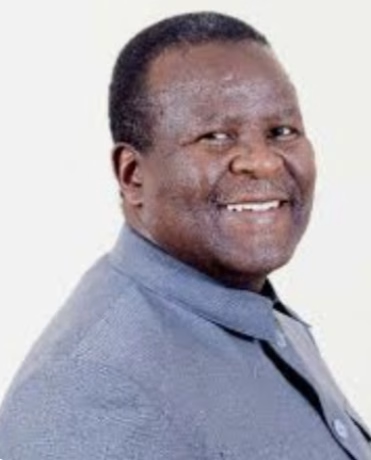
Speaking at a press briefing, the Minister of Women Affairs, Community, Small and Medium Enterprises Development, Senator Monica Mutsvangwa, underscored the significance of the event, saying it reflects Zimbabwe’s commitment to driving the regional agenda on gender equity. The meeting, she said, will be guided by SADC’s 2025 theme, “Promoting Innovation to Unlock Opportunities for Sustained Economic Growth and Development towards an Industrialised SADC.”
This theme, the Minister noted, is timely for a region seeking to diversify its economies and enhance the role of women in key sectors such as manufacturing, mining beneficiation, and information technology. She emphasised that despite women-led micro, small, and medium enterprises forming the backbone of local economies, many women still lack access to land, capital, and market opportunities, barriers that inhibit their full participation in economic development.
Senator Mutsvangwa highlighted that Zimbabwe has developed several policies and strategies to accelerate gender mainstreaming and women’s empowerment, including the National Gender Policy, the High-Level Political Compact on Ending GBV, and the Broad-Based Women Economic Empowerment Framework. She also cited the UNSCR 1325 National Action Plan and the Strategy for Women in Leadership and Decision Making as key instruments that Zimbabwe will showcase during the meeting.
Despite this progress, the Minister acknowledged the persistent gaps, making the SADC meeting a vital platform for mutual learning and recommitment. Member States are expected to assess the implementation of the SADC Protocol on Gender and Development, drawing from frameworks such as the SADC Gender Equality Seal, the Regional GBV Strategy, and the Women, Peace and Security Agenda.
The Minister stressed the urgency of advancing inclusive growth by placing women at the center of innovation and entrepreneurship in the region. She urged for renewed momentum in mobilising resources for gender-responsive programming and called on SADC countries to work collaboratively to address pushbacks and dwindling funding in the gender sector.
She concluded by expressing hope that the conference will yield concrete outcomes, clear action plans, timelines, and renewed political will to ensure the empowerment of women and girls remains central to the region’s transformation agenda. The resolutions from the meeting will ultimately be tabled before the SADC Summit of Heads of State and Government.