As regional cooperation deepens in response to the challenges and opportunities of a rapidly evolving global landscape, Southern Africa is poised for a transformative dialogue. On 20 June 2025, the Republic of Zimbabwe will host the SADC Joint Meeting of Ministers Responsible for Education and Training and Science, Technology and Innovation in Harare, a gathering set to redefine the region’s collective investment in knowledge, skills, and innovation.
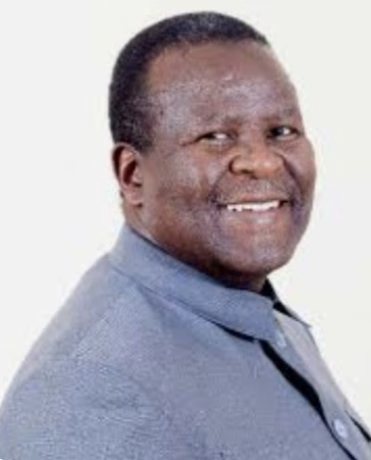
Chaired by Honourable Dr. Frederick M. Shava, Zimbabwe’s Minister of Higher and Tertiary Education, Innovation, Science and Technology Development, this high-level ministerial platform is not just an administrative convening. It represents SADC’s strategic pivot toward building a knowledge-based economy, empowering its citizens with relevant education, and promoting innovation as a catalyst for industrialisation, climate resilience, and inclusive development.
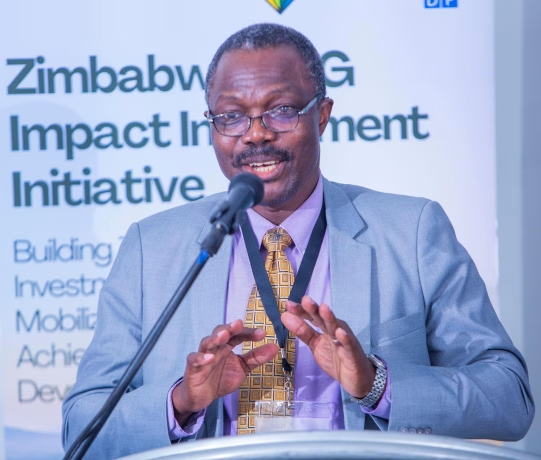
Representing the SADC Secretariat will be Ms. Angèle Makombo N’tumba, the SADC Deputy Executive Secretary for Regional Integration, standing in for the Executive Secretary, His Excellency Mr. Elias M. Magosi. Their presence underlines the weight SADC attaches to these interwoven sectors and the urgent need for coherence in regional education and STI policies.
A major highlight of the meeting will be the review of progress on previous resolutions and implementation of key protocols, including the SADC Protocol on Science, Technology and Innovation, a landmark agreement aimed at enhancing collaboration across member states in research, technology transfer, and innovation ecosystems.
One of the most anticipated discussions is the operationalisation of the SADC University of Transformation (SUT), envisioned as a regional hub for entrepreneurship, technology transfer, and enterprise development. The university’s mission aligns with SADC’s broader industrialisation agenda, creating a skilled workforce ready to lead in digital, green, and creative economies.
Also on the agenda is the Regional Higher Education Strategic Framework, which follows the adoption of the SADC Futures of Higher Education and TVET Policy Framework. These frameworks are vital tools for member states seeking to align their national education systems with regional development goals, while addressing emerging challenges such as climate change, digitalisation, and demographic shifts.
Importantly, the Ministers will engage with the revised TVET Strategic Framework, a forward-looking policy that integrates modern-day realities, particularly the need to equip youth with 21st-century skills for green and digital jobs. This signals a bold step toward closing the skills gap, reducing youth unemployment, and ensuring SADC’s workforce is future-ready.
In a powerful nod to indigenous heritage and cultural knowledge, the meeting will also review progress on the Regional Indigenous Knowledge Systems (IKS) Strategy and implementation plans for the Seventh IKS Policy. These instruments aim to bridge traditional wisdom with scientific research, elevating indigenous knowledge holders to equal footing in development discourse and decision-making.
Gender equity is not being left behind. Ministers will consider the SADC Charter on Women in Science, Engineering and Technology, which is pushing for greater representation, leadership, and entrepreneurship among women in STEM. With growing recognition of the gendered dimensions of development, this Charter is a call to action to dismantle barriers and unlock the full potential of half the region’s population.
One of the most sensitive yet critical agenda items will be the presentation of a report calling for systematic data collection on adolescent health, school health policies, and areas such as HIV awareness, mental health, sexual and reproductive health, and violence prevention. By grounding future policies in robust, reliable data, the region aims to make informed interventions that protect and empower its youth.
Preceding this ministerial gathering are key technical meetings that set the tone. On 17–18 June, senior officials from the same portfolios will meet to prepare policy drafts and review technical reports. On 19 June, a High-Level Ministerial Round Table on Foundational Literacy and Numeracy will also convene, drawing focus to one of the most pressing challenges in the region, ensuring that no child is left behind in acquiring the most basic yet transformative tools for lifelong learning.
In analytical terms, this SADC Joint Ministerial Meeting reflects a regional awakening, a realisation that education, science, and innovation are not peripheral, but foundational to achieving Vision 2050, the AU Agenda 2063, and the Sustainable Development Goals. It acknowledges that building strong institutions, skilled human capital, and resilient systems starts with dialogue, strategy, and bold policy choices.
As ministers gather in Harare, the stakes are high, but so is the potential. What emerges from these deliberations may well shape the future of how Southern Africa educates, innovates, and transforms in the decades to come.