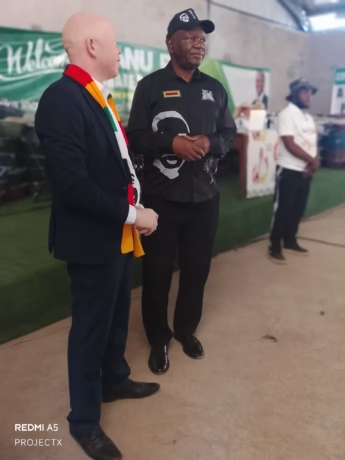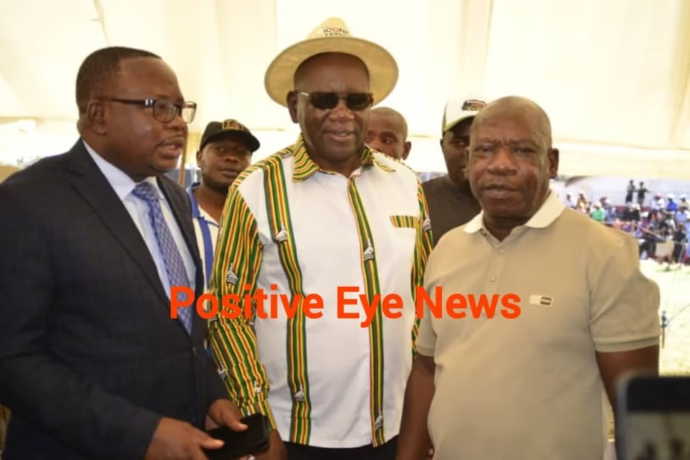
It was a scene that crackled with energy and promise: pastors in vibrant regalia, songs of praise echoing through the Glamis Arena, and a palpable sense of anticipation in the air. In that moment, faith and economics converged in a way Zimbabwe has rarely seen before.

The launch of the Presidential Empowerment Fund for the clergy wasn’t just another political event. It was a bold declaration that the pulpit is no longer a bystander in Zimbabwe’s developmental journey, it’s a key player.

Rainbow Hotels — Experience Luxury Across Zimbabwe
Rainbow Hotels continues to redefine hospitality standards in Zimbabwe, offering world-class accommodation, fine dining, and modern conference facilities in Harare, Bulawayo, and Victoria Falls.
Whether for business or leisure, Rainbow Hotels delivers unmatched comfort, exceptional service, and a truly premium guest experience tailored to modern travellers.
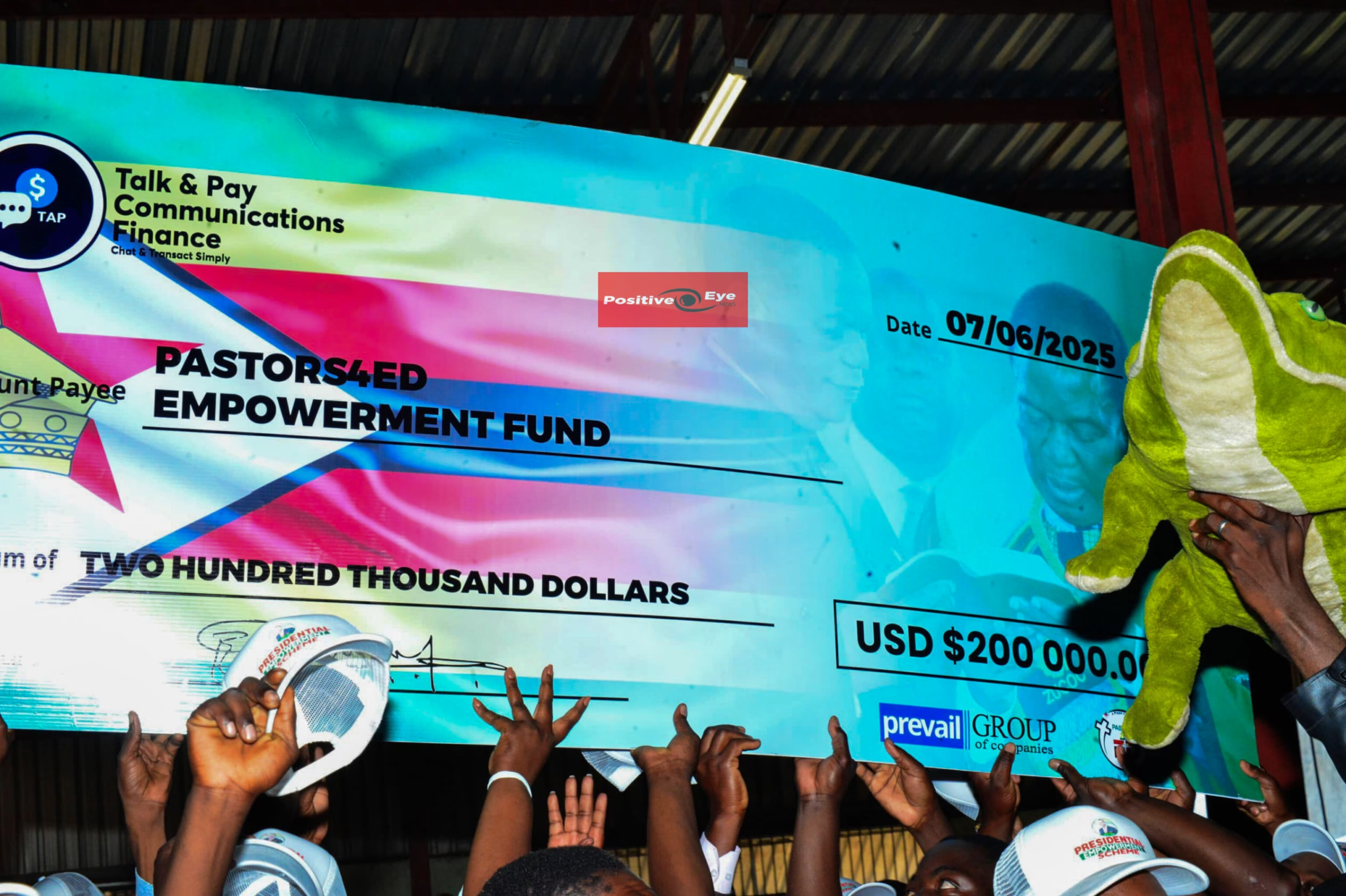
Book NowPresidential Investment Adviser Dr. Paul Tungwarara delivered the announcement with a mix of reverence and realism: “This is not a donation; it is an investment in people who are already leading transformation from the pulpit.” With that, US$200,000 in seed capital was handed over to Pastors for Economic Development (Pastors4ED), a move that signals a paradigm shift in how Zimbabwe sees its faith leaders.

Gone are the days when pastors were confined to spiritual matters while politicians and business elites dominated the economic landscape. This fund, part of a broader vision to create an upper-middle-income economy by 2030, positions the clergy as the bridge between government policy and grassroots empowerment.
And the significance was not lost on the crowd. As Dr. Tungwarara outlined plans for agricultural training, small enterprise support, and sustainable income generation, applause rippled through the audience like a wave. For many pastors who have spent years tending to spiritual needs while grappling with financial hardships, the fund felt like overdue recognition.

“This fund will restore the dignity of both pastors and congregants,” Dr. Tungwarara continued, his words landing with the force of a promise. “It will reduce cases of rape, child marriages, and other illegal acts,” he added, linking economic empowerment to social change in a way that felt both ambitious and necessary.
ZANU PF Deputy National Political Commissar, Cde Webster Shamu, took it further: “Pastors must take a leading role in national development. This fund ensures that the church contributes actively to the growth of our communities.”
This is more than just a one-time financial boost. It’s a reimagining of the clergy’s role, from spiritual guardians to catalysts of economic dynamism. Pastors4ED chairperson, Ms. Idirashe Dongo, reminded everyone that this wasn’t happening in a vacuum. “For the past few years, we have trained 105,000 pastors in entrepreneurship skills, smart agriculture, beekeeping, and horticulture,” she said. “Now we have the skills needed to help drive the economy forward.”
The symbolism is powerful. In a nation where the church has historically been a voice of moral guidance, and sometimes a critic of political missteps, this new partnership raises both hopes and questions. Can pastors walk the tightrope between prophetic witness and pragmatic development? Will the fund avoid the pitfalls of patronage and mismanagement that have sometimes dogged similar initiatives?
Analytically, the move is savvy. Pastors command trust in communities that often feel left out of mainstream development. Their influence can be leveraged to roll out entrepreneurship training, local farming initiatives, and small businesses that not only reduce poverty but foster resilience. It’s a model that blends social capital with economic potential, a marriage of vision and grassroots power.
Yet the initiative also risks blurring the line between church and state in ways that could challenge the independence of both. Some critics worry that aligning clergy too closely with ruling party structures could undermine their prophetic voice. Others see it as a pragmatic partnership that harnesses every available tool to uplift communities.
As the sun dipped below the Harare skyline, the message was clear: Zimbabwe’s development is no longer a conversation reserved for technocrats and politicians. It’s a journey that now includes pastors, congregants, and the communities they serve.
If this fund lives up to its promise, it could transform not just the economic prospects of pastors, but the very fabric of Zimbabwean society, turning the pulpit into a launchpad for grassroots entrepreneurship, social justice, and sustainable development.
It’s a tall order, but in a country that has always defied expectations, the clergy may well be the missing link between policy and people, a force ready to build the future with faith, resilience, and enterprise.