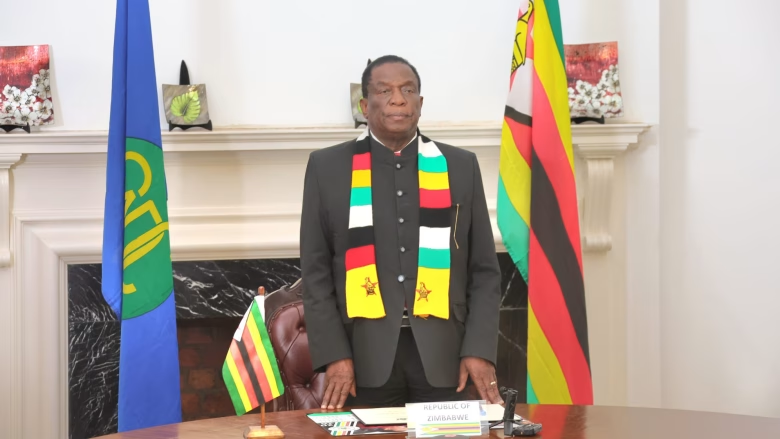
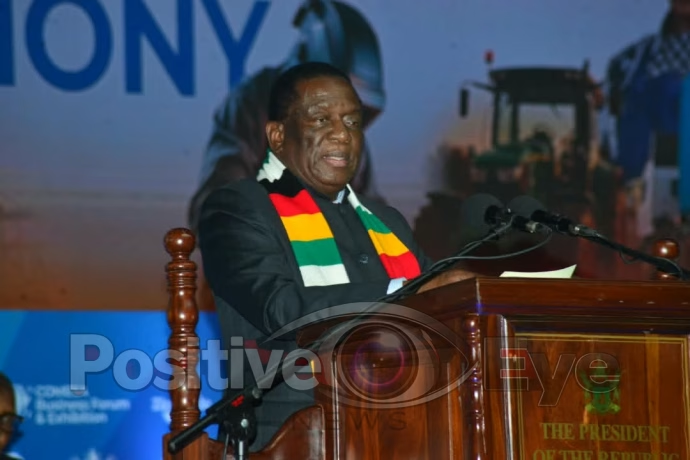
The echoes of Zimbabwe’s liberation struggle found new life at Harare’s City Sports Centre this week as the Presidential War Veterans Empowerment Scheme was officially launched. Against a backdrop of revolutionary songs and party regalia, the event was more than a political ceremony, it was a recalibration of the country’s relationship with its liberation heroes, a move to transition from symbolic gratitude to tangible, economic empowerment.
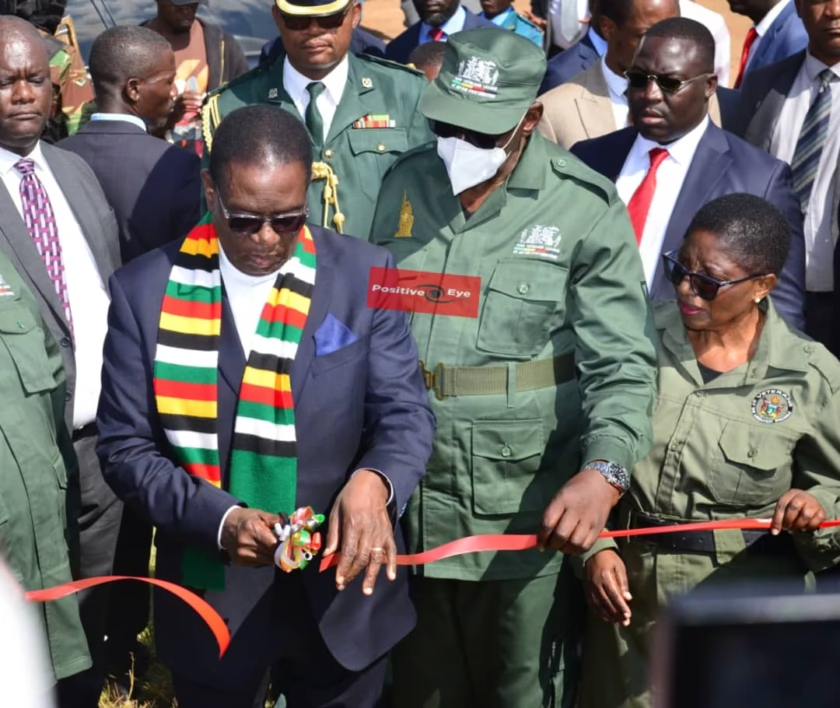
President Emmerson Mnangagwa, delivering his address with characteristic resolve, underscored the gravity of the moment. War veterans, he reminded the nation, are more than a historical footnote, they are the living foundation of Zimbabwe’s sovereignty. “They remain critical actors in advancing our national vision,” he declared, as the crowd responded with chants of solidarity.
But behind the ceremonial fanfare lay a more profound narrative: the long-standing question of how to truly integrate war veterans into the country’s socioeconomic fabric. For decades, the conversation about war veterans’ welfare has simmered, often marked by sporadic interventions and short-lived schemes. This latest initiative, however, is pitched as a comprehensive plan: US$1.5 million already disbursed across provinces, plus an additional US$2 million announced at the launch to broaden its reach to war collaborators, ex-detainees, non-combatants, and widows of veterans.
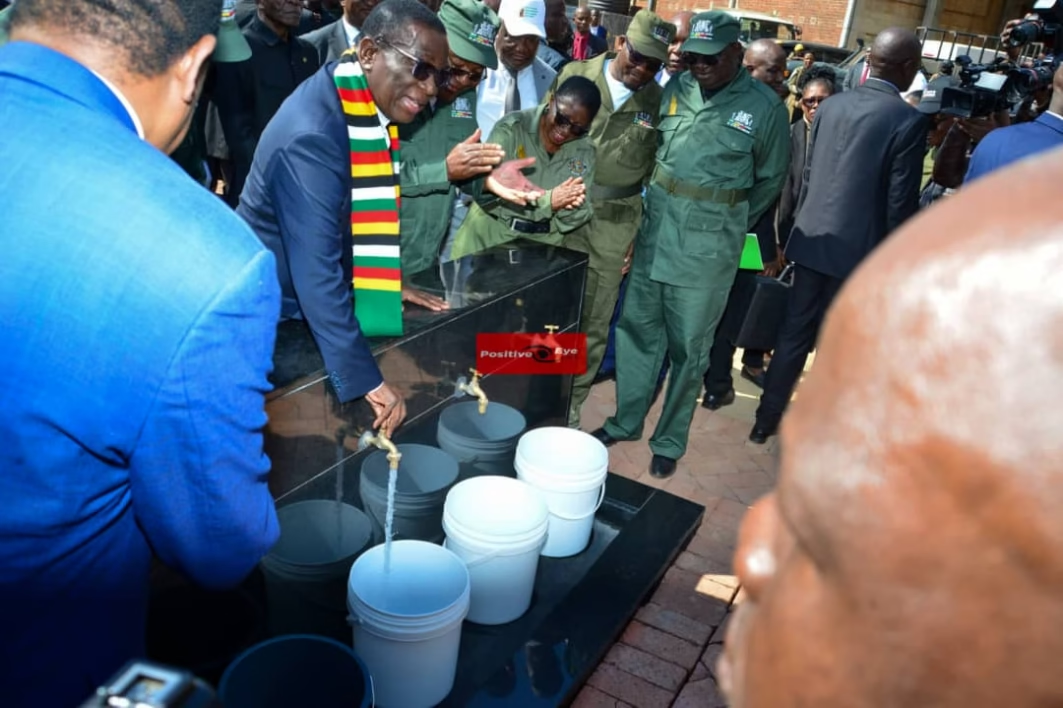
The scheme’s design reads like a blueprint for inclusive development. Tractors, essential tools for unlocking Zimbabwe’s agricultural potential, are being distributed province by province. Model houses are under construction. Boreholes, solar projects, and bicycles are being rolled out with the promise that “no one and no place will be left behind.” The symbolism here is potent: war veterans fought to liberate the land, and now they are being equipped to cultivate it, both literally and figuratively.
Yet beneath the rhetoric lies a challenge as old as Zimbabwe’s independence itself: turning well-meaning initiatives into sustained impact. The President’s call for accountability was unambiguous, urging transparency in beneficiary selection and insisting that the interest-free loans be repaid so the fund can revolve. “Hatidi humbavha,” he warned, a clear signal that past experiences with mismanagement and patronage must not be repeated.
The empowerment scheme’s broader economic implications are equally significant. As the country navigates the lingering effects of economic sanctions and seeks to stabilise its currency, integrating war veterans into productive sectors such as agriculture and mining could be a catalyst for inclusive growth. The scheme’s emphasis on skills development, resource mobilisation, and technological adoption hints at a model where war veterans are not passive recipients of state largesse but active participants in Zimbabwe’s development journey.
But perhaps the most intriguing aspect of the launch was its timing and tone. Held in the run-up to crucial by-elections and amid growing global attention on veterans’ affairs, the event doubled as both a developmental milestone and a strategic political signal. The slogans of unity, peace, and development were not lost on the crowd, a reminder that in Zimbabwe, the line between party loyalty and national policy is often thin.
The theme of the event, “Honouring, Respecting, Recognising the Past: Shaping the Future”, captured this delicate balancing act. Zimbabwe’s war veterans are not just historical actors; they are key players in the nation’s ongoing quest for stability, growth, and identity.
As the sun set on the City Sports Centre and war veterans departed with their hopes, and perhaps a dose of healthy scepticism, the real work began. Implementation, oversight, and community buy-in will be the tests of this scheme’s durability. Will the tractors transform fallow lands into productive farms? Will the revolving fund sustain itself beyond the initial political honeymoon? Will this scheme truly shift the narrative from war hero as a symbol to war hero as a stakeholder in Zimbabwe’s future?
One thing is certain: Zimbabwe’s story is incomplete without the voices of its veterans. As the country charts its course towards Vision 2030 and beyond, the success of this empowerment scheme will be a telling measure of how it reconciles the sacrifices of the past with the demands of the future.
In the end, the Presidential War Veterans Empowerment Scheme is not just about economics, it’s about national memory, identity, and the promise of a country determined to build itself with and for its people.