The Judicial Service Commission (JSC) has launched a critical recruitment process to fill eight vacant positions on the Labour Court bench, marking a pivotal step in strengthening Zimbabwe’s justice delivery system and responding to growing labour dispute volumes across the nation. The public interviews, currently underway in Harare, underscore the Commission’s commitment to constitutionalism, transparency, and merit-based appointments within the judiciary.
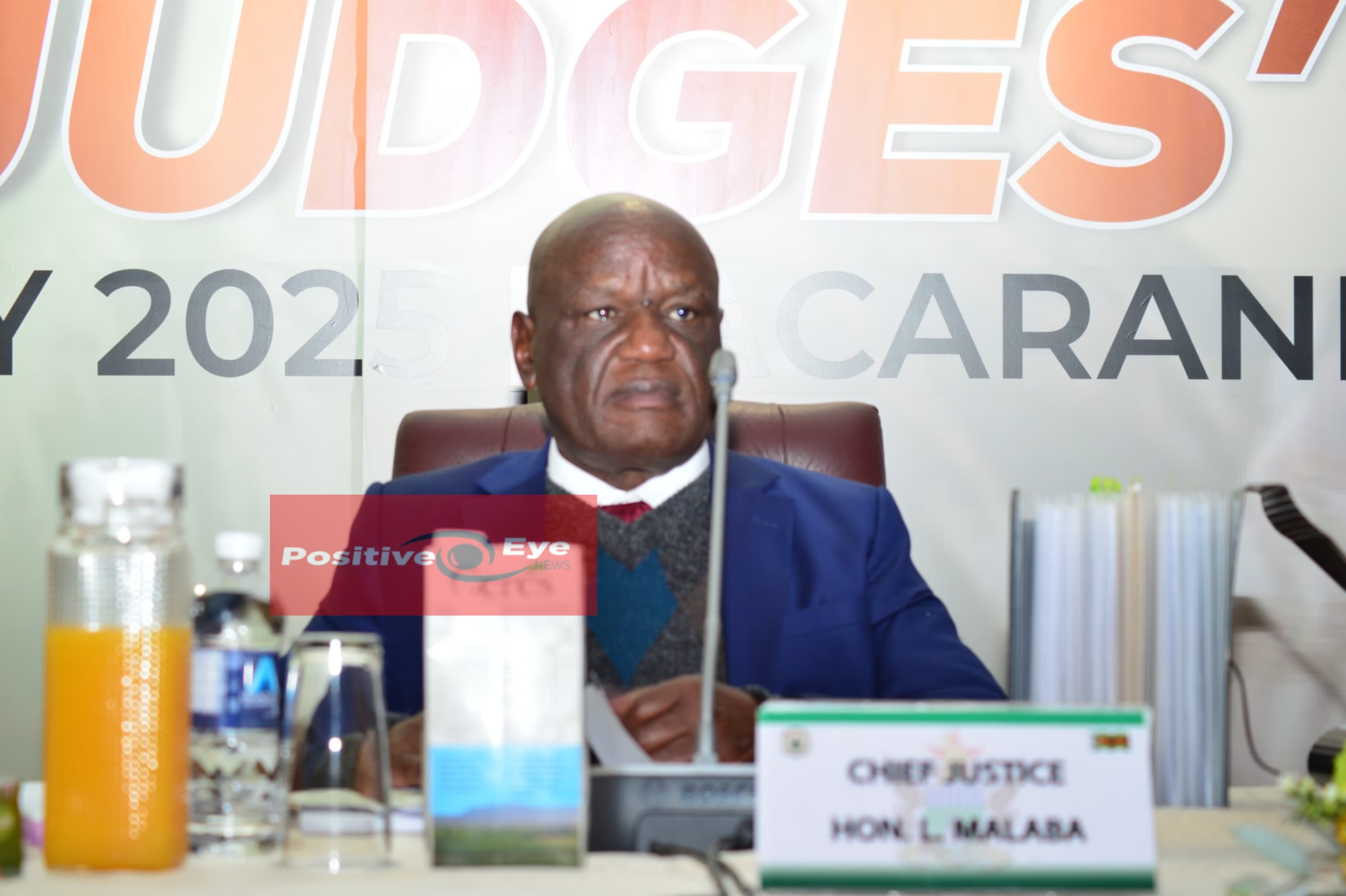
Presided over by Chief Justice Luke Malaba, who is also expected to deliver the official opening remarks, the interviews serve not only as an evaluative mechanism but also as a national reaffirmation of the judiciary’s role in upholding rights and ensuring institutional integrity. The panel is focused on assessing each candidate’s depth of knowledge in labour law and their interpretive capacity in safeguarding both workers’ and employers’ rights within a fast-evolving labour environment.
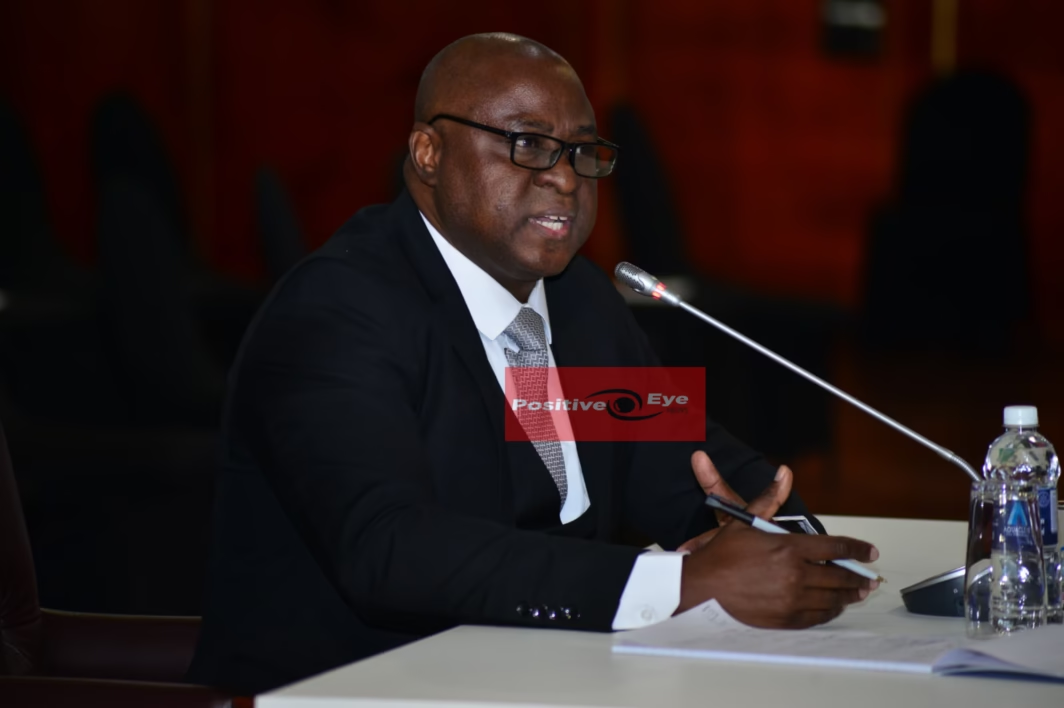
Thirteen candidates are appearing before the panel today, including Innocent Bepura, Chipo Ruwhaya, Estere Chivasa, Martin Ray Gapara, Tinevimbo Gatawa, Evidence Gonesi, Mary Grace Nyarai Hare, Thompson Hove, Motion Jaravani, Naison Machingauta, Bianca Makwande, Taurai Manwere, and Edward Mapara. A total of 27 candidates were shortlisted, reflecting the JSC’s broad search for competent legal professionals who can fortify the Labour Court with the necessary jurisprudential rigour.
The Labour Court, established under the Labour Act [Chapter 28:01], plays a foundational role in the resolution of workplace-related disputes, the interpretation of employment contracts, and the maintenance of industrial harmony. In recent years, the Court has come under increasing pressure due to a surge in cases driven by economic volatility, retrenchments, restructuring, and wage-related grievances. The need to augment judicial capacity has thus become both a legal and economic imperative.
The Commission has repeatedly emphasised the importance of a judiciary that is not only impartial and independent, but also efficiently staffed to ensure timely justice. Labour disputes, if left unresolved, can cascade into broader socio-economic instability, making the Labour Court’s effectiveness central to the country’s economic governance framework.
In line with Section 179 of the Constitution of Zimbabwe, successful candidates will be formally appointed by the President upon recommendation by the Judicial Service Commission. This constitutional provision ensures that appointments are not only procedurally sound but also politically insulated, further enhancing public trust in the judiciary.
This recruitment process is emblematic of a wider institutional reform agenda underway within Zimbabwe’s legal sector, one aimed at modernising the courts, professionalising legal practices, and reinforcing access to justice. By investing in judicial human capital and refining selection mechanisms, the JSC is contributing significantly to the broader national vision of an accountable and responsive legal framework.
As the interviews progress and the country awaits the final appointments, this moment represents more than just personnel changes. It is a signal of intent: that Zimbabwe’s judiciary continues to evolve in its quest for integrity, fairness, and service to the nation.