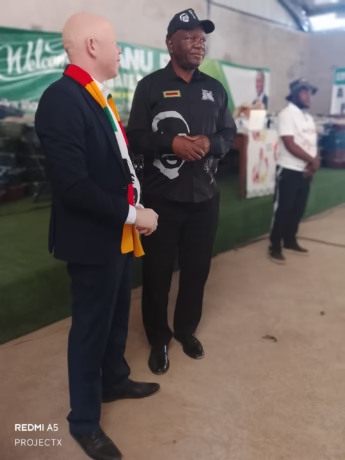
As environmental diplomacy gains traction within Southern Africa, the recent engagement between Zimbabwe and Botswana marks a significant shift from traditional bilateral rhetoric to practical, region-focused implementation. The meeting between Botswana’s Minister of Environment and Tourism, Honourable Winter Boipuso Mmolotsi, and Zimbabwe’s Minister of Information, Publicity and Broadcasting Services, Dr Jenfan Muswere, was more than a courtesy call, it was a signal of intent to operationalise a shared vision rooted in ecological interdependence and economic opportunity.
In a region where wildlife migratory corridors, conservation zones, and natural heritage sites straddle national borders, the collaborative stewardship of resources has evolved from being idealistic to imperative. The Kavango-Zambezi Transfrontier Conservation Area (KAZA TFCA), which encompasses parts of Zimbabwe and Botswana, is a case in point, its success depends heavily on policy alignment, joint tourism promotion, and harmonised immigration protocols. This meeting, held under the banner of a standing Memorandum of Understanding, explored precisely that.

Rainbow Hotels — Experience Luxury Across Zimbabwe
Rainbow Hotels continues to redefine hospitality standards in Zimbabwe, offering world-class accommodation, fine dining, and modern conference facilities in Harare, Bulawayo, and Victoria Falls.
Whether for business or leisure, Rainbow Hotels delivers unmatched comfort, exceptional service, and a truly premium guest experience tailored to modern travellers.
Book NowDr Muswere’s remarks hinted at a broader strategy that places tourism at the core of regional development. From calls to ease tourist mobility through relaxed immigration protocols, to technical partnerships on biodiversity and wildlife management, the language of the engagement suggests a pivot toward results-oriented diplomacy. It also positions tourism not only as a commercial enterprise but as a platform for cultural exchange, environmental education, and economic inclusion.
Botswana, known for its conservative and highly sustainable tourism model, stands as a model of environmental integrity. Zimbabwe, with its rich biodiversity and iconic destinations like Victoria Falls and Hwange National Park, brings to the table cultural depth and vast potential. When combined through structured cooperation, these assets can create a seamless regional tourism experience, one that does not merely attract international arrivals but reinvests in local communities and natural ecosystems.
Honourable Mmolotsi’s statement that “wildlife knows no borders” captures the essence of this transboundary approach. His emphasis on availability and active engagement reflects Botswana’s readiness to transcend diplomatic niceties and focus on delivery. The institutional memory and political will displayed by both countries reinforce the notion that environmental collaboration is no longer optional in the face of climate change, poaching, and shifting tourism dynamics.
Furthermore, the visit reflects a growing trend where environmental and tourism portfolios are increasingly used to bolster foreign relations and economic diplomacy in Africa. As global tourism slowly recalibrates post-COVID, Southern Africa has a chance to rebrand itself as a united eco-tourism block, anchored not in competition, but in shared vision and responsible growth.
If this partnership is followed through with action, joint marketing, integrated visa systems, harmonised standards, and cross-border conservation projects, it could become a blueprint for regional cooperation. It could also redefine how neighbouring nations approach tourism: not as rivals vying for tourist dollars, but as collaborators nurturing a common ecological and economic future.
In this light, the Zimbabwe-Botswana engagement is more than symbolic—it is strategic, timely, and necessary.