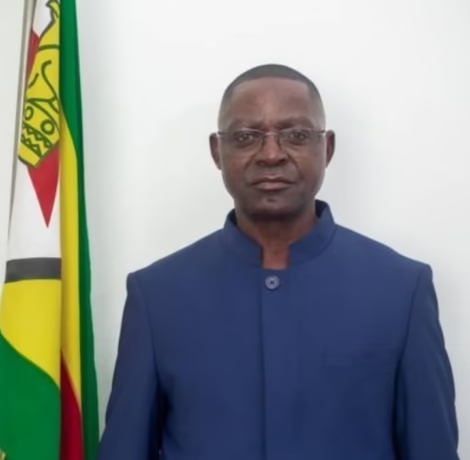


As the SADC Parliamentary Forum (SADC PF) Executive Committee (EXCO) reconvened for its third day of deliberations in Windhoek, the tone shifted from ceremonial unity to rigorous thought leadership, with Zimbabwe’s Speaker of Parliament, Advocate Jacob Francis Nzwidamilimo Mudenda, delivering a compelling call for Africa to rewrite its development script.
Held under the introspective theme “Evolving Ecosystem for Parliamentarism,” the day’s sessions reflected a deepening maturity of the region’s parliamentary leadership, one no longer content with reactive posturing but ready to confront complex global and regional challenges head-on. The forum opened with remarks by SADC PF President and Speaker of the National Assembly of Madagascar, Rt. Hon. Justin Tokely, who emphasized resilience, innovation, and the pressing need for relevance in today’s volatile world order.
The high-level policy discourse was anchored by presentations from three thought leaders who painted a sobering picture of the road ahead. Mr. Raphael Hurley of the Clinton Health Access Initiative warned of the systemic consequences of the United States’ development aid withdrawal, especially for Africa’s public health systems and employment landscape. Ms. Paulina Mbala Elago, former SACU Executive Secretary, brought attention to escalating trade tensions jeopardizing the African Continental Free Trade Area (AfCFTA), while Amnesty International’s Deprose Muchena delivered a powerful appeal for Parliaments to reclaim fiscal oversight and strategic direction amid growing global economic polarity.
Building on this platform, Speaker of the Parliament of Zimbabwe, Advocate Jacob Francis Nzwidamilimo Mudenda, rose to offer a transformative policy outlook for the region and the continent at large. Drawing from the influential book Dead Aid by Zambian economist Baroness Dambisa Moyo, Speaker Mudenda boldly echoed its central thesis: aid has not only failed Africa, it has trapped it. Citing Chapter Three in particular, he stressed that dependency on donor assistance undermines innovation, discourages reform, and breaks the accountability link between governments and their citizens.
In a moment of strategic clarity, Speaker Advocate Mudenda urged African Parliaments and Executives alike to pivot from externally driven narratives toward sustainable, home-grown economic policies that leverage the continent’s abundant natural resources. He called for urgent action on value addition and beneficiation, especially in the extractives sector, to increase the real value of Africa’s exports and correct the historical imbalance in global trade relationships. His remarks struck a chord with many in the chamber, resonating not only as critique, but as a roadmap.
Speaker Advocate Mudenda also called for the policy insights presented at the session, particularly on aid, trade, and fiscal sovereignty, to be included in the agenda of the upcoming 57th Plenary Assembly in Victoria Falls. This, he argued, would ensure actionable recommendations and strengthen the Forum’s capacity to help Member States close the widening funding gaps exacerbated by the imposition of new tariffs and aid withdrawal policies by global powers.
Later in the day, attention turned to the strategic planning of the Forum’s Standing Committees, as respective secretaries presented priorities aligned with the Forum’s evolving mandate. Speaker Advocate Mudenda’s intellectual contribution provided a lens through which these committee goals could be sharpened, urging that all structures within SADC PF maintain coherence in advocating for regional economic sovereignty, political accountability, and legislative innovation.
In the evening, Speaker Advocate Mudenda joined Zimbabweans living in Namibia, along with members of the diplomatic community, for a vibrant celebration of Zimbabwe’s 45th Independence Anniversary. The belated commemorations, hosted by the Zimbabwe Mission in Namibia, underscored Zimbabwe’s strong diasporic presence and its proud leadership role within the region.
As EXCO’s engagements advance, the orientation programme has evolved from a procedural exercise into a platform for intellectual rejuvenation. With voices like Speaker Advocate Mudenda’s calling for a decisive break from dependency, and a move toward justice-driven policymaking, the Forum is clearly nurturing a new kind of regional leadership, one anchored in principle, strategy, and self-determination.