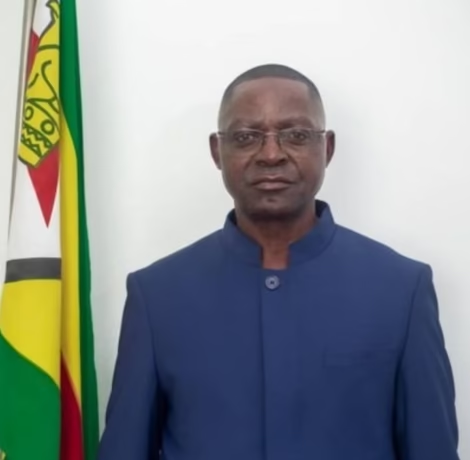


Farmers across Zimbabwe have been assured of uninterrupted electricity and water supplies ahead of the winter cropping season, with the government increasing power allocations and monitoring dam levels to support irrigation.
Lands, Agriculture, Fisheries, Water and Rural Development Minister, Dr. Anxious Masuka, announced that 150 megawatts (MW) of electricity have been ring-fenced for farming operations, up from 120MW last year, to ensure continuous power supply for irrigation and sustain agricultural productivity.
Speaking at a post-Cabinet media briefing in Harare yesterday, Dr. Masuka said collaboration between ministries is key to securing stable power. Energy and Power Development Minister July Moyo is working to ensure that Hwange Units 7 and 8 become operational by March 29, further strengthening the national grid. He added that an inter-ministerial task force is working with wheat-growing clusters to ensure dedicated power supply, while farmers are now supplying GPS coordinates of their meters so that the Zimbabwe Electricity Supply Authority (ZESA) can minimize outages.
Water availability has also been secured, with 151 major dams monitored to assess their irrigation capacity. National dam levels currently stand at 88.5 percent, an improvement from 82 percent recorded this time last year. Minister of Information, Publicity, and Broadcasting Services, Dr. Jenfan Muswere, said this stability ensures sufficient water supply for winter cropping. The government has set a winter cereal production target of 135,250 hectares, with 120,000 hectares allocated to wheat, 6,500 hectares to barley, and 8,750 hectares to Irish potatoes. The plan aims to produce 600,000 tonnes of wheat, surpassing the national annual requirement of 360,000 tonnes, along with 39,000 tonnes of barley and 263,250 tonnes of potatoes.
To ensure success, the government will closely monitor 21 critical enablers, including power, water, seed, fertilizer, and fuel, as well as financial support mechanisms such as farmer payments, finance, and insurance. Other key factors include mechanization, coordination, contract farming, risk management strategies for pests, land security, and fire management, along with marketing and policy frameworks. A whole-of-government and whole-of-sector approach will be implemented to meet the set targets.
Meanwhile, the government is also addressing food security through the Food Deficit Mitigation Programme. Public Service, Labour and Social Welfare Minister, Edgar Moyo, reported that the fourth phase of the Blitz Food Distribution exercise is underway to support vulnerable households awaiting their harvests.
So far, 45,513 metric tonnes of grain have been distributed, while the Zunde raMambo/Isiphala SeNkosi programme has delivered an additional 4,372 tonnes to replenish stocks allocated to traditional leaders. The Cash-for-Cereal Programme also continues to provide assistance to food-insecure communities.