Zimbabwe’s efforts to achieve Vision 2030, an upper-middle-income economy anchored in inclusive and sustainable growth, are receiving a powerful boost through UNDP Zimbabwe’s nature-based solutions, which are revitalizing wetlands, supporting livelihoods, and building resilience against climate change.
As the nation intensifies implementation of its National Development Strategy 1 (NDS1) and gears toward NDS2, partnerships between the Government of Zimbabwe and the United Nations Development Programme (UNDP) are proving instrumental in linking environmental restoration to economic empowerment.
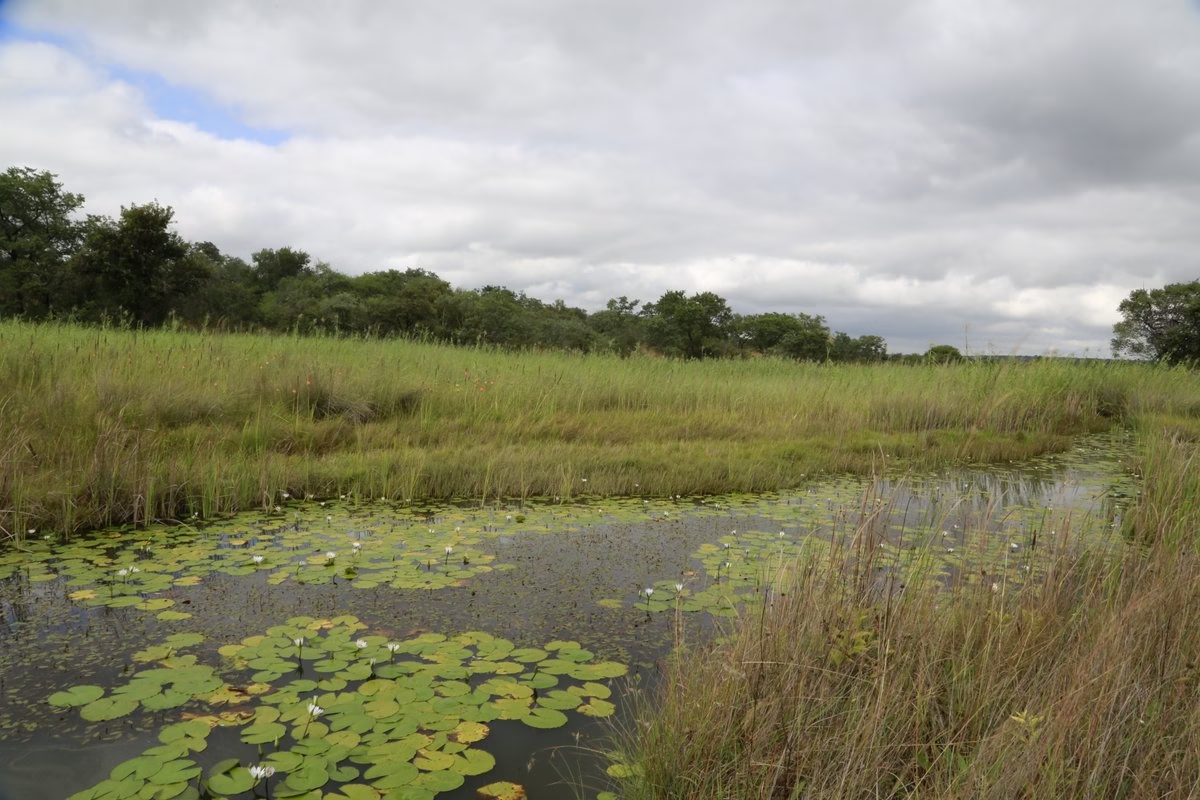
Through its biodiversity and ecosystem management initiatives, UNDP has supported community driven conservation in Mbire, Muzarabani, Hurungwe, Shurugwi, Zvishavane, and Binga, transforming degraded wetlands into engines of productivity.
In partnership with the Ministry of Environment, Climate and Wildlife, the programme has trained and equipped 1,206 beekeepers, established two honey processing centres, and harvested over 4,300 kilograms of honey in the 2021 flow season, generating both income and ecological balance.
At the same time, tree planting and reforestation campaigns have restored more than 149 hectares of wetland ecosystems, with 264,460 trees planted and 56,000 seedlings raised in community nurseries. These interventions stabilise soils, enhance carbon sequestration, and prevent siltation, key priorities under Zimbabwe’s Climate Policy and Environmental Management Strategy.
In addition, the introduction of solar-powered boreholes and the deployment of beehives as “bio fences” along elephant corridors demonstrate innovation rooted in local solutions, merging conservation with practical, sustainable livelihoods.
Speaking at the Ramsar COP15 Conference in Victoria Falls, themed “Wetlands: For Our Common Future,” Dr Ayodele Odusola, UNDP Zimbabwe Resident Representative, underscored that “Healthy wetlands mean healthy communities. From honey harvests to restored forests, nature-based solutions are our best defence against climate shocks.”
The outcomes from Zimbabwe’s participation at COP15 reaffirmed its leadership in wetland conservation, culminating in the Victoria Falls Declaration, which commits the region to coordinated, inclusive, and sustainable wetland management. The launch of the Southern Africa Ramsar Regional Initiative (SARRI) further cements Zimbabwe’s position as a regional hub for biodiversity restoration and policy innovation.
At Monavale Vlei, one of Harare’s key wetlands, over 120 indigenous plant species have been reintroduced, while 230 bird species have been recorded, transforming it into a model of urban ecological restoration. In Binga’s Masibinta Wetland, 13 hectares were rehabilitated, creating new aquaculture and horticultural projects that earned two national environmental awards in 2024.
In Midlands Province, UNDP supported efforts have protected 237 hectares of wetlands and installed 11 solar boreholes, serving over 2,200 people, 63 percent of them women, reinforcing gender inclusion in climate action.
The UNDP’s integrated approach complements government frameworks such as Zimbabwe’s National Climate Change Response Strategy and Vision 2030, which emphasise balancing economic growth with environmental stewardship.
By investing in wetlands, UNDP and the Government of Zimbabwe are demonstrating that climate resilience and sustainable development are inseparable pillars of progress. Wetlands, once neglected, are now being recognised as vital natural infrastructure, filtering water, storing carbon, and sustaining livelihoods for thousands of rural families.
As Dr Odusola aptly noted, “When we invest in nature, nature invests back in us.”
With continued commitment, the partnership between UNDP and Zimbabwe is not only restoring ecosystems but also laying the foundation for a green, inclusive economy, a key pathway to realising Vision 2030.