

Zimbabwe ranks among the top 10 African countries for diaspora remittance inflows, according to the World Bank’s 2023 report. With a total of $3.08 billion in remittances received, the country holds the sixth position, unchanged from the previous year’s figure. The steadfast inflow of remittances extends beyond just financial support to households; it contributes significantly to poverty reduction, economic growth, and overall development.
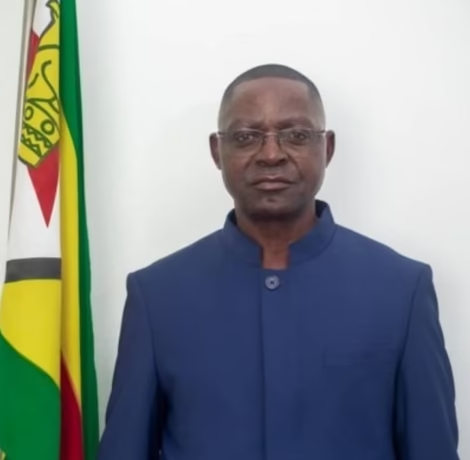
The growth in remittances has been significantly stimulated by President Mnangagwa’s pro-investment policies and his concerted efforts to engage with the Zimbabwean diaspora. Through his engagement and re-engagement initiatives, the president has consistently interacted with Zimbabweans living abroad during his foreign trips, encouraging them to invest in their home country. His outreach efforts have fostered a sense of inclusivity and optimism among the diaspora community, fostering trust and confidence in the country’s economic potential. By promoting a favorable business environment and urging Zimbabweans abroad to contribute to the country’s development, President Mnangagwa’s leadership has played a pivotal role in boosting remittance inflows and driving economic growth.
Some of the policies put in place by the New Dispensation to incentivize remittances in Zimbabwe include the relaxation of exchange controls, allowing easier transfer of funds; the introduction of diaspora bonds, enabling citizens abroad to invest in the country; tax exemptions on remittances, making it more attractive for diaspora citizens to send money back home; and improved banking infrastructure, making it easier and cheaper to transfer funds.
The remittance growth aligns with President Mnangagwa’s development philosophy, Nyika inovakwa nevene vayo. One of the most visible and impactful ways in which Zimbabweans in the diaspora contribute to their country is through these remittances. According to the World Bank, remittances sent to Zimbabwe over the past few years have consistently surpassed Official Development Aid and Foreign Direct Investment.
The remittance growth is crucial for Zimbabwe as it provides a significant source of foreign currency, helping to stabilize the economy and support imports. In 2023, remittances accounted for 9.6% of the country’s GDP and 16% of Zimbabwe’s total foreign currency receipts, while exports accounted for 55%. Zimbabwe’s currency (ZiG) is backed by gold and foreign exchange reserves, which provides a solid foundation for its value. As a result, the significant inflows of remittances contribute to the growth of foreign exchange reserves, thereby stabilizing exchange rates, reducing volatility, and supporting economic stability. By bolstering the country’s foreign exchange reserves, remittances play a crucial role in maintaining a stable economic environment, which fosters growth and development.
Remittances help alleviate poverty by providing financial support to households, enabling them to meet basic needs and improve their living standards. According to a research study on the flow, impact, and regulatory framework of migrant remittances in Zimbabwe conducted by the Government in collaboration with the International Organization for Migration (IOM), the diaspora community in South Africa is supporting three or more family members in Zimbabwe.
Remittances have a multiplier effect on the economy, as they lead to increased consumer spending, which in turn boosts economic activity as recipients of remittances use the funds to purchase goods and services, thereby increasing demand and stimulating economic growth. This increased consumer spending benefits local businesses, such as shops, restaurants, and service providers, which in turn creates jobs and stimulates further economic growth. Additionally, remittances help households to better withstand economic shocks, such as unemployment or crop failures, by providing a safety net. By increasing access to capital, remittances enable individuals and families to invest in income-generating activities, such as starting a business or improving their education and skills, thereby fostering economic development.