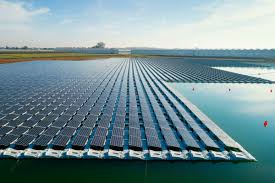
Adequate power supply is essential for economic development, social progress, and overall prosperity. To achieve universal access to electricity by 2030, the government of Zimbabwe is investing significantly in solar power and grid expansion. With a total installed capacity of 2,185 MW, the country faces a shortfall compared to the peak demand of 1,900 MW, highlighting the need for new power supply projects. In this context, the proposed 800MW floating solar photovoltaic power plant on Lake Kariba marks a major step towards improving the country’s energy supply.
To become an upper-middle-income society, Zimbabwe needs increased and affordable electricity to support accelerated development in all sectors of the economy. The electricity demand forecast is over 5,000 MW by 2030, making the development of new generation capacity crucial. In December 2023, an unsolicited bid was received from an energy company proposing to invest $600 to $850 million in an 800MW floating solar photovoltaic power plant on Lake Kariba, in Mashonaland West Province. This project aligns with the National Renewable Energy Policy of 2019.
A Grid Impact Assessment led to the Cabinet’s approval of a 600MW floating solar power plant on Lake Kariba, considering grid stability and the risks of concentrating generation at one location. The plant will be developed in phases to complement the Kariba South hydropower station. The first phase of 150MW capacity is expected to be commissioned in 2025, with the second phase of 300MW in 2026 and the final phase of 150MW in 2027. A 25-year operating lease was signed, and a land survey was completed in February 2024. The power generation licence for the energy company is being processed.
Zimbabwe has many lakes and dams that could be potential sites for future renewable energy investments. Projects using water-mounted solar photovoltaic cells are 5-15% more efficient than those on land. This project will support the country’s import substitution agenda by reducing power imports, which range from 0 to 500MW and cost significant foreign currency.
Expanded power generation will also boost the Rural Electrification programme, supporting the Rural Industrialisation agenda pursued by the Second Republic.