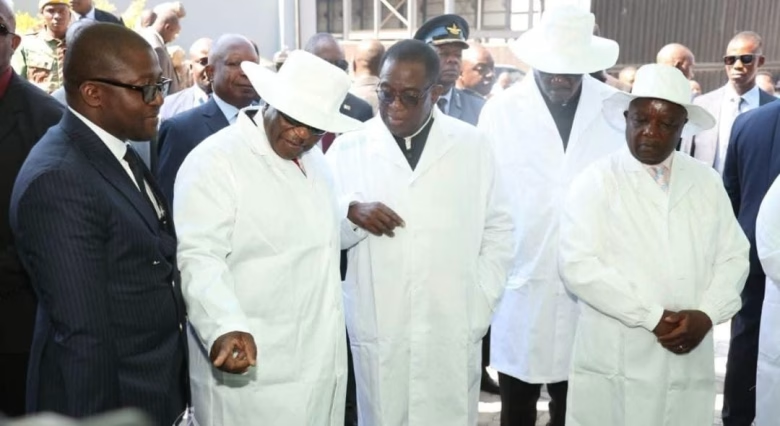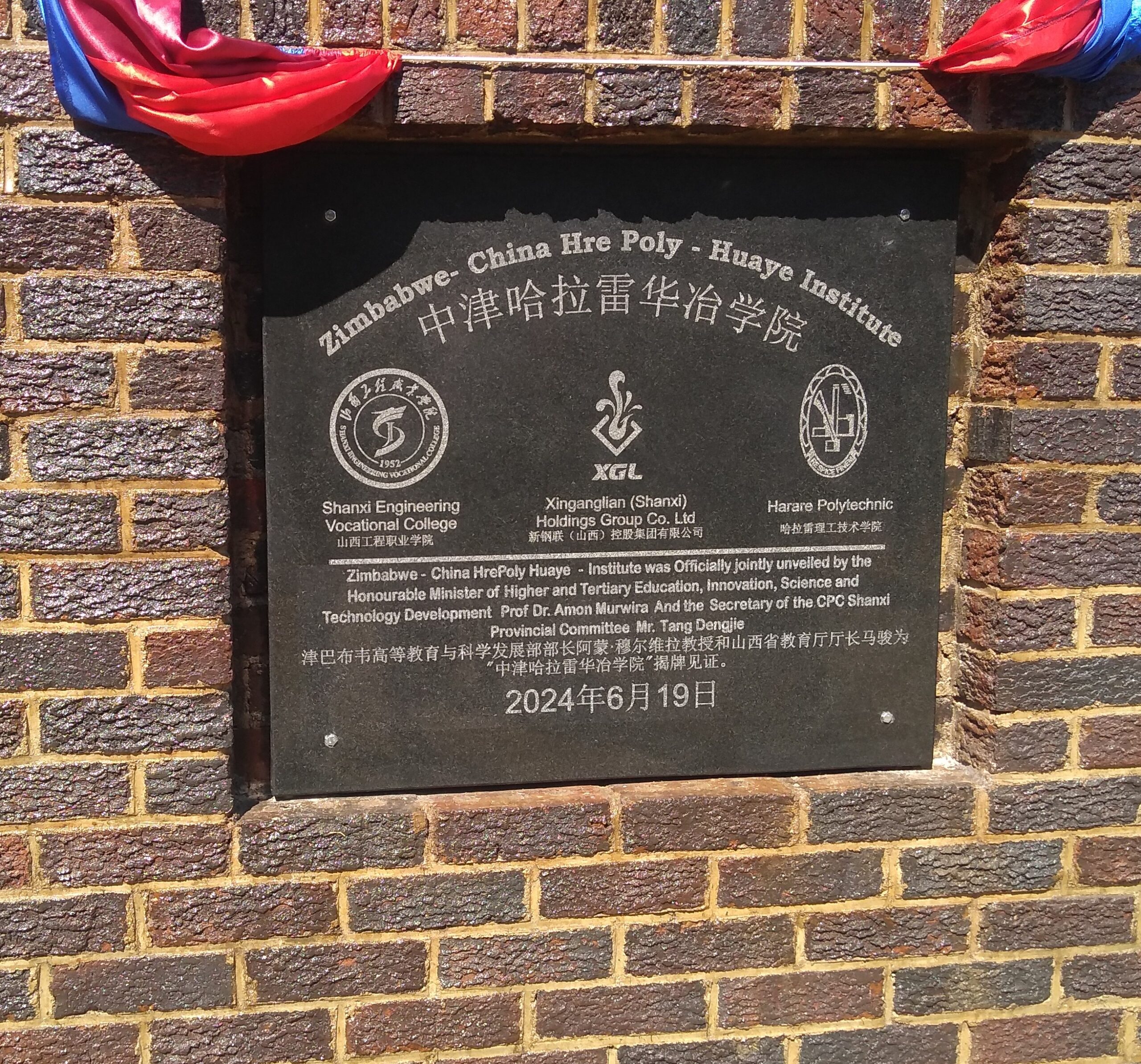
The unveiling of the Zimbabwe-China Harare Polytechnic-Huaye Institute Plaque of Excellence marks a significant milestone in Zimbabwe’s educational and industrial development. This event symbolizes the fruitful partnership between Harare Polytechnic and institutions in Shanxi Province, China, aimed at transforming Zimbabwe’s education system to better serve national development goals.
Under President Mnangagwa’s leadership, Zimbabwe has reformed its education system to produce graduates with both knowledge and practical skills. This new approach, known as Heritage-Based Education 5.0, emphasizes teaching, research, community service, innovation, and industrialization. The partnership with Shanxi Polytechnic aligns perfectly with this vision, aiming to harness Zimbabwe’s rich natural resources through advanced education and training.
In 2019, Zimbabwe adopted the Heritage-Based Education 5.0 philosophy to drive the country’s industrialization and modernization. Embracing advanced technologies worldwide is essential for unlocking the potential of Zimbabwe’s natural resources. The collaboration between Harare Polytechnic and Shanxi Polytechnic is a significant step in this direction, promoting international vocational education and fostering technology and skills transfer.
The recent signing of a Memorandum of Understanding (MoU) between Harare Polytechnic, Xin Gang Lian (Shanxi) Holding Group Company, and Shanxi Engineering Vocational College highlights the deepening bilateral relations between Zimbabwe and China. This agreement will benefit Harare Polytechnic students, particularly those in metallurgy, mechanical engineering, and electrical engineering, by providing scholarships to study in China.
The establishment of the metallurgical Center of Excellence, named Zimbabwe-China Harare Poly-Huaye Institute, will help Zimbabwe move away from exporting raw minerals and instead focus on value addition and beneficiation. This shift is crucial for creating local industries, generating employment, and stimulating economic growth.
The center will also enhance Harare Polytechnic’s ability to innovate and develop new technologies, increasing its competitive edge and providing a model for other polytechnics. The collaboration will lead to significant benefits, including research, training, technology transfer, capacity building, and exchange programs.
This initiative is part of Zimbabwe’s broader efforts to achieve its Vision 2030, aiming for an empowered and prosperous upper-middle-income society. By focusing on human capital development, innovation, science, and technology, Zimbabwe is building a future where its rich mineral resources are fully utilized to drive economic growth.
The Principal of Harare Polytechnic emphasized the importance of this partnership, noting that 60 students from the institute would receive full scholarships to study in China in 2025, with more students joining in subsequent years. This collaboration is expected to anchor critical skills development, share best practices, and facilitate student and faculty exchanges.
Overall, the establishment of the Zimbabwe-China Harare Poly-Huaye Institute represents a significant advancement in Zimbabwe’s educational and industrial landscape. This partnership is a testament to the country’s commitment to leveraging international cooperation to achieve national development goals and create a brighter future for its people.