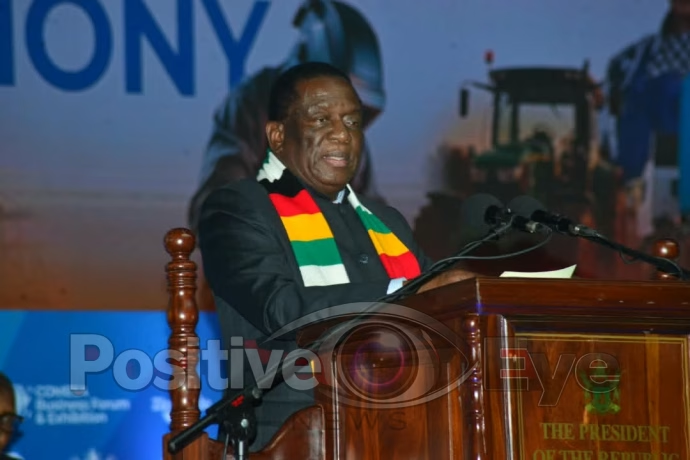
The Presidential goat rearing and pass-on scheme, launched in 2022, is gaining momentum, with Mashonaland West province receiving 75 goats over the weekend. The event, which drew hundreds of attendees, brings significant relief to the local farming community and aims to empower traditionally marginalized groups.
The scheme primarily targets the youth and women, who have historically faced challenges in accessing and controlling livestock. President Emmerson Mnangagwa initiated this program as part of broader women empowerment efforts to ensure their active participation in Zimbabwe’s economy.
The Presidential goat pass-on scheme is a key component of the Government’s Rural Development 8.0 strategy, designed to accelerate rural development and support the goal of achieving an upper middle-income economy by 2030. The scheme aims to distribute a total of 632,000 goats with improved genetics across the country. Launched in Chipinge in 2022, the program will ultimately benefit more than 600,000 goats to the small-scale sector, enhancing both crop and livestock productivity.
The initiative is not limited to youth and women; it also aims to assist the elderly, women-headed households, people living with disabilities, and youth-headed families, as identified by the Zimbabwe Vulnerability Assessment Committee. This development is expected to expand and upgrade the country’s goat industry to meet both domestic and international market demands.
The distribution of goats is intended to bolster the national herd, which has suffered due to tick-borne diseases affecting cattle over the past four years. Unlike cattle, goats are less prone to diseases, making them a viable alternative for livestock production. The scheme is anticipated to enhance food security and generate financial benefits at the family level, aligning with the goals of the National Development Strategy 1 (NDS1).
President Mnangagwa’s inclusive development model, which leaves no place and no one behind, underscores the Government’s commitment to reaching every corner of the country with this program. This effort is crucial in achieving the vision of an upper middle-income economy by 2030.
In conclusion, the Presidential goat scheme represents a strategic intervention to uplift rural communities, improve livestock genetics, and empower marginalized groups, thereby contributing to Zimbabwe’s broader economic goals.