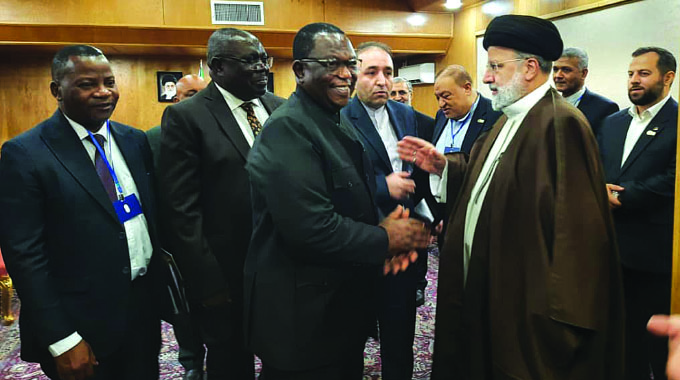
VICE President Dr Constantino Chiwenga yesterday met Iranian President Ebrahim Raisi for bilateral talks as Zimbabwe continually seeks global economic synergies in traditional and emerging markets.
The meeting was held on the sidelines of the Iran-Africa International Economic Conference which the VP is attending together with Government representatives from across Africa.
The conference is part of the global energy super-power’s quest to deepen mutually beneficial economic cooperation with African countries and Zimbabwe, in line with President Mnangagwa’s thrust to pursue all economically beneficial synergies.
The summit comes at a time when Iran was seeking to further entrench a global foothold for its advanced auto-industry and pharmaceuticals sector.
Against this background, VP Chiwenga emerged from his meeting with President Raisi noting that Iran had advanced to lofty economic and industrial levels from which Zimbabwe and Africa as a whole, could tap into.
“Firstly, we were congratulating him for hosting the Iran-Africa International Economic Conference which will mutually benefit the parties involved,” said VP Chiwenga.
He said Iran had advanced economically and its cooperation with Africa would bring growth impetus to the economies involved.
“We are the builders of our own economies and we really want to see development. From our end, we are following up on the implementation of the 12 agreements signed last year,” said VP Chiwenga.
“We have the Ministry of Higher and Tertiary Education because we will be advancing a lot in the area of research, education, innovation, scholarships in the various areas.
“So, there is a lot of co-operation in that area. Remember, everything we are talking about begins with education. We are also looking into areas of Information Communication Technology, agriculture, mining, manufacturing.”
He said Iran was a developing country which had however, gone a step further than the African continent and had now come up with the idea of Iran-Africa cooperation.
“It means we are now cooperating with a major economic powerhouse with a long-time civilisation.
“Iran has moved quite a lot and Africa also needs to learn from their example.
“There is a lot Africa can offer to Iran and also a lot Iran can offer to Africa, so it’s a win-win situation. What we want is what is good for our people and when we talk of joining multilateral organisations like BRICS, it is not like we want to compete with anyone but we want co-operation in a win-win situation for our people,” said VP Chiwenga.
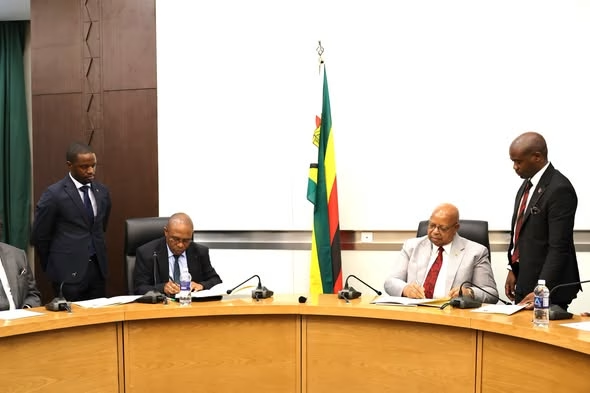
President Raisi last year visited Zimbabwe and together with President Mnangagwa, witnessed the signing of 12 economic co-operation agreements.
For Zimbabwe, the agreements are part of a broader national economic strategy to drive the economy towards an empowered upper middle income economy by 2030.
Iran’s national leadership is keen to see the quick implementation of agreements for the mutual benefit of both countries.
Officially opening the conference yesterday, President Raisi challenged Iranian authorities to make the most of African interest in collaborating with them.
Herald