Peter Matika, peter.matika@chronicle.co.zw
GOVERNMENT has availed US$15 million to the Bulawayo City Council to support emergency interventions to address the water supply challenges and avert any potential hazards.
The city has already started drawing 15 megalitres of water from the rehabilitated boreholes at the Nyamandlovu Aquifer, a huge boost to supplies as major dams have received insignificant inflows due to drought.
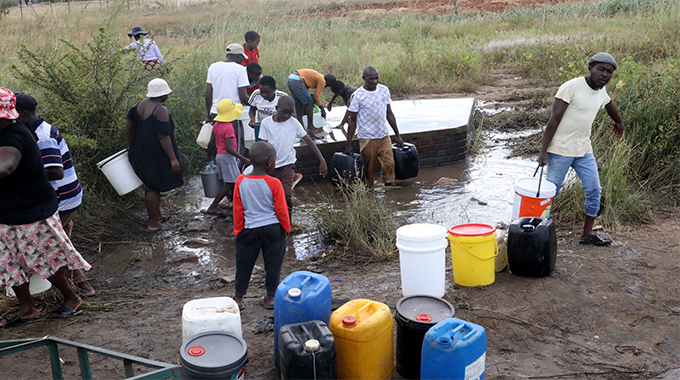
Residents are, however, reeling under a 120-hour water-shedding schedule adopted in February due to depleting water levels from supply dams.

Since the start of the year, several suburbs have endured prolonged periods of water cuts, some exceeding a week, with the situation deteriorating further in recent weeks leading to the council failing to maintain the 120-hour water shedding schedule.
Acting city mayor, Councillor Edwin Ndlovu, confirmed the Government bailout in an interview yesterday, where he revealed that Bulawayo was losing 48 percent of its treated water due to leakages along the main water pipes, as well as water bursts in suburbs due to ageing infrastructure.

Clr Ndlovu said the council had an engagement with the Minister of Finance, Economic Development and Investment Promotion, Professor Mthuli Ncube, concerning the issue last week.
“The US$15 million is for a short-term measure to attend to the leakages on major pipelines that draw water to the city, as well as to rehabilitate vandalised infrastructure,” he said.
“There are also burst pipes in some of the city suburbs where we are losing treated water.”
Cllr Ndlovu said the funds from the Treasury will be availed in batches of US$5 million.

“We anticipate receiving the funds as early as two weeks. I don’t have the specifics but the process includes duplicating pipelines to draw water from substitute dams. “After the completion of this first stage, which is a temporary measure, we hope to move to the next stage, which is the medium strategy to ensure the availability of water in the city. This includes the construction of dams,” said Clr Ndlovu.
He said the long-term plan to solve Bulawayo’s perennial water shortages lies with the Lake Gwayi-Shangani project, which the Government expects to complete this year.
Cllr Ndlovu said the funds from the Government will also be channelled towards beefing up security at major dams and pipelines where vandalism is rampant.
“We are already working on the procurement process as we want this to be smooth sailing when the funds are available. We are happy with the assurance we have from the Government,” he said.
In an interview over the weekend, Prof Ncube said the Bulawayo water crisis was a serious matter of concern.

“It is an issue of concern and in my conversation with the city council, I was made aware that the city is losing 48 percent of water through leakages from pipes and rundown infrastructure,” he said.
“To lose 48 percent is basically half of treated water and that is a big loss.”
Prof Ncube said the Government has already set up a committee through the Ministry of Lands, Agriculture, Fisheries, Water and Rural Resettlement, which is being spearheaded by the Zimbabwe National Water Authority, working in partnership with the Bulawayo City Council.
“We, as the Treasury stand ready to support financially, to ensure this situation is dealt with to improve the water situation for reticulation.

“We are also working towards the completion of the Lake Gwayi-Shangani project, which is a long-term plan to address the water situation in and around Bulawayo,” said Prof Ncube.

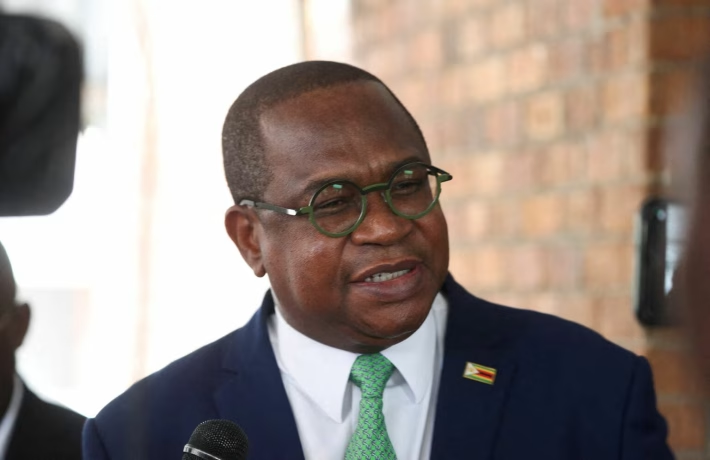
Professor Mthuli Ncube
He said the funds will also be channelled towards the rehabilitation of dams surrounding the city to ensure efficiency and water reticulation to the city’s reservoirs and the Nyamandlovu Aquifer.
“We are also focusing on beefing up security for the safety of the infrastructure,” Prof Ncube said.