ZIMBABWE has taken over the chairmanship of the United Nations Economic Commission for Africa (UNECA) Conference of African Ministers of Finance, Planning and Economic Development for the next 12 months.
This means Zimbabwe will lead the whole bloc during the period and its thought leadership while helping member states address challenges facing the region.
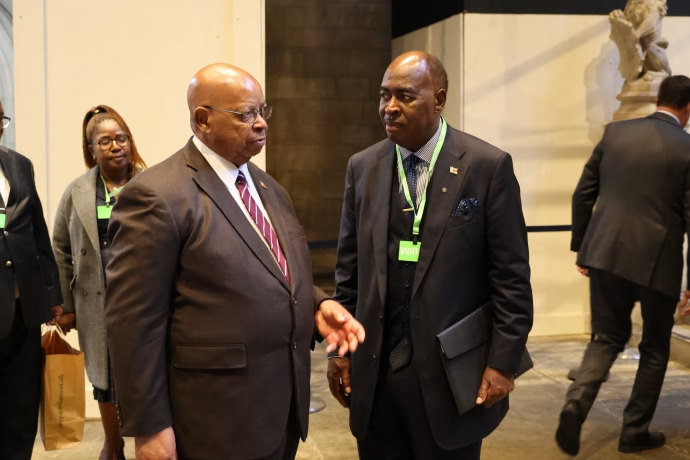
Finance, Economic Development and Investment Promotion Minister, Professor Mthuli Ncube (pictured), will be the chairperson of the high-level platform on behalf of Zimbabwe.
“Zimbabwe is taking over the chairmanship of the Conference of Ministers of Finance over the next 12 months,” said Prof Ncube during a press briefing on the sidelines of the 56th edition of the UNECA Conference of Ministers of Finance, which is underway in Victoria Falls.
“We are also grateful for allowing Zimbabwe to go ahead and chair. During my chairmanship, I am going to drive the African agenda and voice looking at the cost of transition of our economies, the cost of investment in the green economy and opening borders.
“We have been given chairmanship to oversee actions and strategic thinking around what Africa should be doing in terms of driving our economies forward.”
The hybrid summit began on Wednesday and is being attended by delegates from all UNECA member states up to Tuesday next week with some following online.
It is being held under the theme: “Financing the Transition to Inclusive Green Economies in Africa: Imperatives, Opportunities, and Policy Options”.
“We want to tackle the subject of rethinking the architecture of the global financial system so that we can also benefit vulnerable countries in Africa. There is a cost to transition to a greener economy and as Africans we find it expensive but of cause benefits are high. It costs money to climate proof but benefits are high,” said the minister.
He said financing transition will be topical at the next G20 conference that will be chaired by South Africa.
Also being discussed at the conference is rising African debt which has risen to over 60 percent from around 20 percent a decade ago.
Prof Ncube said the rising debt and budget deficits are issues that should be discussed at length as they have led to a weakening of the shock absorption ability of African communities.
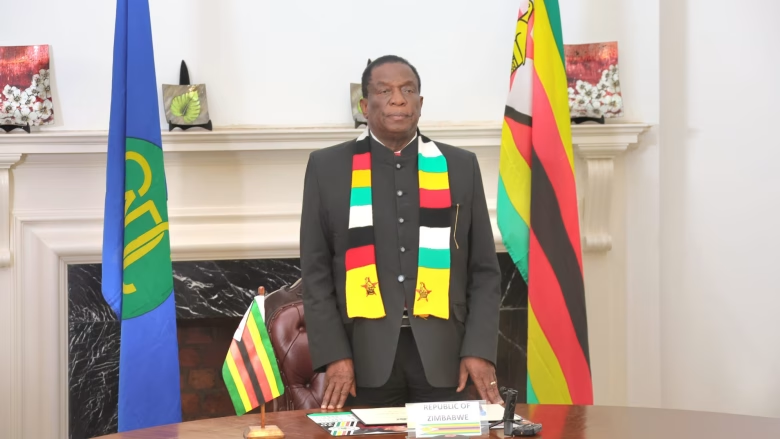
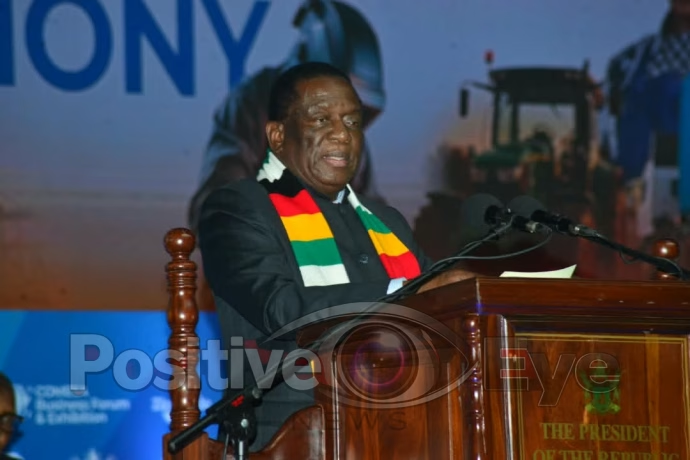
Deliberations will culminate into the official opening to be presided over by President Mnangagwa on Monday before the conference ends on Tuesday.
Chronicles